

Files
Download Full Text (227 KB)
Description
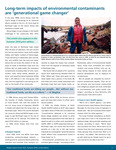
Most Formerly Used Defense Sites (FUDS) properties are in remote locations, placing a disproportionate impact on Alaska Native communities that depend upon environmental resources for their livelihood. After the 1972 closure of a U.S. Air Force base that had operated for 20 years on St. Lawrence Island, residents of the Yup'ik village of Savoonga began to experience a higher incidence of cancer, lower birth-weight babies, and higher numbers of miscarriages. The U.S. Army Corps of Engineers eventually spent $125 million cleaning up the abandoned base. But there are concerns about continued impact from environmental contamination. While state and federal health studies recommend continued reliance upon traditional foods based on locally harvested berries, fish, and wildlife, St. Lawrence Island community members fear those foods may be contributing to elevated levels of PCBs and higher cancer rates.
Publication Date
7-16-2018
Keywords
Alaska Department of Environmental Conservation (DEC), Alaska Natives, bush justice, environment, environmental justice, Environmental Protection Agency (EPA), health, military, rural justice, Savoonga, Alaska, St. Lawrence Island, Alaska, U.S. Army Corps of Engineers (USACE)
Recommended Citation
UAA Justice Center, "Long-Term Impacts of Environmental Contaminants Are ‘Generational Game Changer’" (2018). Vols 31-36 (2014-2019). 68.
https://scholarworks.alaska.edu/uaa_ak_justice_forum_31-36/68
Handle
http://hdl.handle.net/11122/8810