

-
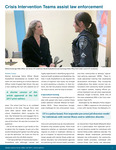
Crisis Intervention Teams Assist Law Enforcement
Pamela Cravez
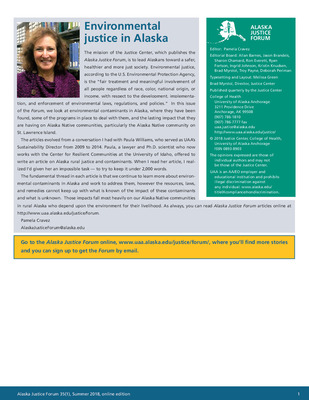
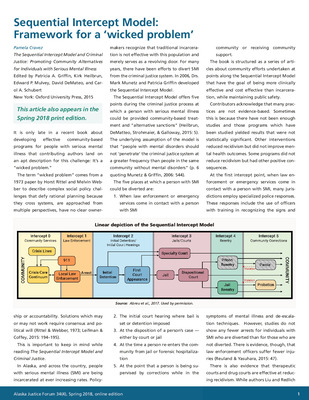
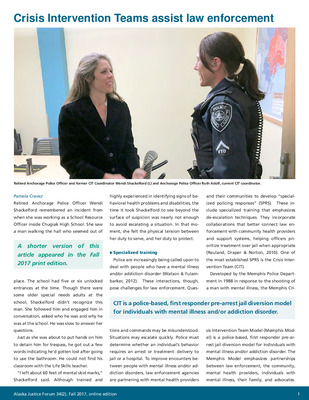
The Crisis Intervention Team (CIT) is a police-based, first responders’ pre-arrest jail diversion model for individuals with mental illness and/or substance abuse disorder. A new CIT coalition is being developed in Matanuska-Susitna Borough. The online version of the article also includes additional information about specialized police responses.
-
Editor's Note
Pamela Cravez
Pamela Cravez, new editor of the Alaska Justice Forum, announces changes to the publication, including an updated design and enhanced online presence.
-
Editor's Note
Pamela Cravez
Pamela Cravez, editor of the Alaska Justice Forum, gives an overview of articles in the current edition of the Alaska Justice Forum.
-
Crime Rates and Alaska Criminal Justice Reform
Brad A. Myrstol and Pamela Cravez
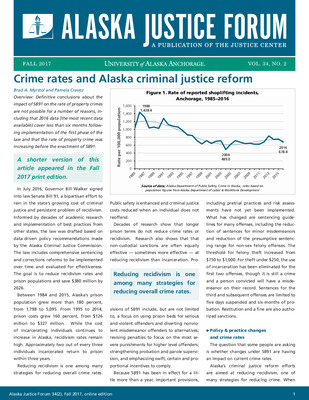
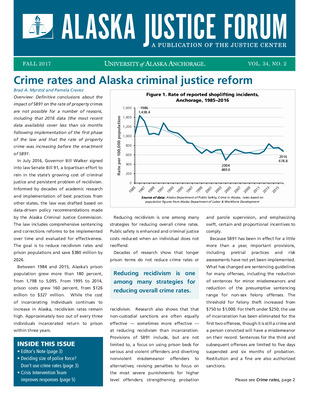
Definitive conclusions about the impact of Senate Bill 91 on the rate of property crimes in Alaska are not possible for a number of reasons, including that the most current data cover less than six months following implementation of the first phase of the law. Accompanying figures show rates of incidents of shoplifting, motor vehicle theft, burglary, and larceny theft reported to police in 1985–2016.
-
Alaska Justice Forum ; Vol. 34, No. 2 (Fall 2017)
Brad A. Myrstol, Pamela Cravez, Troy C. Payne, and N/A UAA Justice Center
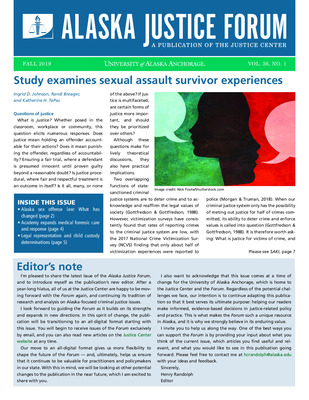
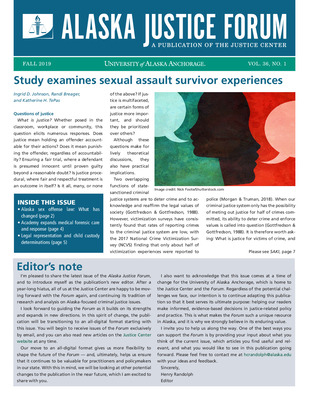
The Fall 2017 print edition of the Alaska Justice Forum features two stories on crime rates — in relation to criminal justice reform and in relation to police staffing — that caution using crime rates as a single factor to determine policy. A story on Crisis Intervention Teams shows how specialized responses are helping law enforcement deal with calls from individuals with mental illness and/or substance use disorders. The Fall 2017 online edition includes expanded versions of print stories and a video (with transcript) on property crime rates in Alaska.
-
![Is the Rate of Property Crime Increasing in Alaska? [transcript] by Myrstol A. N/A and Pamela Cravez](https://scholarworks.alaska.edu/uaa_ak_justice_forum_31-36/1051/thumbnail.jpg "Is the Rate of Property Crime Increasing in Alaska? [transcript] by Myrstol A. N/A and Pamela Cravez")
Is the Rate of Property Crime Increasing in Alaska? [transcript]
Myrstol A. N/A and Pamela Cravez
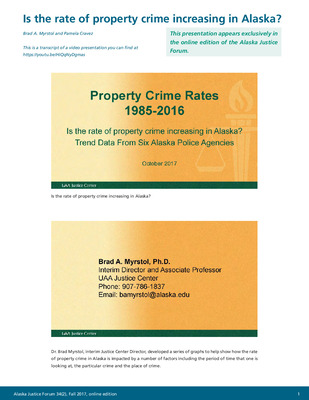
Is the rate of property crime increasing in Alaska? Data from six Alaska jurisdictions show it’s a complex question. Dr. Brad Myrstol, interim Justice Center director developed a series of graphs to show how the rate of property crime in Alaska is impacted by factors including time, place of crime and type of crime. This presentation focuses on the property crimes of larceny-theft, shoplifting (which is a subcategory of larceny), burglary, and motor vehicle theft. The time period is from 1985 to 2016. The jurisdictions reviewed are: Anchorage, Fairbanks, Juneau, Kenai, North Slope Borough and Palmer. Each use the Uniform Crime Reports to report data. This is a transcript of the video presentation "Property Crime Rates 1985–2016: Is the Rate of Property Crime Increasing in Alaska? Trend Data from Six Alaska Police Agencies" which can be found at https://youtu.be/HiQqNyDgmas. Graphs by Brad A. Myrstol; produced & narrated by Pamela Cravez.
-
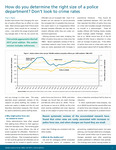
How Do You Determine the Right Size of a Police Department? Don’t Look to Crime Rates.
Troy C. Payne
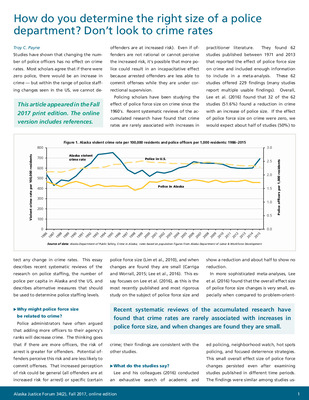
Studies have shown that changing the number of police officers has no effect on crime rates. This article explains why and describes alternative measures. An accompanying chart compares rates of violent crime in Alaska for 1986–2015 with the number of police officers per 1,000 residents for the same period.
-
Director's Farewell
André B. Rosay
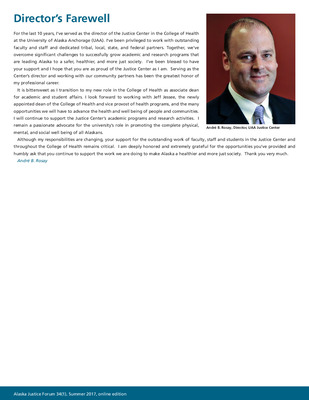
Dr. André B. Rosay bids farewell to the UAA Justice Center, where he has been director since 2007. Dr. Rosay has been appointed associate dean for academic and student affairs in the College of Health at University of Alaska Anchorage.
-
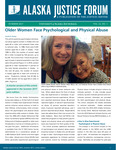
Older Women Face Psychological and Physical Abuse
André B. Rosay
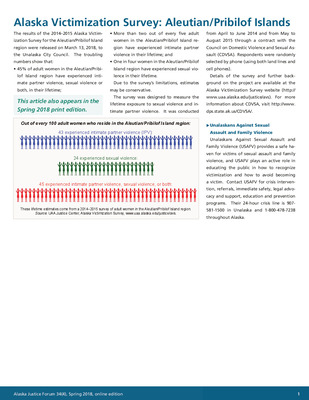
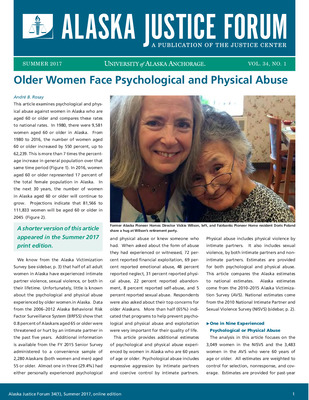
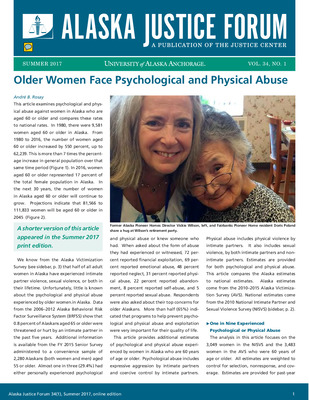
This article examines psychological and physical abuse against women in Alaska who are aged 60 or older and compares these rates to national rates. Psychological abuse includes expressive aggression by intimate partners and coercive control by intimate partners. Physical abuse includes physical violence by intimate partners. It also includes sexual violence, by both intimate partners and non-intimate partners. Estimates are provided for both psychological and physical abuse. Alaska estimates come from the 2010–2015 Alaska Victimization Survey (AVS) and national estimates from the 2010 National Intimate Partner and Sexual Violence Survey (NISVS). Results show that one in nine Alaskan women aged 60 or older (11.5%) experienced psychological or physical abuse in the past year. These rates are all significantly higher than national rates.
-
Alaska Justice Forum ; Vol. 34, No. 1 (Summer 2017)
André B. Rosay and Pamela Cravez
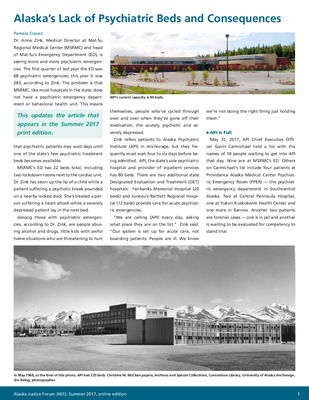
The Summer 2017 print edition of the Alaska Justice Forum features articles on psychological and physical abuse against women in Alaska who are aged 60 or older and on the consequences of Alaska's lack of capacity to treat mental illness in the community. An editor's note describes changes to the publication and invites online subscriptions. The Summer 2017 online edition includes expanded versions of print stories, an additional story on a collaborative problem-solving process involving liquor stores in an Anchorage neighborhood and a farewell from André B. Rosay, who served as Justice Center director from 2007 to 2017.
-
When Mental Illness Becomes a Police Matter
UAA Justice Center
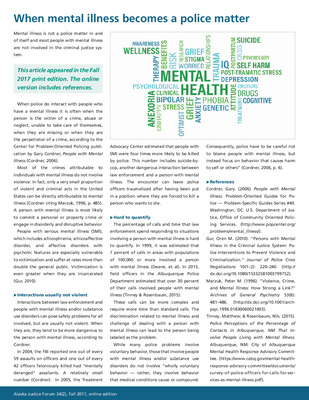
Mental illness is not a police matter in and of itself and most people with mental illness (MI) are not involved in the criminal justice system. When police do interact with an individual with MI, care needs to be taken not to label the person as the problem but to focus on behavior that causes harm to self and others.
-
Editor's Goodbye
Barbara Armstrong
Barbara Armstrong, editor of the Alaska Justice Forum since 2008, is leaving the Justice Center at the end of December 2016.
-
Informed Alaskans Initiative: Public Health Data in Alaska
Barbara Armstrong
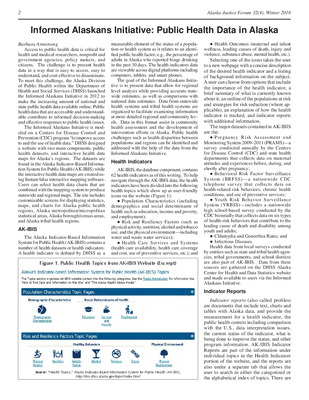
This article describes the national and state public health data made available online through the Alaska Division of Public Health's Informed Alaskans Initiative.
-
Justice Reinvestment Report
Barbara Armstrong
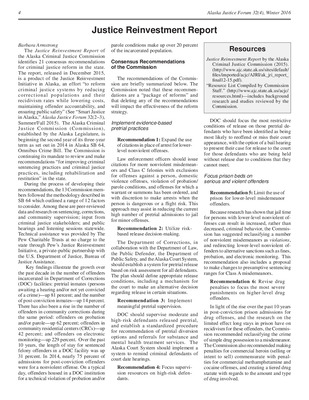
This article summarizes the Alaska Criminal Justice Commission's recommendations for criminal justice reform in Alaska included in the Commission's Justice Reinvestment Report released in December 2015.
-
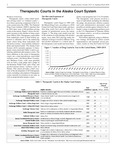
Therapeutic Courts in the Alaska Court System
Barbara Armstrong
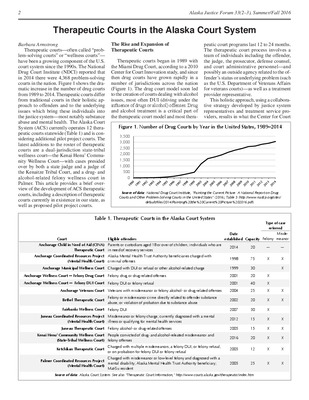
Therapeutic courts — often called “problem-solving courts” or “wellness courts” — have been a growing component of the U.S. court system since the 1990s. This article provides an overview of the development of Alaska Court System therapeutic courts, and describes the 12 therapeutic courts currently operating in Alaska as well as proposed pilot project courts. Includes a bibliography.
-
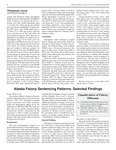
Alaska Felony Sentencing Patterns: Selected Findings
Teresa White Carns
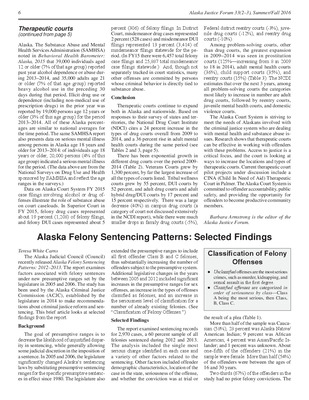
This article describes selected findings from the Alaska Judicial Council's recently released report Alaska Felony Sentencing Patterns: 2012–2013. The report examines factors associated with felony sentences under new presumptive ranges set by the Alaska Legislature in 2005 and 2006. The study has been used by the Alaska Criminal Justice Commission (ACJC), established by the legislature in 2014 to make recommendations about criminal justice reform and sentencing.
-
Alaska Justice Forum ; Vol. 33, No. 2-3. (Summer/Fall 2016)
Tiffany Hall, Barbara Armstrong, Teresa White Carns, and Khristy Parker
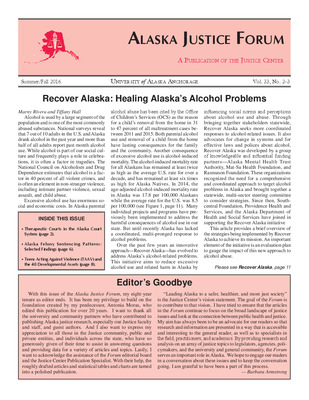
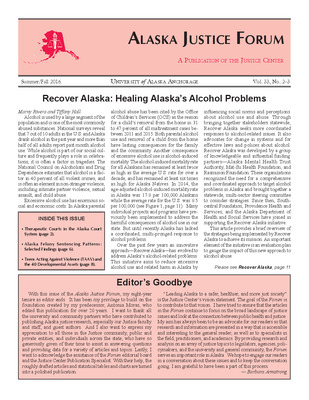
The Summer/Fall 2016 issue of the Alaska Justice Forum includes articles on the Recover Alaska intitiative to address Alaska's alcohol-related problems; therapeutic courts in Alaska; findings of the Alaska Judicial Council's analysis of felony sentencing patterns in Alaska in 2012–2013; outcomes of the Teens Acting Against Violence (TAAV) program in Bethel seen through the lens of Search Institute's 40 Developmental Assets; and a farewell from Barbara Armstrong, whose eight-year tenure as editor of the Alaska Justice Forum is ending with this issue.
-
Alaska Justice Forum ; Vol. 32, No. 4 (Winter 2016)
Brad A. Myrstol and Barbara Armstrong
The Winter 2016 issue of the Alaska Justice Forum features articles on approaches to evidence-based criminal justice reform and recidivism reduction in Alaska, and an initiatve to make Alaska and national public health data available online.
-
Criminal Justice Reform and Recidivism Reduction
Brad A. Myrstol and Barbara Armstrong
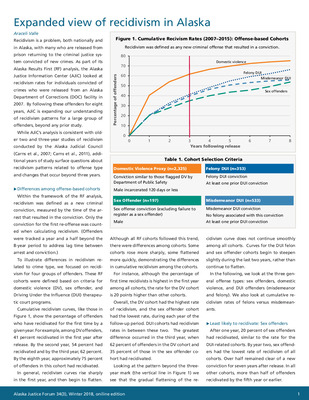
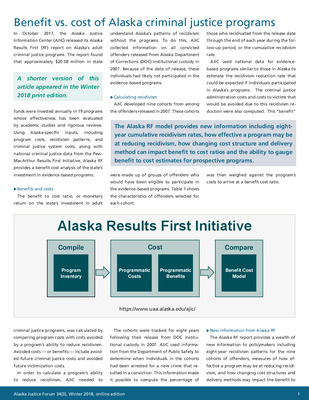
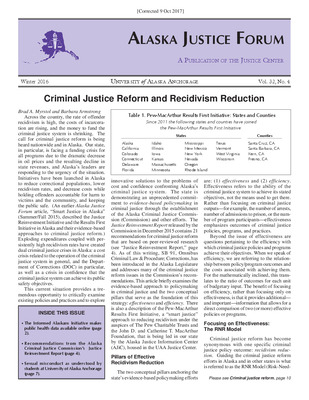
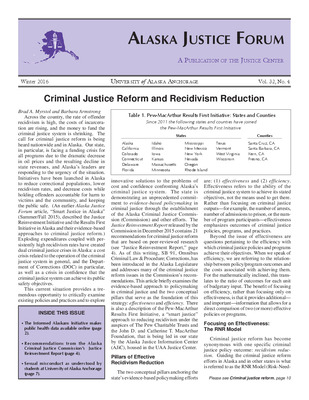
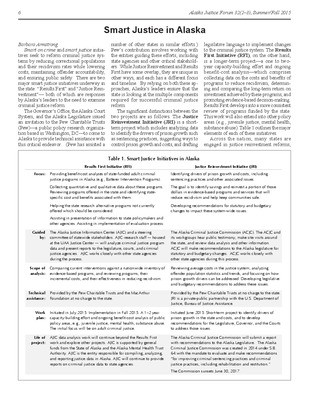
This article briefly examines evidence-based approach to policymaking in criminal justice and the two conceptual pillars that serve as the foundation of this strategy: effectiveness and efficiency. The article also describes the Pew-MacArthur Results First Initiative, a “smart justice” approach to reducing recidivism under the auspices of The Pew Charitable Trusts and the John D. and Catherine T. MacArthur Foundation, that is being led in Alaska by the Alaska Justice Information Center (AJiC), housed in the UAA Justice Center.
-
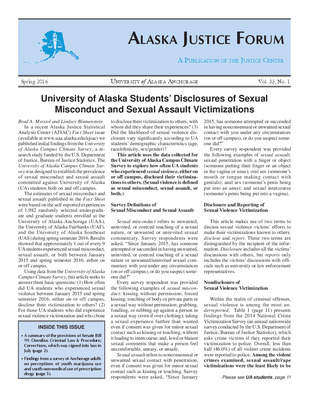
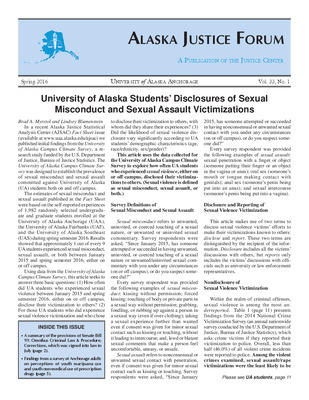
University of Alaska Students’ Disclosures of Sexual Misconduct and Sexual Assault Victimizations
Brad A. Myrstol and Lindsey Blumenstein
This article uses data collected for the University of Alaska Campus Climate Survey to explore how often University of Alaska (UA) students who experienced sexual misconduct or sexual assault, either on or off campus, disclosed their victimizations to others. The likelihood of victimization disclosure in relation to the type of victimization, the persons or institutions to whom disclosure was made, and the demographic characteristics of UA student victims are also examined.
-
Alaska Justice Forum ; Vol. 33 No. 1 (Spring 2016)
Brad A. Myrstol, Lindsey Blumenstein, Marny Rivera, and Cory R. Lepage
The Spring 2016 issue of the Alaska Justice Forum includes articles focusing on University of Alaska students' disclosures of sexual misconduct and sexual assault victimizations; a summary of the provisions of the criminal justice reform measure Senate Bill 91 "Omnibus Criminal Law & Procedure; Corrections" enacted into law in July 2016 ; and findings from a survey of Anchorage adults on perceptions of youth marijuana use and youth non-medical use of prescription drugs.
-
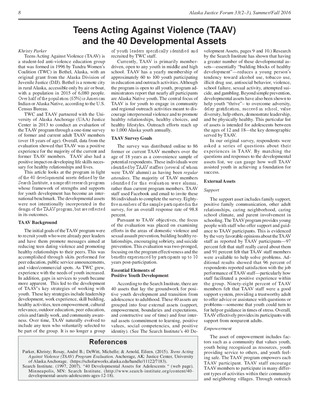
Teens Acting against Violence (TAAV) and the 40 Developmental Assets
Khristy Parker
Teens Acting Against Violence (TAAV) is a student-led anti-violence education group formed in 1996 by Tundra Women’s Coalition (TWC) in Bethel, Alaska. This article looks at the program in light of the 40 developmental assets defined by the Search Institute, a nonprofit research program whose framework of strengths and supports for youth development has become an international benchmark. While the developmental assets were not intentionally incorporated in the design of the TAAV program, they are reflected in the program's outcomes.
-
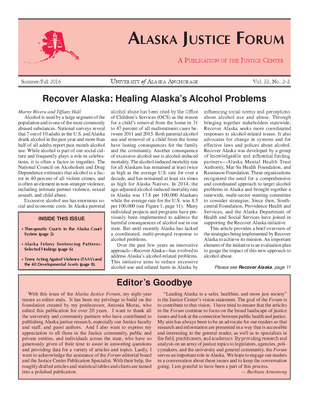
Recover Alaska: Healing Alaska's Alcohol Problems
Marny Rivera and Tiffany Hall
This article provides an overview of the strategies being implemented by the Recover Alaska initiative in its mission to reduce excessive alcohol use and related harm in Alaska by influencing social norms and perceptions about alcohol use and abuse. Includes a list of online resources.
-
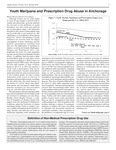
Youth Marijuana and Prescription Drug Abuse in Anchorage
Marny Rivera and Cory R. Lepage
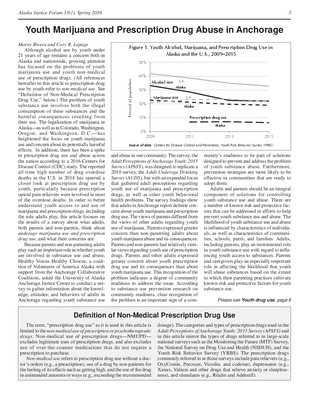
This article examines results of the Adult Perceptions of Anchorage Youth: 2015 Survey (APAYS) to examine perceptions and concerns of Anchorage adults, both parents and non-parents, about youth marijuana use and youth non-medical use of prescription drugs. A resource list is included.
-
Senate Bill 91: Summary of Policy Reforms
UAA Justice Center
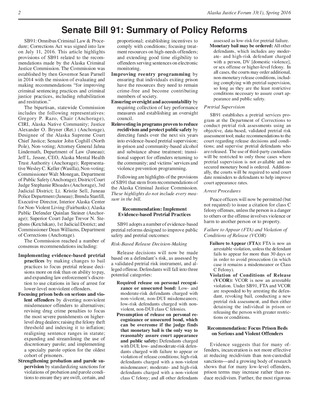
This article highlights provisions of Senate Bill 91, "Omnibus Criminal Law & Procedure; Corrections Act," related to the recommendations of the Alaska Criminal Justice Commission. SB91 was signed into law on July 11, 2016.
Printing is not supported at the primary Gallery Thumbnail page. Please first navigate to a specific Image before printing.