

Anchorage Community Indicators Series 2: Sexual Assault Study presents information about sexual assaults in Anchorage based on sexual assaults reported to the Anchorage Police Department in 2000–2001.
-
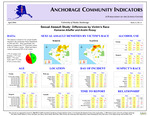
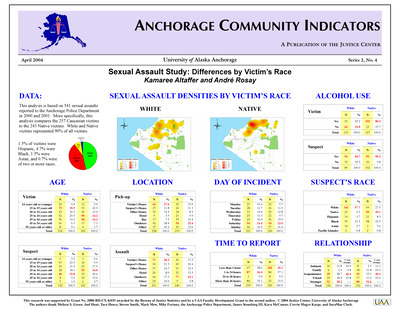
Sexual Assault Study: Differences by Victim's Race
Kamaree Altaffer and André B. Rosay
This issue of Anchorage Community Indicators Series 2, "Sexual Assault Study," describes the spatial patterning and geographical concentration of 541 sexual assaults reported to the Anchorage Police Department in 2000–2001 by victim's race. More specifically, this analysis compares the 257 Caucasian victims to the 243 Native victims. White and Native victims represented 90% of all victims.
-
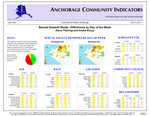
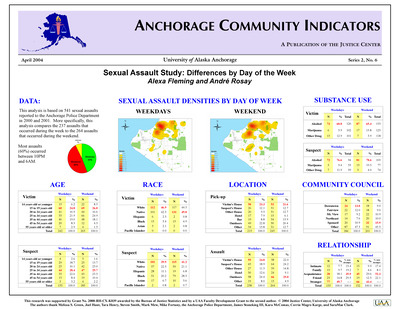
Sexual Assault Study: Differences by Day of Week
Alexa Fleming and André B. Rosay
This issue of Anchorage Community Indicators Series 2, "Sexual Assault Study," describes the spatial patterning and geographical concentration of 541 sexual assaults reported to the Anchorage Police Department in 2000–2001 by day of the week. More specifically, this analysis compares the 237 assaults that occurred during the week to the 264 assaults that occurred during the weekend. Most assaults (60%) occurred between 10 PM and 6 AM.
-
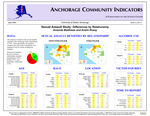
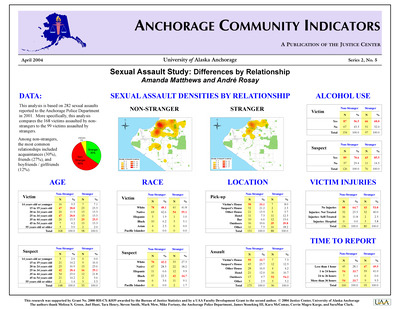
Sexual Assault Study: Differences by Relationship
Amanda Matthews and André B. Rosay
This issue of Anchorage Community Indicators Series 2, "Sexual Assault Study," describes the spatial patterning and geographical concentration of 282 sexual assaults reported to the Anchorage Police Department in 2000–2001 by relationship between victim and suspect. More specifically, this analysis compares the 168 victims assaulted by nonstrangers to the 99 victims assaulted by strangers. Among non-strangers, the most common relationships included acquaintances (30%), friends (27%), and boyfriends/girlfriends (12%).
-
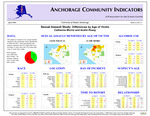
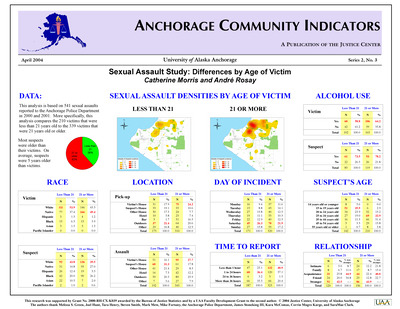
Sexual Assault Study: Differences by Age of Victim
Catherine Morris and André B. Rosay
This issue of Anchorage Community Indicators Series 2, "Sexual Assault Study," describes the spatial patterning and geographical concentration of 541 sexual assaults reported to the Anchorage Police Department in 2000–2001 by age of victim. Analysis compares the 210 victims that were less than 21 years old to the 339 victims that were 21 years old or older. Most suspects were older than their victims. On average, suspects were 5 years older than victims.
-
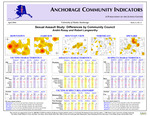
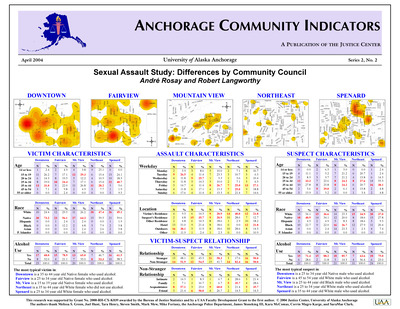
Sexual Assault Study: Differences by Community Council
André B. Rosay and Robert H. Langworthy
This issue of Anchorage Community Indicators Series 2, "Sexual Assault Study," describes the spatial patterning and geographical concentration of sexual assaults reported to the Anchorage Police Department in 2000–2001 by the five community councils with the highest incidence of sexual assauults reported to police during the study period: Downtown, Fairview, Mountain View, Northeast, and Spenard. Comparison date is presented for these five community councils on victim and suspect characteristics including age, race, and alcohol use; assault characteristics including day of week and location of assault; and victim-suspect relationship.
-
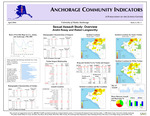
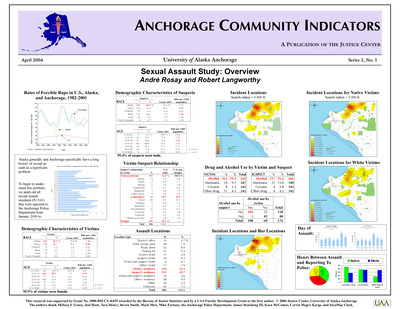
Sexual Assault Study: Overview
André B. Rosay and Robert H. Langworthy
Anchorage Community Indicators is a public education project of the Justice Center aimed at providing information about various aspects of the Anchorage municipality through maps and tables. This issue introduces Series 2, "Sexual Assault Study," which describes the spatial patterning and geographical concentration of sexual assaults reported to the Anchorage Police Department in 2000–2001.
-
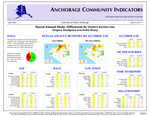
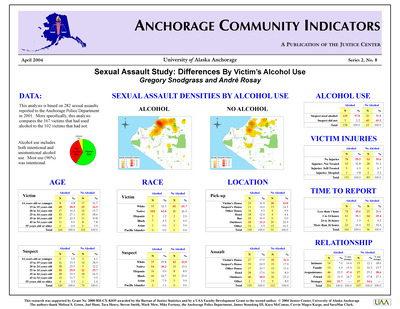
Sexual Assault Study: Differences by Victim's Alcohol Use
G. Matthew Snodgrass and André B. Rosay
This issue of Anchorage Community Indicators Series 2, "Sexual Assault Study," describes the spatial patterning and geographical concentration of 282 sexual assaults reported to the Anchorage Police Department in 2001 by victim's alcohol use.
-
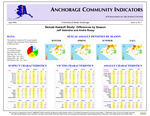
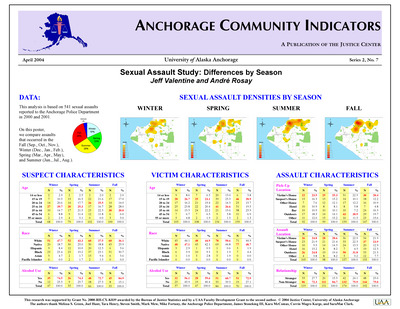
Sexual Assault Study: Differences by Season
Jeff Valentine and André B. Rosay
This issue of Anchorage Community Indicators Series 2, "Sexual Assault Study," describes the spatial patterning and geographical concentration of 541 sexual assaults reported to the Anchorage Police Department in 2000–2001 by season of year: fall (Sep., Oct., Nov.), winter (Dec., Jan., Feb.), spring (Mar., Apr., May), and summer (Jun., Jul., Aug.).