
Files
Download Full Text (4.8 MB)
Description
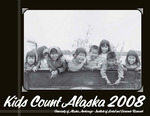
We’re pleased to announce that Kids Count Alaska is part of a new site, the Kids Count Data Center (datacenter.kidscount.org). Developed by the KIDS COUNT national program, the site gives easy access to data on children and teenagers for every state and hundreds of cities and counties across the country. For Alaska, you can select indicators for each of the state’s seven regions and create your own maps, trend lines, and charts. There are also maps and graphs you can put on your Web site or blog. You can go directly to that national site, or you can link from our Web site (www.kidscount.alaska.edu). We hope you’ll find the new data and features helpful. This book and all previous data books are available on our Web site, and each data book is divided into sections for faster downloading. Also on our site is a link to the most recent national KIDS COUNT data book, as well as to other publications and reports. About This Year’s Book Alaska is celebrating 50 years as a state in 2009—and as part of the celebration, we decided to illustrate this year’s data book with historic photos of Alaska’s children before statehood. We also used information from the U.S. Census Bureau to take a broad look at how conditions have changed for Alaska’s children since statehood. In the Highlights at the end of this section (pages 7 to 10) you’ll find some comparisons of the social and economic wellbeing of children in Alaska in 1959 and today. What is Kids Count Alaska? Kids Count Alaska is part of a nationwide program, sponsored by the Annie E. Casey Foundation, to collect and publicize information about children’s health, safety, and economic status. We pull together information from many sources and present it all in one place. We hope this book gives Alaskans a broad picture of how the state’s children are doing and provides parents, policymakers, and others interested in the welfare of children with information they need to improve life for children and families. Our goals are: • Distributing information about the status of Alaska’s children • Creating an informed public, motivated to help children • Comparing the status of children in Alaska with children nationwide, and presenting additional Alaska indicators (including regional breakdowns) when possible
Publication Date
5-17-2009
Recommended Citation
Hanna, Virgene; Leask, Linda; Lampman, Claudia; Schreiner, Irma; and DeRoche, Patricia, "Kids Count Alaska 2008" (2009). ISER Reports. 93.
https://scholarworks.alaska.edu/uaa_iser_reports/93
Handle
http://hdl.handle.net/11122/4331