-
Unemployment on the North Slope: Characteristics of Unemployed Eskimo Workers and of Eskimo Youth Entering the Labor Force
Judith Kleinfield, Jack A. Kruse, and Robert Travis
-
Limited Entry in the Alaska and British Columbia Salmon Fisheries
Judith Kleinfield, Bill McDiarmid, and Judith Kleinfield
-
Lower Cook Inlet Petroleum Development Scenarios: Economic and Demographic Analysis
Tom Lane and Barbara Withers
-
The Alaska Council On Science and Technology: A Preliminary Assessment
Thomas Morehouse and Linda E. Leask
-
Limited Entry in the Alaska and British Columbia Salmon Fisheries
Thomas Morehouse and George W. Rogers
-
Bering-Norton Base Case and Impact Results From the MAP and SCIMP Models
Will Nebesky, Jim Kerr, and Lee Husky
-
The Alaskan Experience with Limited Entry
George Rogers
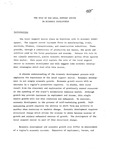
Viewed in its historical perspective, the 1973 Alaska limited entry law evolved from fisheries policies motivated by distributive (Alaska and Alaskans first) and social (maintenance of rural fishing communities) criteria more than the traditional economic criteria of efficiency. Although the stated purpose of the Act includes the promotion of the conservation and sustained yield management of the fisheries resources, its primary objective, as revealed in its provisions and implementation, is the promotion of "the economic health and stability of commercial fishing." Furthermore, the responsibility for these two purposes is institutionally divided between a resource managing and an entry regulatory agency. To date, the program has failed to eliminate or even to reduce excess capacity in fisheries because of the impossibility of arriving at a practical determination of the optimum levels to which the units of gear are to be reduced. The most it has accomplished is stabilizing the number of operating units at the maximum for the 1969-72 permits. Because capacity is defined only in terms of numbers of units of gear, increased efficiency and effort have also increased pressure on the resources requiring continuation of traditional management tools limiting time and efficiency. Free transferability of entry permits by holders coupled with rising fish prices have resulted in permit prices beyond the ability to pay of many young people seeking entry into fisheries. Although the nonresident Alaskan to resident Alaskan division of fisheries permits has not altered significantly, there has been a trend of transfer of permits within Alaska from rural to urban centers which threatens the maintenance and stability of fishing communities. Pending legislative reform of the Act would provide for administrative control of permit transfer and would expand the economic welfare orientation of the program.
Printing is not supported at the primary Gallery Thumbnail page. Please first navigate to a specific Image before printing.