



-
Emerging Themes and Future Directions of Multi-Sector Nexus Research and Implementation
Jennifer Schmidt
Water, energy, and food are all essential components of human societies. Collectively, their respective resource systems are interconnected in what is called the “nexus”. There is growing consensus that a holistic understanding of the interdependencies and trade-offs between these sectors and other related systems is critical to solving many of the global challenges they present. While nexus research has grown exponentially since 2011, there is no unified, overarching approach, and the implementation of concepts remains hampered by the lack of clear case studies. Here, we present the results of a collaborative thought exercise involving 75 scientists and summarize them into 10 key recommendations covering: the most critical nexus issues of today, emerging themes, and where future efforts should be directed. We conclude that a nexus community of practice to promote open communication among researchers, to maintain and share standardized datasets, and to develop applied case studies will facilitate transparent comparisons of models and encourage the adoption of nexus approaches in practice.
-
Flight plan for the future: floatplane pilots and researchers team up to predict invasive species dispersal in Alaska
Jennifer Schmidt
Aircraft can transport aquatic invasive species (AIS) from urban sources to remote waterbodies, yet little is known about this long-distance pathway. In North America and especially Alaska, aircraft with landing gear for water called floatplanes are used for recreation access to remote, often road-less wilderness destinations. Human-mediated dispersal of AIS is particularly concerning for the conservation of pristine wildlands, yet resource managers are often challenged by limited monitoring and response capacity given the vast areas they manage. We collected pathway data through a survey with floatplane pilots and used a Bayesian hierarchical model to inform early detection in a data-limited situation. The study was motivated by Alaska’s first known AIS, Elodea spp. (Elodea) and its floatplane-related dispersal. For 682 identified floatplane destinations, a Bayesian hierarchical model predicts the chance of flights originating from AIS source locations in freshwater and estimates the expected number of flights from these sources. Model predictions show the potential for broad spread across remote regions currently not known to have Elodea and informed monitoring and early detection efforts. Our result underlines the small window of opportunity for Arctic conservation strategies targeting an AIS free Arctic. We recommend management that focuses on long-distance connectivity, keeping urban sources free of AIS. We discuss applicability of the approach for other data-limited situations supporting data-informed AIS management responses.
-
From Metrics to Action: A Framework for Identifying Limiting Factors, Key Causes, and Possible Solutions in Food-Energy-Water Security
Jennifer Schmidt
Food, energy, and water (FEW) security require adequate quantities and forms of each resource, conditions that are threatened by climate change and other factors. Assessing FEW security is important, and needs to be understood in the context of multiple factors. Existing frameworks make it hard to disentangle the contributors to FEW insecurity and to determine where best to expend efforts on short- and long-term solutions. We identified four consistent components of FEW security (availability, access, preference, quality). This framework provides detailed and nuanced insights into factors that limit or bolster security in each of the three sectors. The integrated framework identifies proximate and ultimate underlying causes of deficiencies in each security component providing opportunities to identify short- and long-term solutions.
-

Rural Alaska Water Treatment and Distribution Systems Incur High Energy Costs: Identifying Energy Drivers Using Panel Data Analysis for 78 Communities
Jennifer Schmidt
The energy consumption for water treatment and distribution in rural Alaska communities that represent one of the coldest and most isolated regions in the US has been unexplored. Using energy audits data from Alaska Native Tribal Health Consortium (ANTHC), we investigate the annual energy consumption patterns for water treatment and distribution in 78 rural Alaska communities (average population < 500 people) along with seasonal, regional, and population impacts, and water treatment/distribution system types. Regional trends of per capita annual energy consumption are as follows: Interior > Northern > Southwest > Gulf coast > Southeast regions of Alaska. Our results indicate that the per capita energy consumption is highest during the winter and lowest during the summer. Generally, the per capita energy consumption decreases with an increasing population. The variation of per capita energy consumption based on water distribution types shows that piped circulating systems consume the most energy, followed by washeteria, piped pressure, and closed haul. At the water treatment plant, space heating and electrical motors have the highest per capita energy consumption, followed by domestic hot water, tank heating, and lighting. The findings in this work suggest that per capita energy consumption (kWh/p) for water treatment and distribution in rural Alaska is about 12–26 times higher than the national average and about two orders of magnitude higher economic costs for the same. Overall, this work sheds light on energy use for water treatment and distribution in rural Alaska and establishes a baseline that would be useful for the rural Alaska communities’ adaptation to climate change efforts, specifically in planning for and designing new water systems or updating existing systems.
-
Emerging Anthropogenic Influences on the Southcentral Alaska Temperature and Precipitation Extremes and Related Fires in 2019
Matthew Berman, Jennifer Schmidt, Uma S. Bhatt, Rick T. Lader, John E. Walsh, Peter A. Bieniek, Richard L. Thoman, Cecilia Borries-Strigle, Kristi Bulock, Jonathan Chriest, Micah Hahn, Amy S. Hendricks, Randi Jandt, Joseph Little, Daniel McEvoy, Chris Moore, T. Scott Rupp, Eric Stevens, Heidi Strader, Christine F. Waigl, James White, Alison York, and Robert Ziel
The late-season extreme fire activity in Southcentral Alaska during 2019 was highly unusual and consequential. Firefighting operations had to be extended by a month in 2019 due to the extreme conditions of hot summer temperature and prolonged drought. The ongoing fires created poor air quality in the region containing most of Alaska’s population, leading to substantial impacts to public health. Suppression costs totaled over $70 million for Southcentral Alaska. This study’s main goals are to place the 2019 season into historical context, provide an attribution analysis, and assess future changes in wildfire risk in the region. The primary tools are meteorological observations and climate model simulations from the NCAR CESM Large Ensemble (LENS). The 2019 fire season in Southcentral Alaska included the hottest and driest June–August season over the 1979–2019 period. The LENS simulation analysis suggests that the anthropogenic signal of increased fire risk had not yet emerged in 2019 because of the CESM’s internal variability, but that the anthropogenic signal will emerge by the 2040–2080 period. The effect of warming temperatures dominates the effect of enhanced precipitation in the trend towards increased fire risk.
-
Understanding and applying the RE-AIM framework: Clarifications and resources
Jodi Summers Holtrop, Paul A. Estabrooks, Bridget Gaglio, Samantha M. Harden, Rodger S. Kessler, Diane K. King, Bethany M. Kwan, Marcia G. Ory, Borsika A. Rabin, Rachel C. Shelton, and Russell E. Glasgow
Introduction: Understanding, categorizing, and using implementation science theories, models, and frameworks is a complex undertaking. The issues involved are even more challenging given the large number of frameworks and that some of them evolve significantly over time. As a consequence, researchers and practitioners may be unintentionally mischaracterizing frameworks or basing actions and conclusions on outdated versions of a framework. Methods: This paper addresses how the RE-AIM (Reach, Effectiveness, Adoption, Implementation, and Maintenance) framework has been described, summarizes how the model has evolved over time, and identifies and corrects several misconceptions. Results: We address 13 specific areas where misconceptions have been noted concerning the use of RE-AIM and summarize current guidance on these issues. We also discuss key changes to RE-AIM over the past 20 years, including the evolution to Pragmatic Robust Implementation and Sustainability Model, and provide resources for potential users to guide application of the framework. Conclusions: RE-AIM and many other theories and frameworks have evolved, been misunderstood, and sometimes been misapplied. To some degree, this is inevitable, but we conclude by suggesting some actions that reviewers, framework developers, and those selecting or applying frameworks can do to prevent or alleviate these problems.
-
Digital Communication Technology: Does Offering a Choice of Modality Improve Medication Adherence and Outcomes in a Persistent Asthma Population?
Diane K. King, PJ Cvietusa, NM Wagner, JA Shoup, GK Goodrich, SM Shetterly, MA Raebel, CS Riggs, and B Bender
Background: Use of digital communication technology has shown potential to improve asthma adherence and outcomes. Few studies have looked at patient preference around mode of medication reminders used to improve and maintain asthma medication adherence. Objective: To determine if, in a population already receiving automated medication reminders, offering a choice for preferred mode of reminder (text, email, phone) would improve their adherence and asthma outcomes over a 1-year period. Methods: This was a pragmatic, randomized controlled trial conducted at Kaiser Permanente Colorado involving 7522 adult patients with persistent asthma. Study patients were randomized to receive usual care or their choice of medication reminder. Differences between the 2 groups in both medication adherence and asthma outcomes were then assessed over the following year. Results: Only 30% of those offered a choice of medication reminder modality responded by making a choice, with 52% preferring text messaging. There was less of a decrease in adherence rate over the 1-year period in those who made a choice regarding the mode of medication refill reminder. There was no difference in asthma outcomes between those who did make a choice compared with those who did not make a choice regarding the mode of medication refill reminder. Conclusion: In a patient population already receiving medication reminders, offering a choice about what type of technology-enabled asthma medication reminder patients wanted did not improve outcomes but did enable a subgroup to better maintain their medication adherence.
-
Using Facebook Advertising as a Recruitment Tool for an mHealth Alcohol Intervention Clinical Trial -Abstract Only
Robyn N. Mertz, Alexandra E. Edwards, Diane K. King, and Patrick L. Dulin
Smartphone-delivered interventions improve access to tailored, timely and private support for adults seeking to manage their alcohol use. Researchers attempting to identify and recruit eligible participants to test alcohol interventions encounter barriers reaching this hidden population, making achievement of sample size a costly and lengthy endeavor. We aimed to recruit 150 adults, drinking above recommended limits, to a 3-month mHealth study, comparing two versions of an evidence-based alcohol app with a control condition. Facebook ads were run every two-weeks until recruitment goals were met. Interested individuals clicked on the ad and were linked to the study website, where they were screened for eligibility and consented. Eligibility criteria: Alcohol Use Disorders Identification Test (AUDIT) score between 6-20 for females and 8-20 for males; not enrolled in, or mandated to, alcohol treatment; U.S. citizen; English literacy; and smartphone possession. Facebook analytics were reviewed weekly, and ad content and frequency adjusted to improve reach. Demographic characteristics of eligible and ineligible individuals were reviewed for representativeness and to assure criteria were not systematically excluding otherwise eligible participants. Within 3-months 1,417 participants were prescreened, with 415 eligible. Of those eligible, 259 completed consent and 191 completed baseline surveys. Total advertising cost was $2,184.48 or $11.44 per enrolled participant. Participant characteristics were 54% female; mean age = 40.3 (SD = 12.6), possibly indicating preferential use of Facebook by women and older aged adults. Iterative review of demographics found that our conservative AUDIT score cut-off (i.e., 20) eliminated otherwise eligible adults who could benefit. Raising the cut-off slightly (i.e., 24) greatly accelerated achieving enrollment goals. In addition, iterative review of enrollment data identified numerous consents with the same IP address, an indicator of phishing. Once identified, we added a manual IP review for completed consents and emailed eligible participants their baseline surveys, which replaced automatic routing from consent to survey. Facebook provided an efficient, low-cost method to reach a hidden population. Frequent analytic review to maximize ad appeal, and processes to authenticate participants are recommended. Recruitment using other social media platforms may improve representation of younger adults and males.
-
Applying the food–energy–water nexus concept at the local scale
N/A N/A
The food–energy–water (FEW) nexus describes interactions among domains that yield gains or trade-offs when analysed together rather than independently. In a project about renewable energy in rural Alaska communities, we applied this concept to examine the implications for sustainability and resilience. The FEW nexus provided a useful framework for identifying the cross-domain benefits of renewable energy, including gains in FEW security. However, other factors such as transportation and governance also play a major role in determining FEW security outcomes in rural Alaska. Here, we show the implications of our findings for theory and practice. The precise configurations of and relationships among FEW nexus components vary by place and time, and the range of factors involved further complicates the ability to develop a functional, systematic FEW model. Instead, we suggest how the FEW nexus may be applied conceptually to identify and understand cross-domain interactions that contribute to long-term sustainability and resilience.
-
Uplifting the voices of rural American Indian older adults to improve understanding of physical activity behavior
Maja Pedersen, Kari Jo Harris, Jordan Lewis, Mattea Grant, Chelsea Kleinmeyer, Ashley Glass, Niki Graham, Blakely Brown, and Diane K. King
American Indian (AI) older adults experience pronounced health disparities and demonstrate one of the lowest levels of physical activity (PA) among racial and ethnic groups. Nearly half of AI older adults live in rural areas, indicating distinct challenges to participation in PA. Research to identify factors influencing PA in this population is missing from the literature, yet is critical to informing culturally relevant PA intervention development and implementation. The purpose was to identify barriers to and facilitators of PA among rural AI older adults using the ecological model and qualitative methods. A community-based approach was used to conduct semi-structured interviews with rural AI older adults. Interview questions were based on a multilevel ecological model. Content analysis was performed, using an iterative coding process to identify findings. The mean age of participants (n = 21) was 66 years. Barriers to and facilitators of PA were identified across ecological model levels. Barriers included factors such as caregiving and community responsibilities, lack of acceptable areas for walking, and overall lack of community-level support for older adult health. Facilitators included a personal connection to the land and ancestors through PA, multigenerational participation, and supportive tribal policies. This study addressed a gap in the literature by identifying barriers to and facilitators of PA among rural AI older adults, which can inform PA intervention development. With barriers and facilitators identified by AI older adults themselves, the voices of those directly affected are uplifted to shape efforts toward addressing longstanding health disparities through relevant public health interventions.
-
Applying the food–energy–water nexus concept at the local scale
Jennifer Schmidt
The food–energy–water (FEW) nexus describes interactions among domains that yield gains or trade-offs when analysed together rather than independently. In a project about renewable energy in rural Alaska communities, we applied this concept to examine the implications for sustainability and resilience. The FEW nexus provided a useful framework for identifying the cross-domain benefits of renewable energy, including gains in FEW security. However, other factors such as transportation and governance also play a major role in determining FEW security outcomes in rural Alaska. Here, we show the implications of our findings for theory and practice. The precise configurations of and relationships among FEW nexus components vary by place and time, and the range of factors involved further complicates the ability to develop a functional, systematic FEW model. Instead, we suggest how the FEW nexus may be applied conceptually to identify and understand cross-domain interactions that contribute to long-term sustainability and resilience.
-
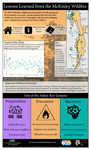
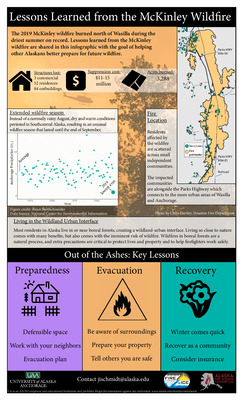
Lessons learned from the McKinely Wildfire
Jennifer Schmidt
Lessons on preparedness, evacuation, and rebuilding after wildfire.
-
Stoking the flame: Subsistence and wood energy in rural Alaska, United States
Jennifer I. Schmidt, Amanda Byrd, Jennifer Curl, Todd J. Brinkman, and Krista Heeringa
Energy costs are large and increasing in rural Alaska communities, so communities are turning to renewable energy. While, many of these communities have a mixed subsistence-cash economy, the relationship between renewable energy and subsistence has not been studied. Tanana, Alaska has a biomass program and we conducted interviews with 61 households in 2017 to understand how residents perceive the program and its association with subsistence activities. We analyzed Alaska Department of Fish & Game subsistence surveys from 89 communities to estimate differences in subsistence harvest between households that harvest wood and those that do not. Interviews indicated that people who harvest wood for the biomass program were six times more likely to engage in subsistence. Subsistence harvests were nearly double (184 kg/per capita) in households that harvested wood for personal use versus those that did not (101 kg/per capita). Equipment used for both activities was similar, and 57% respondents combined wood harvesting with other activities (e.g. subsistence, travel, etc.). Higher household incomes and employment were positively associated with subsistence participation (p < 0.001) while only household incomes was positively associated with wood harvest through the biomass program (p < 0.001). Overall, the program was perceived as having a positive effect (69%) for the community because it has created jobs (36%), saved people money (23%), promoted sharing (16%), and reduced fuel use by the community (15%). Our research shows that biomass programs have the potential to complement subsistence activities and enhance the sustainability of communities in rural Alaska that are faced with high energy costs.
-
Can digital communication technology reduce health system personnel time? An evaluation of personnel requirements and costs in a randomized controlled trial
Nicole M. Wagner, Debra P. Ritzwoller, Marsha A. Raebel, Glenn K. Goodrich, Peter J. Cvietusa, Diane K. King, Jo Ann Shoup, and Bruce G. Bender
Use of digital communication technologies (DCT) shows promise for enhancing outcomes and efficiencies in asthma care management. However, little is known about the impact of DCT interventions on healthcare personnel requirements and costs, thus making it difficult for providers and health systems to understand the value of these interventions. This study evaluated the differences in healthcare personnel requirements and costs between usual asthma care (UC) and a DCT intervention (Breathewell) aimed at maintaining guidelines-based asthma care while reducing health care staffing requirements. We used data from a pragmatic, randomized controlled trial conducted in a large integrated health system involving 14,978 patients diagnosed with asthma. To evaluate differences in staffing requirements and cost between Breathewell and UC needed to deliver guideline-based care we used electronic health record (EHR) events, provider time tracking surveys, and invoicing. Differences in cost were reported at the patient and health system level. The Breathewell intervention significantly reduced personnel requirements with a larger percentage of participants requiring no personnel time (45% vs. 5%, p < .001) and smaller percentage of participants requiring follow-up outreach (44% vs. 68%, p < .001). Extrapolated to the total health system, cost for the Breathewell intervention was $16,278 less than usual care. The intervention became cost savings at a sample size of at least 957 patients diagnosed with asthma. At the population level, using DCT to compliment current asthma care practice presents an opportunity to reduce healthcare personnel requirements while maintaining population-based asthma control measures.
-
Measuring Progress toward Urban Sustainability: Do Global Measures Work for Arctic Cities?
Matthew Berman and Robert W. Orttung
The International Organization for Standardization recently responded to a growing global interest in cities by developing an index for measuring urban sustainability (ISO 37120). We address how well this standard applies to Arctic cities, and potential modifications that might improve its performance. After briefly discussing the goals of sustainability indicators, we examine the extent to which Arctic cities’ remote location, cold and changing climate, and thin, largely resource-based economies may create different sustainability challenges. We then critically examine the content of ISO 37120 and the context in which it was created. We place the index within a broader discussion of urban sustainability indicators and examine the extent to which it really addresses sustainability. We then analyze how well the ISO 37120 accounts for the characteristic features of Arctic cities that produce unique sustainability challenges. Our findings show that only half of ISO 37120′s 128 indicators actually measure future-oriented concerns. We suggest that, while the ISO 37120 may be a useful starting point in quantifying Arctic urban sustainability, the index should only be used as a foundation for a more in-depth analysis. To better represent Arctic cities, the ISO 37120 would need to include indicators that situate cities within their regional contexts, addressing both remoteness and the underlying basis of the Arctic city economy. The index should also measure the role of Indigenous populations, and chart the extent to which cities are working to increase levels of sustainability.
-
The Effect of a Paired Lab on Course Completion and Grades in Nonmajors Introductory Biology
Dayna Jean DeFeo, Andrew Bibler, and Sarah Gerken
This paper explores the effect of a paired lab course on students’ course outcomes in nonmajors introductory biology at the University of Alaska Anchorage. We compare course completion and final grades for 10,793 students (3736 who simultaneously enrolled in the lab and 7057 who did not). Unconditionally, students who self-select into the lab are more likely to complete the course and to earn a higher grade than students who do not. However, when we condition on observable course, academic, and demographic characteristics, we find much of this difference in student performance outcomes is attributable to selection bias, rather than an effect of the lab itself. The data and discussion challenge the misconception that labs serve as recitations for lecture content, noting that the learning objectives of science labs should be more clearly articulated and assessed independent of lecture course outcomes. This paper explores the effect of a paired lab course on students’ course outcomes in introductory biology for nonmajors at the University of Alaska Anchorage (UAA), a large, open-enrollment, 4-year university. We compare outcomes for 10,793 students, 3736 who simultaneously enrolled in the lab and 7057 who did not, and analyze the degree to which they select into the lab on observable characteristics to explore the following research questions: 1. Are students who take a paired lab more likely to complete the lecture component (i.e., receive a final grade as opposed to withdrawing or receiving an Incomplete)? 2. Are students who take a paired lab more likely to receive a higher grade in the lecture component? 3. Does the laboratory experience differently affect course outcomes for students in specific demographic subgroups (e.g., gender, race, high school urbanicity, age, prior academic performance, and socioeconomic status)?
-
Mediating Students’ Fixation with Grades in an Inquiry-Based Undergraduate Biology Course
Dayna Jean DeFeo, Trang C. Tran, and Sarah Gerken
The paper analyzes focus group data to explore student perceptions of an inquiry-based undergraduate biology course. Though the course was designed to mimic the scientific process by incorporating uncertainty, peer review, and self-reflection, students came to class focused on getting As and with a developed schema for didactic instruction and passive learning. They perceived the autonomy and self-directedness of the learning experience as a threat to their grades, and responded with strategies that protected their grades and ego, but were deleterious to learning. Students could identify merits of the inquiry-based approach; however, they made clear: they prioritized grades, and were unwilling to trust an unfamiliar pedagogy if they perceived it jeopardized their grades. In the framework of self-regulated learning, the discussion considers how to scaffold students to foreground learning over achievement.
-
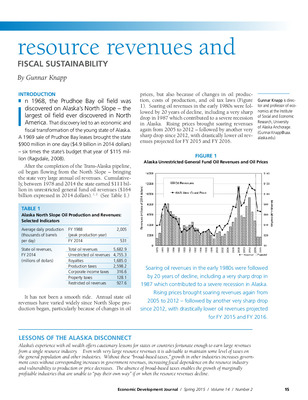
Who Benefits from an Oil Boom? Evidence from a Unique Alaskan Data Set
Alexander James and Mouhcine Guettabi
Oil booms have been shown to increase local employment and wages. But these effects reflect the aggregated experience of residents, commuters, and recent migrants alike. This paper takes advantage of a unique data set that identifies a rich set of labor market outcomes by place of residence, rather than by place of work. Exploiting this feature of the data, we examine the effect of a major oil boom on employment and wage outcomes in the North Slope Borough of Alaska. This analysis is juxtaposed with a more conventional one that uses place-of-work data collected from the Bureau of Economic Analysis. Using the Synthetic Control Method, we find that the oil boom of the late 2000s significantly increased non-residential employment. While the boom caused residential employment to shift from the public to the private sector, total residential employment was unaffected. There is weak evidence that residential wages increased in response to the boom. These results are important as drilling decisions are often negotiated locally by interest groups that might be less concerned with general equilibrium effects.
-
Planning for Implementation Success Using RE-AIM and CFIR Frameworks: A Qualitative Study
Diane K. King, Jo Ann Shoup, Marsha A. Raebel, Courtney B. Anderson, Nicole M. Wagner, Debra P. Ritzwoller, and Bruce G. Bender
Background: RE-AIM (Reach, Effectiveness, Adoption, Implementation, Maintenance) and CFIR (Consolidated Framework for Implementation Research) dissemination and implementation frameworks define theory-based domains associated with the adoption, implementation and maintenance of evidence-based interventions. Used together, the two frameworks identify metrics for evaluating implementation success, i.e., high reach and effectiveness resulting in sustained practice change (RE-AIM), and modifiable factors that explain and enhance implementation outcomes (CFIR). We applied both frameworks to study the implementation planning process for a technology-delivered asthma care intervention called Breathewell within an integrated care organization. The goal of the Breathewell intervention is to increase the efficiency of delivering resource-intensive asthma care services. Methods: We reviewed historical documents (i.e., meeting agendas; minutes) from 14 months of planning to evaluate alignment of implementation team priorities with RE-AIM domains. Key content was extracted and analyzed on topics, frequency and amount of discussion within each RE-AIM domain. Implementation team members were interviewed using questions adapted from the CFIR Interview Guide Tool to focus their reflection on the process and contextual factors considered during pre-implementation planning. Documents and transcripts were initially coded using RE-AIM domain definitions, and recoded using CFIR constructs, with intent to help explain how team decisions and actions can contribute to adoption, implementation and maintenance outcomes. Results: Qualitative analysis of team documents and interviews demonstrated strong alignment with the RE-AIM domains: Reach, Effectiveness, and Implementation; and with the CFIR constructs: formal inclusion of provider and staff stakeholders in implementation planning, compatibility of the intervention with workflows and systems, and alignment of the intervention with organizational culture. Focus on these factors likely contributed to RE-AIM outcomes of high implementation fidelity. However, team members expressed low confidence that Breathewell would be adopted and maintained post-trial. A potential explanation was weak alignment with several CFIR constructs, including tension for change, relative priority, and leadership engagement that contribute to organizational receptivity and motivation to sustain change. Conclusions: While RE-AIM provides a practical framework for planning and evaluating practice change interventions to assure their external validity, CFIR explains why implementation succeeded or failed, and when used proactively, identifies relevant modifiable factors that can promote or undermine adoption, implementation, and maintenance.
-
Quantifying expert opinion with discrete choice models: Invasive elodea's influence on Alaska salmonids
Joseph Little and Gregory D. Hayward
Scientific evidence should inform environmental policy, but rapid environmental change brings high ecological uncertainty and associated barriers to the science-management dialogue. Biological invasions of aquatic plants are a worldwide problem with uncertain ecological and economic consequences. We demonstrate that the discrete choice method (DCM) can serve as a structured expert elicitation alternative to quantify expert opinion across a range of possible but uncertain environmental outcomes. DCM is widely applied in the social sciences to better understand and predict human preferences and trade-offs. Here we apply it to Alaska's first submersed invasive aquatic freshwater plant, Elodea spp. (elodea), and its unknown effects on salmonids. While little is known about interactions between elodea and salmonids, ecological research suggests that aquatic plant invasions can have positive and negative, as well as direct and indirect, effects on fish. We use DCM to design hypothetical salmonid habitat scenarios describing elodea's possible effect on critical environmental conditions for salmonids: prey abundance, dissolved oxygen, and vegetation cover. We then observe how experts choose between scenarios that they believe could support persistent salmonid populations in elodea-invaded salmonid habitat. We quantify the relative importance of habitat characteristics that influence expert choice and investigate how experts trade off between habitat characteristics. We take advantage of Bayesian techniques to estimate discrete choice models for individual experts and to simulate expert opinion for specific environmental management situations. We discuss possible applications and advantages of the DCM approach for expert elicitation in the ecological context. We end with methodological questions for future research.
-
An Evaluation of Cancer Education Webinars in Alaska.
Katie Cueva, Melany Cueva, Laura Revels, Michelle Hensel, and Mark Dignan
-
A Framework for Culturally Relevant Online Learning: Lessons from Alaska's Tribal Health Workers.
Katie Cueva, Melany Cueva, Laura Revels, Anne P. Lanier, Mark Dignan, K Viswanath, Teresa T. Fung, and Alan C. Geller
Culturally relevant health promotion is an opportunity to reduce health inequities in diseases with modifiable risks, such as cancer. Alaska Native people bear a disproportionate cancer burden, and Alaska's rural tribal health workers consequently requested cancer education accessible online. In response, the Alaska Native Tribal Health Consortium cancer education team sought to create a framework for culturally relevant online learning to inform the creation of distance-delivered cancer education. Guided by the principles of community-based participatory action research and grounded in empowerment theory, the project team conducted a focus group with 10 Alaska Native education experts, 12 culturally diverse key informant interviews, a key stakeholder survey of 62 Alaska Native tribal health workers and their instructors/supervisors, and a literature review on distance-delivered education with Alaska Native or American Indian people. Qualitative findings were analyzed in Atlas.ti, with common themes presented in this article as a framework for culturally relevant online education. This proposed framework includes four principles: collaborative development, interactive content delivery, contextualizing learning, and creating connection. As an Alaskan tribal health worker shared "we're all in this together. All about conversations, relationships. Always learn from you/with you, together what we know and understand from the center of our experience, our ways of knowing, being, caring." The proposed framework has been applied to support cancer education and promote cancer control with Alaska Native people and has motivated health behavior change to reduce cancer risk. This framework may be adaptable to other populations to guide effective and culturally relevant online interventions.
-
What do we know about the effects of the Alaska Permanent Fund Dividend?
Mouhcine Guettabi
The Alaska Permanent Fund Dividend (PFD) has been distributed to Alaska residents for 37 years, providing each resident an equal share of a yearly government appropriation based on the earnings of the Alaska Permanent Fund. While support for the program is high, work assessing the PFD�s influence on the lives of Alaskans is limited. Recently, a number of researchers have analyzed the causal effect of the PFD on a variety of socio-economic outcomes including employment, consumption, income inequality, health, and crime. This paper summarizes this empirical literature and highlights future areas of research.
-
Exploring the Term “Resilience” in Arctic Health and Well-Being Using a Sharing Circle as a Community-Centered Approach: Insights from a Conference Workshop
Gwen Healey Akearok, Katie Cueva, Jon Stoor, Christina Larsen, Elizabeth Rink, Nicole Kanayurak, Anastasia Emelyanova, and Vanessa Hiratsuka
In the field of Arctic health, “resilience” is a term and concept used to describe capacity to recover from difficulties. While the term is widely used in Arctic policy contexts, there is debate at the community level on whether “resilience” is an appropriate term to describe the human dimensions of health and wellness in the Arctic. Further, research methods used to investigate resilience have largely been limited to Western science research methodologies, which emphasize empirical quantitative studies and may not mirror the perspective of the Arctic communities under study. To explore conceptions of resilience in Arctic communities, a Sharing Circle was facilitated at the International Congress on Circumpolar Health in 2018. With participants engaging from seven of the eight Arctic countries, participants shared critiques of the term “resilience,” and their perspectives on key components of thriving communities. Upon reflection, this use of a Sharing Circle suggests that it may be a useful tool for deeper investigations into health-related issues affecting Arctic Peoples. The Sharing Circle may serve as a meaningful methodology for engaging communities using resonant research strategies to decolonize concepts of resilience and highlight new dimensions for promoting thriving communities in Arctic populations.
Printing is not supported at the primary Gallery Thumbnail page. Please first navigate to a specific Image before printing.