-
Culture Change and Identity Among Alaska Natives: Retaining Control
Ann Fienup-Riordan
To date, Alaska Natives have changed in some respects and remained the same in other as a result of exposure to and interaction with the non-Native world.Like other Native Americans, they have been much more motivated to preserve what they can of their traditional view of the world in their reactions to missionaries ad agents of change in general than has been appreciated. This paper gives a general outline of culture change and changes in personal and group identity among Alaska Natives. It draws from the recent history of the Yup'ik-speaking residents of western Alaska, an area of the state where this process has been relatively recent and where social problems associated with rapid culture change are at present particularly intense.
-
Homer Fiscal Planning Model: Background Report
Scott Goldsmith
Homer is a first-class city of about 4,000 residents, located in the Kenai Peninsula Borough. The city provides a variety of local government services including police and fire protection, roads maintenance, and parks and recreation as well as a library, but excluding schools (provided by the Borough). These services and general government expenses are financed primarily through sales and property taxes and transfers from the state. City expenditures increased rapidly through most of the 1980s, interrupted only during the recession years of 1988 and 1989. An economic boom occurring at the end of the decade has now passed, and the ability of the city to fund services is being constrained both by the local economic base·and the budget problems facing state government. The 1992 Homer budget reflects a sharp reduction from the previous year, with departments planning layoffs and service cutbacks. Aggressive fiscal planning in future years will be required to minimize the negative effects of budget shortfalls in the coming years. This document provides information to assist the community in addressing this issue.
-
Safe Landing: A Fiscal Strategy for the 1990s
Scott Goldsmith
Alaska is poised for either a safe landing or a nose dive. Whether we land safely or crash depends on how Alaskans deal with declining oil revenue. Since oil began flowing from the Prudhoe Bay field 15 years ago, Alaska’s government and economy have come to depend on state taxes and royalties from oil production. Oil revenue makes up 85 percent of the state’s general revenue, and it creates 30 percent of Alaskans’ personal income. But North Slope production is now declining as the giant Prudhoe Bay field ages. Luckily, Alaska has the resources it needs to make the difficult transition. This paper outlines a comprehensive but flexible strategy for moving Alaska through the 1990s with a minimum of economic damage and into the next century with a government that is smaller but still able to provide essential services and support a healthy economy.
-
What We Learned about Alaska's Finances, 1989-1992
Scott Goldsmith, Lee Gorsuch, Alexandra Hill, Teresa Hull, Matthew Berman, Jay Hogan, Mary Lou Madden, Linda Leask, and Dalsfoist Monette
The principal series author, Scott Goldsmith, is an ISER economist with 17 years’ experience analyzing state finances. Lee Gorsuch, ISER director, guides the design and presentation of the series. Other contributors include Alexandra Hill and Teresa Hull, ISER research associates, Matthew Berman, ISER economist, Jay Hogan, former director of the Alaska Division of Budget Review, and Mary Lou Madden, currently with the Alaska Commission on Post-Secondary Education. Linda Leask edits the series and Monette Dalsfoist prepares layout and graphics. Many state officials and private citizens also helped us enormously by reviewing drafts of the papers, and we thank them all. The series to date has been financed by a grant from ARCO Alaska. It will continue in 1993 with grants from several Alaska businesses.
-

Cost of Health Care In Alaska
Scott Goldsmith and Alexandra Hill
Health care in Alaska cost an estimated $1.6 billion in fiscal 1991. That’s 50 percent more than it cost to operate Alaska’s public schools in 1990 ($1 billion). It’s close to what the military spent for its bases and personnel and equipment in Alaska in 1989 ($1.9 billion). It equals one-third of the money on deposit in Alaska banks and credit unions in 1990 ($4.8 billion). It’s nearly half of what Alaskans spent at grocery stores, restaurants, and other retail establishments in 1987 ($3.6 billion). This Research Summary details fiscal 1991 health care spending in Alaska. It also looks at why health care costs have escalated and how spending in Alaska compares with the national average. We define health care spending to include all spending for personal care, program administration, and public health programs. We did not estimate spending for construction of health facilities and for medical research. The information presented here was developed by Alexandra Hill and Scott Goldsmith of ISER and the state’s Health Resources and Access Task Force.
-
Lime Village Economic Profile
Alexandra Hill
Lime Village is a small Athapaskan community on the Stony River (a tributary of the Kuskokwim). It lies within sight of the Alaska Range, about 180 miles west of Anchorage and 120 miles south of McGrath. The nearest other villages are Stony River, Red Devil, and Sleetmute, between 60 and 100 miles away by river. The 1990 census counted 42 residents in 14 households. I spoke with 11 households, identified two which were out of town temporarily and one indefinitely, for a 1992 total of 13 or 14 households, and 13 occupied housing units. This profile provides information on a range of economic indicators based on the interviews undetaken by the author.
-
Economy of Village Alaska
Lee Huskey
Villages around Alaska will confront a crucial question in the1990s: to what extent and under what conditions ca village economies continue to survive and achieve desired self-sufficiency? This paper provides an understanding of the economics of village Alaska. It reviews current thinking about the status of the village economy, and examines the contributions of subsistence, transfers, and the market to the economic well-being of villages. It also describes, in general, the limits to village economic self-sufficiency. Finally, the paper outlines how public policy could influence the future economics of the villages, and raises questions that could help inform policy decisions.
-
Alaska Salmon Markets and Prices
Gunnar Knapp
Since 1988, Alaska salmon fishermen have watched the bottom drop out of salmon prices. Between 1988 and 1991, the average price Alaska fishermen received for sockeye salmon fell from $2.35 per pound to $. 77 per pound, and the average price of pink salmon fell from 79 cents per pound to 13 cents per pound. The bust in salmon prices followed an equally dramatic boom in prices between 1985 and 1988. What caused the boom and bust in salmon prices, and what lies ahead for the Alaska salmon industry? This report addresses these questions, and provides basic data needed for informed discussion of policy issues related to salmon prices and markets. This report is part of a series of papers and workshops intended to provide information and encourage fishermen and others to work together to improve the salmon market.
-
Native Timber Harvests in Southeast Alaska
Gunnar Knapp
The Alaska Native Claims Settlement Act established 13 Native corporations in southeast Alaska. There are 12 "village" corporations and 1 "regional" corporation (Sealaska Corporation). The Native corporations were entitled to select about 540,000 acres of land out of the Tongass National Forest; about 95 percent have been conveyed. This study reviews Native corporation timber resources, harvests to date, and projected future harvest levels. Publicly available data on the volume of timber conveyed to Native corporations are subject to a wide margin of error. Estimates based on USDA Forest Service data suggest that economic volume at conveyance was between 4.0 and 7.8 billion board feet. About 56 percent of this timber volume was on village corporation lands, with the remainder on Sealaska lands. Native corporation timber harvests began in 1979 and grew rapidly to about 400 million board feet in 1987 and 1988, despite depressed timber markets from 1981 to 1986. Timber harvests in 1989 were about 600 million board feet. Since 1983, more than half the timber harvests in southeast Alaska have occurred on Native lands. More than 3 billion board feet were harvested by 1989. Most of the timber is exported as round logs, primarily to Japan. Most of the village corporations will have harvested all their merchantable timber by 1991. If current market conditions continue, Native harvests will decline sharply between 1989 and 1992 as most village corporation harvests end. About 10 to 15 years from now, harvests will again decline after Sealaska Corporation completes logging on most of its lands.
-
Price Formula Options for Alaska Pink Salmon
Gunnar Knapp
The wide swings in fishermen's prices for Alaska pink salmon in recent years has reawakened interest in the possibility of introducing price formulas under which fishermen's prices would be based on the wholesale prices received by processors. There are a wide variety of possible formulas which would have different implications for fishermen and processors. This paper presents a simple framework for thinking about price formula options. To illustrate historic trends in wholesale prices and fishermen's prices, and to illustrate how different price formula options would have worked during the period 1980-1991, I used Alaska statewide data for average wholesale case prices, average fishermen's prices, and statewide harvest volumes. I used the Anchorage consumer price index--the only price index available for Alaska--to adjust prices from nominal to "real 1991 dollars". None of these data necessarily reflect the situation of salmon fishermen or processors in specific regions of Alaska, since wholesale prices, harvest prices, harvest volumes, and inflation rates differ for different regions. However, whether or not these data accurately represent what happened in specific regions does not matter for this paper: the main purpose is to illustrate how different price formulas work and their advantages and disadvantages for fishermen and processorsPrepared for discussion at a conference on Toward Prosperity Through Stability: Making the Most of Alaska's Pink Salmon October 30-31, 1992 in Ketchikan, Alaska.
-
Salmon Markets 1992
Gunnar Knapp
This report was prepared by fisheries specialists from several units of the University of Alaska: the Marine Advisory Program, the Institute of Social and Economic Research, the Alaska Center for International Business, and the University of Alaska Fairbanks Department of Economics. The Alaska Department of Fish and Game, the Alaska Office of International Trade, the Alaska Seafood Marketing Institute, and the University of Washington Fisheries Research Institute also contributed articles and information. This work was funded by the University of Alaska's Natural Resources Fund and the Alaska Sea Grant Program.The articles in the report discuss current salmon market conditions. The appendix presents a variety of regularly published market data showing trends over time. We believe this marks the first time such comprehensive material on Alaska salmon market conditions has been published in one place.
-
The Population of the Circumpolar North
Gunnar Knapp
This paper describes and compares the population of different regions of the circumpolar North. Available population data are presented on Native and non-Native populations at ten-year intervals for the period 1900-1990 for Alaska Yukon Territory, the Northwest Territories, Greenland, northern Norway, northern Sweden, northern Finland, and twelve regions of the Soviet North. These data show that there are substantial differences between northern regions in population density, Native population share, and population growth rates. Total population and population density are much higher in the European North than in the Asian North and the American North. The American North accounts for a relatively small share of total northern population. Non-Native growth rates are higher than Native growth rates, leading to a decline in the Native share of the population in most northern regions. Although much has been written about the development of the circumpolar North, relatively little systematic empirical comparison has been undertaken of different northern regions. Population data provide a starting point for systematic comparison of northern development experience. Population provides a useful first indicator of the scale, pace and character of economic development.
-
An Assessment of Safety Belt Use In Alaska - 1992
Jack Kruse and Virgene Hanna
During the summer of 1992, over 24,000 vehicles were observed in a survey of seatbelt use. Information on these vehicles, the driver, and the outboard passenger was recorded and analyzed. Of the passenger cars in the sample area, covering 85 percent of the state's population, 62 percent of the drivers and 57 percent of the outboard passengers were observed to be wearing seatbelts. Cars in which both the driver and passenger in the same car were belted were observed 55 percent of the time. Of all the drivers and all the passengers observed, 66 percent were buckled. Drivers and outboard passengers of pickup trucks and recreational vehicles were much less likely to be wearing their seatbelts. The same techniques used for observing vehicles were used for observing motorcycles. Areawide, 51 percent of the drivers of motorcycles were wearing helmets. It is important to note that survey results pertain to the driver and outboard passenger in a probability sample of vehicles drawn from the most settled areas of Alaska. Included in this area are the Municipality of Anchorage, the MatanuskaSusitna Borough, the Juneau Borough, the Kenai Peninsula Borough, and the Fairbanks North Star Borough.
-
Economic Consequences of 1989-1990 Mt. Redoubt Eruptions
Liz Talbot, Bradford Tuck, and Lee Huskey
The Mt. Redoubt eruptions of 1989-1990 presented all of the elements of a major natural disaster, including the extensive disruption of social and economic activity, significant property damage, and the threat of major loss of human life. Some of the costs associated with a major eruptions, or series of eruptions, are unavoidable. However, other costs may be avoided, or at least reduced. The economic value of such mitigation efforts depends on both the costs and benefits of mitigation. In the case of natural disasters, the benefit of mitigation are measured by the avoided economic costs of future disasters. Thus, the economic costs associated with the Mt. Redoubt eruptions of 1989-1990 can serve as a measure of the potential benefits to be derived from future mitigation activities. Measurement of these economic costs has been the primary objective of this study.
-

Choice and Innovation in K-12
Andy Warwick, Jack Phelps, Cheri Davis, John Havelock, and Lee Gorsuch
-
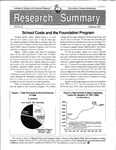
School Costs and the Foundation Program
Matthew Berman and Eric Larson
Alaska's public school system today is a much different and costlier system than it was 20 years ago. This summary provides an overview of an examination undertaken by ISER on behalf of the Alaska Legislature. The aim of this investigation was to assess how the state's Public School Foundation Program could be more equitable for taxpayers and school districts. We studied changes in the major categories of school operating costs over the past two decades. Those costs recur year after year and account for most of total school district spending. They include costs of instruction and pupil support (libraries for instance); general support (administrative functions); and operations and maintenance of school buildings. We did not analyze capital costs, which normally make up a small part of total school costs and are different each year. This summary is based on "Education Equity and Taxpayer Equity: A Reveiw of the Alska Public School Foundation Funding Program" by Matthew Berman and Eric Larson.
-
Alaska's Plea Bargaining Ban Re-evaluated
Teresa White Carns and John Kruse
This article summarizes the findings of the Alaska Judicial Council's most recent evaluation of Alaska's ban on plea bargaining. The study found several major differences between Alaska's pre-ban practices and current practices that could be directly attributed to the ban. First, the standard for screening of cases was tightened immediately after the ban was announced, resulting in an increase in the number of cases not accepted for prosecution. According to most persons interviewed, the present screening policy is a positive influence on the quality of cases and a useful tool for prosecutors. The Alaska Judicial Council recommends that the present high standard for screening be maintained. If extra time is needed for screening cases in some situations (especially in rural areas), that need could be finally recognized in the wri tten policy guidelines. A second major effect of Alaska's 1975 ban on plea bargaining involved a dramatic shift in responsibility for the sentencing of convicted defendants. Before the ban, the prosecutor and the defense attorney commonly agreed upon a specific sentence in exchange for the defendant's plea of guilty or nolo contendere. The judge would then be asked to approve the deal. The Judicial Council found that routine sentence· recommendations for a specific sentence were virtually eliminated soon after the ban and have not returned. As a result, most defendants today are sentenced by a judge at an open hearing with participation by the prosecutor, defense, and presentence reporter. Thus, responsibility for determining the sentence rests primarily with the judge, who makes an independent decision, but also benefits from the participants' input. A third major finding of the Judicial Council's study was that charge bargaining (charge reductions and dismissals) was substantially curtailed for several years after the original plea bargaining ban; but it has become steadily more prevalent since the mid 1980s. Attorneys and judges attribute the change to a combination of circumstances, including changes in personnel in the Attorney General's office and local District Attorney offices, the changes in the criminal code structure, and the reduced resources available for the prosecution of cases after the middle of 1986. It appears that the legal community's perception of the current prosecutorial practices related to charge bargaining is substantially at odds with the Attorney General's written policy that prohibits charge bargaining. The Attorney General's current policy prohibits a prosecutor from agreeing to reduce or dismiss charges in exchange for the defendant's plea of guilty (an exception applies in some types of multiple count cases, where the prosecutor may dismiss some counts if the defendant pleads to the "'essence' of the conduct engaged in"). The Judicial Council takes no position with respect to the practice of charge bargaining, but recommends that the written policy and the actual practice be consistent to avoid confusion in the legal community and the public. Thus, the Attorney General may wish either to reiterate the present policy as written and encourage its application in practice, or he may prefer to incorporate the existing practices into his policy. Fourth, the Judicial Council found that sentences increased substantially in length in the years after the ban, and that the likelihood of a jail sentence increased for most offenders. These increases probably resulted more from increased societal concern with crime and willingness to allocate significant resources to law enforcement, courts and corrections than from the ban on plea bargaining or presumptive sentencing alone. However, because it is apparent that presumptive sentencing is one of several factors that has led to overall longer sentences and a much larger prison population, the Judicial Council recommends that some aspects of the presumptive sentencing scheme be reconsidered. Specifically, the Council recommends that the Legislature, through the Alaska Sentencing Commission, thoroughly evaluate existing and proposed sentencing provisions to compare the relative seriousness of offenses, and carefully consider the full range of costs associated with new sentencing proposals. By ranking the seriousness of each offense in relation to other offenses and possibly tying each sentence to a more narrowly-defined offense, legislators and practitioners will benefit from increased specificity in sentencing. By understanding the full range of costs associated with new sentences, Alaskan legislators may be able to avoid the virtually unsolvable prison overcrowding problems found in so many other states. A fifth finding, related to sentencing, was that appellate review of sentencing by the Alaska Court of Appeals and Alaska Supreme Court has resulted in comprehensive case law guidelines for most offenses and benchmark sentences for several types and groups of offenses. The appellate courts' decisions reflect the legislative mandate for greater fairness and uniformity in sentencing, especially those decisions that use the principles of the presumptive sentencing structure to interpret non-presumptive sentencing statutes. The Judicial Council recommends that the Legislature, through the Alaska Sentencing Commission, examine the various benchmarks set by the appellate courts to determine first whether there is sentencing law in those decisions that would be more effectively addressed by statutes, and second, whether the benchmarks and sentencing criteria could be summarized in a form that would make them easily accessible to judges, attorneys and the public.
Printing is not supported at the primary Gallery Thumbnail page. Please first navigate to a specific Image before printing.