-
Village Wind Diesel Hydrogen Report
Steve Gilbert and Steve Colt
The cost of energy in hub and satellite villages has long been a major contributor to the cost of living in rural Alaska. Wind energy currently displaces a portion of the diesel fuel used for power generation in 5 Alaskan villages; Kotzebue, Selawick, Tooksook Bay, Wales and Saint Paul Island. Numerous other villages are being considered as potential sites for integration of wind generation into the diesel electric system. Wind diesel electric systems are showing promise as sources of long term flat priced electricity for village power needs. Since the price of wind doesn’t change the cost of the wind generated component of electricity is not subject to fuel price volatility. As with any renewable energy the upfront capital cost is higher than diesel engines. Wind diesel alone however, does not address the broader energy needs of rural communities. Fuels such as gasoline, diesel and heating oil have to be transported to the village. This report explores the potential of using wind to produce hydrogen for transportation and heating fuels at a small, 400 person and large, 4000 person village.
-
Alaska National Guard Subsistence Survey
Oliver Scott Goldsmith, Mary Killorin, Patricia DeRoche, Meghan Wilson, Uyuriukaraq Lily Ulran, and Caroline Schultz
-
The Economic Importance of Alaska Labor Union Pension Funds
Scott Goldsmith
Labor union retirees could choose to live anywhere and those that remain in Alaska and collect their pensions in Alaska add to total economic activity. Pension distributions are one important source of purchasing power that flows into Alaska supporting households and generating income and jobs in a wide range of economic sectors. In this way union pension payments are similar to the wages paid in our natural resource export industries like petroleum, mining, and fishing and to the distributions made through the Permanent Fund Dividend program. All of these bring new money from outside the state into Alaska where it becomes income for Alaskan households. When these households then spend this income, sales, jobs, and payrolls are generated in trade, services, construction, and other sectors of the local economy. As these dollars re-circulate through the local economy, additional sales, jobs, and payroll are generated through the process known as the multiplier. The size of the annual infusion of purchasing power into the economy from labor union pension funds, although modest in comparison to some other sources, is not insignificant. For example, in 2004 the union pension fund infusion of $147 million was about one-quarter as large as the distribution from the Alaska Permanent Fund. It was about 50 percent larger than the payroll of the mining industry.
-
The Foraker Group Report on the Alaska Nonprofit Economy
Scott Goldsmith
The nonprofit sector comprises those nongovernmental organizations, commonly known as 501c corporations, that are exempt from the federal corporate income tax. As such, they are a large and very diverse group, as reflected in the different categories identified in the federal tax code. Although comprising a broad array of activities, the entities in the nonprofit sector can be characterized by the following six characteristics: First, they serve some public purpose and contribute to the public good. Second, they involve some voluntary participation, typically in the form of a board of directors, but often involving voluntary labor as well. Third, they are self-governing—meaning that they have internal controls that are not governed by outsiders. Fourth, they are not dedicated to generating profits for their owners through their activities, except that excess revenues may be reinvested in the mission of the organization. Fifth, they are institutionally separate from the government. And finally, they are organizations which typically secure legal standing as corporations chartered under state laws. This allows them to enter into contracts and carry on other functions. However, it is not necessary for a nonprofit to be chartered in this way. (The informal nature of many nonprofits makes it difficult to track and measure the total importance of the sector.) This report is the first attempt to provide a comprehensive description of the nonprofit sector in Alaska. It is based upon a diverse collection of state and national data sources pieced together to create a comprehensive picture of the scope and importance of nonprofits.
-
The Gas Reserves Tax Ballot Initiative: Risky State Policy
Scott Goldsmith
Alaska voters will decide whether the state government should start taxing the natural gas reserves in the two largest North Slope gas fields. The idea behind the proposal is to jump-start construction of a gas pipeline. The North Slope has one of the largest accumulations of natural gas in the U.S., and Alaskans have been waiting a long time for a pipeline to carry that gas to market. Recent higher gas prices have made the project more attractive. Several oil companies hold leases on the gas. They’ve taken steps toward a pipeline—like negotiating fiscal terms with the state—but they haven’t committed to building one. Supporters of the reserves tax think they’re delaying the project (for various possible reasons) and should be pushed. The ballot proposal calls for the oil companies to pay a reserves tax—a tax on gas in the ground—until a pipeline is completed and North Slope gas is up for sale. It offers incentives for them to speed up the project: the sooner the pipeline is finished, the less they pay; and later they would recover some of what they did pay, in credits on gas production taxes. This report is summarized in the fifth Fiscal Policy Note which is included with this document record.
-
$1.5 Billion and Growing: Economic Contribution of Older Alaskans
Scott Goldsmith and Jane Angvik
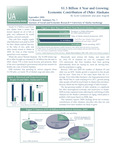
Nearly $1.5 billion a year flows into Alaska from a source that doesn’t depend on oil or fish or gold, isn’t influenced by world markets, and isn’t seasonal. That cash flow roughly equals what fishermen were paid in 2005 for their Alaska seafood harvests, or the value of zinc, gold, and other metals mined in Alaska in 2004. It’s close to what tourists spend here every summer. What’s the source? Retired Alaskans. The 52,000 retirees age 60 or older brought an estimated $1.46 billion into the state in 2004. About 75% is from Social Security and pensions. Most of the rest is spending by governments and private insurers for health-care costs of retired Alaskans. ISER estimates that spending by retirees supports about 11,700 jobs—or nearly 4% of Alaska’s wage and salary jobs. This summary reports ISER’s findings about the economic contributions of older Alaskans, describes who they are, and estimates how their numbers are likely to grow.
-
Alaska's $5 Billion Health Care Bill - Who's Paying?
Scott Goldsmith and Mark Foster
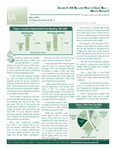
Spending for health care in Alaska topped $5 billion in 2005. Just how big is $5 billion? It is, for perspective, one-third the value of North Slope oil exports in 2005—a year of high oil prices. It’s nearly one-sixth the value of everything Alaska’s economy produced last year. In 1991, health-care spending in Alaska was about $1.6 billion. Even after we take population growth into account, spending for health care increased 176% per Alaskan in 15 years. These soaring costs are taking a growing share of family and government budgets, increasing labor costs, and putting businesses at a competitive disadvantage.
-
The Case for Strengthening Education in Alaska
Alexandra Hill, Lee Gorsuch, and Pamela Cravez
Alaska’s public education system has been transformed since Alaska became a state. Opportunities for education have been expanded in many ways and many places. But at every level, from pre-school on up, the education systems in Alaska and the U.S. have serious troubles. Many American children don’t have access to early education; can’t do math and science as well as those in other countries; can’t pass basic reading, writing, and math tests; and don’t finish high school. Boys are less likely than girls to go on to college. And in Alaska, there are fewer early-education programs than nationwide. Elementary and high-school students— especially Alaska Natives and those from low-income families—are falling below U.S. averages. Since statehood, Alaska’s education system has grown and improved enormously. But the remaining challenges are also very big. Alaska has the resources to deal with those challenges, and some efforts are in fact already underway. The question now for all Alaskans—not only educators and parents—is this: how do we come together to create what our state and our children need?
-
The Economic Benefits of Public Transportation in Anchorage
Mary Killorin, Eric Larson, and Scott Goldsmith
Public transportation in Anchorage benefits transit riders and the entire community in many different ways: All forms of transit provide access to jobs, medical services, social services, shopping, recreation, and participation in the community. This enables more people to work and to spend more in the local economy. The bus system, AnchorRIDES, and Share-A-Ride (including the Van Pool) programs enable many car owners to use these alternatives instead of driving. This reduces the number of vehicles on the roads and, consequently, the costs of traffic congestion, pollution, traffic collisions, parking, and traffic services. People Mover and AnchorRIDES buses also provide essential low-cost transportation services for workers, students, tourists, low- income residents, people with disabilities, and elderly residents. This improves the quality of life and economic well-being of these groups. Public transit also contributes to economic development, improved environmental quality, better public health, land use, and improved quality of life. This report describes and quantifies many types of public transit benefits. Sections II and III provide an overview of the current level of transit services. Sections IV, V, and VI present the estimation of benefits to users, society, and the community. Section VII discusses how benefits would increase as a result of different types of ridership increases. Section VIII presents a calculation of the economic significance of the inputs used in the operation of the transit system.
-
Economic Impacts of BSAI Crab Rationalization on Kodiak Fishing Employment and Earnings and Kodiak Businesses: A Preliminary Analysis.
Gunnar Knapp
This study was requested by the City of Kodiak to analyze how crab rationalization has affected crab fishing jobs and earnings of Kodiak residents and sales of Kodiak businesses. The study is limited to these issues. It does not address many other important issues raised by crab rationalization. There are significant challenges in studying economic effects of crab rationalization on Kodiak. There are important differences between crab fisheries, and within each fishery there are differences in boat sizes, vessel ownership, quota allocation, and many other factors which affect how quota is fished. Many factors besides rationalization affect crab fisheries, and many factors besides crab fisheries affect Kodiak’s economy—making it difficult to identify the specific effects of crab rationalization on Kodiak. Since rationalization began in the 2005/06 season, there have been very rapid and dramatic changes in the crab fisheries. Between the 2004/05 and 2005/06 seasons, vessel registration declined by about two-thirds for the Bristol Bay Red King Crab (BBR) fishery and by about one-half for the Bering Sea Snow Crab (BSS) fishery.1
-
Socioeconomic Review of Alaska's Bristol Bay Region
Marie Lowe
This report provides a “desktop” socioeconomic and sociocultural review of the Bristol Bay Region prepared for the North Star Group by the Institute of Social and Economic Research (ISER) at the University of Alaska Anchorage. Using secondary sources, the report characterizes the local population and its history by examining events that have influenced social change and how locals have adapted to that change. It reviews current social and economic issues in the region to provide a context for potential future mining development. Part 1 presents a regional overview with a description of Bristol Bay’s cultural history, demography, economy, institutions, and development context. Part 2 provides a more detailed overview of Bristol Bay’s sub-regions, accompanied by statistics about participation in subsistence activities, commercial fishing and other employment, and local use of public assistance.
-
Rose Urban Rural Exchange Program Evaluation 2006 Teacher Training Part 1
G. Williamson McDiarmid and Rosyland Frazier
-
Rose Urban Rural Exchange Program Evaluation 2006 Sister School
G. Williamson McDiarmid, Rosyland Frazier, Alexandra Hill, Darla Siver, and Meghan Wilson
-
Effects of Rising Utility Costs on Alaska Households 200 - 2006
Ben Saylor and Sharman Haley
Households in remote rural places face utility costs 50% higher now than in 2000. In Anchorage those costs are up 35% and in other large or road-system communities about 39%. The share of household income going to utilities is also up. Utility costs in urban and rural areas are now anywhere from about 3% to 10% of income for the typical household. Those are median figures for all households. Utilities take a much bigger share of income among low-income households. Utility costs now amount to more than a third of income among low-income households in remote places. These are among the findings of an ISER analysis of how rising energy prices have increased utility costs for Alaska households since 2000.
-
BBNA Pebble Mine Technical Assistance Project - FInal Report (Volumes I-III)
Suzanne Sharp, Steve Colt, Steve Langdon, and Meg King
This report summarizes and incorporates various materials prepared for the Bristol Bay Native Association (BBNA) under contractual agreement with the Institute o f Social and Economic Research (ISER) o f the University of Alaska Anchorage (UAA). The project is known as the BBNA-UAA/ISER Pebble Mine Technical Assistance Project. The project period was September l, 2005 through November 30, 2006. The Pebble Mine Technical Assistance Project was funded by U.S. Department of Environmental Protection through the Indian General Assistance Program (!GAP) for Alaska Native tribes. The funding was provided to the Bristol Bay Native Association through an "unmet needs" grant designed to provide technical assistance to the Bristol Bay tribes and tribal members in addressing environmental quality and subsistence issues associated with the proposed Pebble Mine project. The proposed Pebble Mine would be located in the Kvichak River drainage, home of the world's most productive sockeye salmon fishery and possibly draw water from the Nushagak-Mulchatna River watershed as well. This proposed development raises major issues related to environmental quality o f the lands and waters customarily utilized by Bristol Bay tribes situated in the Kvichak and Nushagak-Mulchatna River drainages. Bristol Bay tribal members from local communities in the vicinity of the proposed Pebble Mine project make substantial subsistence use of natural resources in the area which sustain the nutritional, economic, social and cultural health of tribal members. The purpose of the project was to provide technical assistance to the tribes to allow them to fully comprehend the nature of the Pebble Mine project and its potential impacts on the environment and their subsistence uses, and to enhance their capacity to fully participate in the review and permitting process should permits to develop the Pebble Mine be sought. The purpose of participation is to insure that protection for the environment and subsistence uses that depend on a healthy and productive ecosystem are fully addressed in the project review process.
-
Task 1 and 2 Reports to the Regulatory Commission of Alaska: Affordability Factors and Affordability Standards
Bradford Tuck and Lisa Schwartzberg
Because affordability is essentially an issue of fairness, or equity, it is ultimately the task of the public policymaker to define “affordability” and to indicate factors to be considered in measuring “affordability.” We look first at factors that might be considered in discussing affordability. The FCC has addressed the issue of affordable universal service in some detail and has suggested principles that should be taken into account when policymakers attempt to determine affordable rates for telephone service. Major portions of that discussion are incorporated into Section II of the Task 1 report. Identification of potential variables that might be used to measure the factors influencing affordability is contained in Section III, and is organized around identified factors. Additional material is included in the appendix. Consideration of alternative affordability standards is incorporated in the present report, as well as suggestions we received from carriers in Section IV. Summary comments and observations are presented in Section V. Task 2 collected and analyzed a broad range of data, including extensive information from the 2000 U.S. Decennial Census and other U.S. sources, data from the Regulatory Commission of Alaska, survey results from Alaska Local Exchange Carriers, and other state sources.
-
Economic Development Through State Ownership of Oil and Gas: Evaluating Alaska's Royalty-In-Kind Program
Matthew Berman
Government owners of petroleum subsurface rights often face constituent pressure to exercise control over the disposition of these resources in pursuit of economic development objectives. At the same time, states cannot simply dissipate the potential rent from their resources without losing a principal revenue source. The paper takes a retrospective look at the state of Alaska's policies and programs regarding disposition of oil and gas resources, focusing on the evolution of the royalty-in-kind program. It examines the relative success of different programs in achieving objectives of import substitution and value-added export relative to the cost in foregone revenue. The analysis leads to general conclusions about programs of this type, along with specific insights as the state prepares to embark on the biggest test yet related to the disposition of North Slope natural gas. Prepared for presentation to the Western Regional Science Association Annual Meeting, San Diego, California.
-
Evaluation of the Alaska Interagency Aviation Safety Initiative
Matthew Berman, Stephanie Martin, and Alexandra Hill
Aviation crashes are the leading cause of occupational fatalities in Alaska. From 1990 through 1999, aviation crashes in Alaska caused 106 work-related pilot deaths. This rate is nearly five times the rate for U.S. pilots as a whole.1 In 2000, Congress passed legislation aimed at reducing the number of occupational aviation fatalities in Alaska by 50 percent for the years 2000 through 2009. This legislation created an interagency initiative—the Alaska Aviation Safety Initiative—to improve safety in Alaska through the combined efforts of the Federal Aviation Administration (FAA), the National Transportation and Safety Board (NTSB), the NOAAs National Weather Service (NWS), and the National Institute for Occupational Safety and Health (NIOSH). The final Initiative tasks require the agencies to evaluate the programs created to promote aviation safety in Alaska. To that end, NIOSH contracted with the Institute of Social and Economic Research (ISER) at the University of Alaska Anchorage (UAA). The following report looks at programs, infrastructure changes, accidents and accident rates between 1997 and 2004. It addresses the following questions: • Has flying become safer in Alaska? • Which types of flying (e.g., general aviation, commuter vs. air taxi flights) are the most risky, and which have shown changes in safety? • Where in Alaska is it most risky to fly? Has this changed? • To what extent can the data show that specific programs are associated with improved safety?
-
Evaluation of the Outcomes in Three Therapeutic Courts
Teresa White Carns, Susan McKelvie, Jenny Miller, Emily R. Marrs, Cassie Atwell, and Stephanie Martin
The legislature asked for this report when it created the Anchorage Felony DUI Court and the Bethel Therapeutic Court. The Department of Health and Social Services, Division of Behavioral Health, funded the evaluation at the request of the governor. Thus it is a report that exemplifies inter-branch collaboration on an important policy issue in the criminal justice system.
-
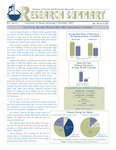
Low Cost, Reliable Power: How Does Anchorage Compare?
Steve Colt
Costs of doing business in Alaska remain generally high, but the low cost and reliability of electric power in Anchorage has been a bright spot on the economic landscape—thanks largely to abundant supplies of natural gas from Cook Inlet and to creation of a unified power grid for the railbelt. This research summary presents data on the changing cost and reliability of electric power from Municipal Light and Power (ML&P)—one of Anchorage’s two electric utilities—from 1960 through 2004. It concludes with a brief discussion of the outlook for the utility, given rising natural gas prices.
-
The Contribution of ANILCA to Alaska's Economy
Steve Colt
This paper presents an assessment of the economic contribution of ANILCA and ANILCA-protected ecosystems to Alaska’s economy. I consider the links between the conservation units designated by the Act and a healthy Alaska economy. The paper consists largely of synthesis and application of existing data and research. It does not consider global ecosystem services or other values that are not currently captured within the Alaska economy. ANILCA was a one-time “natural experiment.” It is not possible, therefore, to observe how the Alaska economy would have evolved absent ANILCA. This makes it difficult if not impossible to say that the Act itself “caused” much of anything. Instead, the best we can do is to say that the data are consistent – or inconsistent -- with certain broad hypotheses and conclusions.
-
Spending Patterns of Selected Alaska Bear Viewers: Preliminary Results from a Survey
Steve Colt and Darcy Dugan
The Institute of Social and Economic Research (ISER) at the University of Alaska Anchorage developed and conducted a Web-based survey of 219 traveling parties who went on a bear viewing excursion from the Homer area during the summer of 2004. All of the bear viewing excursions were taken with one business. The survey was developed in February 2005 and administered over the Web during the period 11 February through 2 March 2005. Respondents were contacted by individual email messages using email addresses that they had voluntarily provided at the time of their excursion. Most bear viewers (69%) in the sample come from lower-48 U.S. states. About 20% come from foreign countries. Only about 10% come from Alaska. About one-third of the respondents stated that bear viewing was the primary purpose of their trip to Alaska. People in the sample spent an average of about 17 days on their trips – far longer than the overall Alaska summer tourism average of about 10 days.
Printing is not supported at the primary Gallery Thumbnail page. Please first navigate to a specific Image before printing.