-
Salmon Fish Traps in Alaska: An Economic History Perspective
Steve Colt
Salmon return faithfully to their stream of birth and can be efficiently caught by fixed gear. But since the introduction at the turn of the century of fish traps to the emerging Alaska commercial salmon fishery, most territorial residents fought for their abolition even while admitting to their technical efficiency. The new State of Alaska immediately banned traps in 1959. I estimate the economic rents generated by the Alaska salmon traps as they were actually deployed and find that they saved roughly $4 million (1967 dollars) per year, or about 12% of the ex-vessel value of the catch. I also find strong evidence that the fishermen operating from boats earned zero profits throughout the 20th century. Thus the State's ban on fish traps did allow 6,000 additional people to enter the fishery, but did nothing to boost average earnings.
-
Simple Fiscal Outlook Model for Rural Alaska Communities
Steve Colt
The Northwest Arctic Borough (NAB) faces a growing population and increased demands for education and public services. At the request of the Assembly, I have prepared a fiscal planning model that can be used to explore what might happen to the Borough's revenues and expenses over the next 20 years. The model looks at both general government and the NAB School District (NABSD). The model allows us to ask "what if....?" questions and get quick answers about how things might change. These cases demonstrate that if the Borough issues new debt that is considered to be "in lieu" of existing cash contributions to the School District for deferred maintenance, then it can cause a large decrease in foundation funding to the School District and would require significant additional school budget cuts. (The case presented already assumes continual tightening of the instruction budget.) Obviously there are variations on the assumptions presented here for Case 3 (new bonds) that would improve the foundation funding amounts. However the overall picture that seems to emerge is that without a continuation of local revenues passed through to the School District, the new bonds are not fiscally sustainable.
-
Kids Count Alaska 1998-1999
Norman Dinges, Claudia Lampman, and Shawna Ragan
How are Alaska’s children doing at the end of the twentieth century? Many are doing just fine—growing up healthy and safe. But others are not so fortunate. They live in poverty; they grow up without their fathers; they drop out of school; they have babies when they are children themselves. Too many—and even one is too many—die accidentally or intentionally. To help Alaska’s children, policymakers and others need reliable information about conditions affecting children. In the past decade or so, scientists have discovered that babies are born with the raw materials for brain development—about 100 million brain cells—but that most brain development happens after birth. What babies see, hear, touch, smell, and taste causes connections to form between brain cells. These connections are the wiring of the brain, allowing children to learn. Overall, scientists point out that we still have much to learn about the brain. But there is strong evidence about both the potential and the vulnerability of young children’s minds. To give children the best chance at life, adults must try to create safe, loving, interesting worlds for them.
-
Achieving Alaska Native Self-Governance: Toward Implementation of the Alaska Natives Commission Report
Victor Fischer, Thomas Morehouse, Stephen Cornell, Jonathon Taylor, and Kenneth Grant
Renewed attention recently has been focused on Alaska’s Native communities. News accounts, government reports, and academic studies make it clear that Native communities continue to struggle with serious socioeconomic problems despite extensive federal and state programs designed to address them. The public debates arising out of the U. S. Supreme Court’s decision in the Venetie case, the formation of the governor’s Rural Governance Commission (not to mention previous commissions), and continuing subsistence conflicts highlight unresolved questions about what Native, state, and federal institutions should do to address the problems of village Alaska. Finally, the recent Alaska Inter-Tribal Council (AITC)-Rural Alaska Community Action Program (RurAL CAP) Conference of Tribes and the subsequent march, rally, and declaration illustrate continuing Native resolve to address the problems them- selves. Clearly there is consensus that Native problems need urgent attention, but there is less agreement on what is to be done. A central issue in this debate concerns Native self-governance. Can Native self-governance do a better job of dealing with Native problems than non- Native efforts have done? What should be the extent of such governance? What forms should it take? This report considers these and related questions. Please note that this version of the report differs from previous version in that it removes the authors recommendations, as this task is being taken on at the organizational level by the AFN.
-
AFN Implementation Study: Proposals to the United States Congress to Implement Recommendations of the Alaska Natives Commission Pursuant To P.L. 104-270
Victor Fischer and Pete Spivey
The AFN Implementation Project is part of a continuum of reports highlighting the critical situation of Alaska Natives and proposing actions to address problems. Each report, each hearing, each resolution, each act is built on what came before and is a step toward resolving problems and meeting the aspirations of Alaska's Native peoples.The AFN process found that although most previously identified social, cultural, and economic problems persist, progress is being made. Innovations are coming about in areas of self-governance, education, delivery of health and other services, and other endeavors. Such progress has come about through both the efforts of Alaska Natives and the support provided by the Congress and federal agencies. Yet, social and economic needs remain tremendous, and it is toward meeting these that the AFN process has been directed. This report has a strict focus on recommendations. So as not to detract from this focus, we hold explanations to a minimum. Background and related research material are not presented here. They are available and will be marshaled as needed to back up and implement specific proposals.
-
Alaska's Gross State Product, 1961-1998
Scott Goldsmith
Alaska gross state product declined by $.5 billion in 1997 and $3.5 billion in 1998 after 3 years of growth. Gross state product measured in current dollars is useful for comparing the contribution of different sectors to total gross state product at a particular point in time. However since Alaska gross state product is dominated by petroleum, and heavily influenced by the production of other commodities which fluctuate in price over time, both the size and composition of gross state product in current dollars can change substantially from year to year independent of the change in the overall level of economic activity as measured either by employment or payroll. Much of this fluctuation is the result of changes in the prices of a few commodities including oil, gas, zinc, and seafood.
-
Safe Landing: Charting a Flight Path Through the Clouds
Scott Goldsmith
Everybody’s got an idea about where to find the roughly $1 billion we’ll need to balance the state budget every year from now on. It’s hard to evaluate these proposals, because the budget is complicated—and it’s hard to imagine how much $1 billion really is. This paper looks first at why some popular ideas can’t raise $1 billion a year, although they can certainly help. Then, in the foldout, we try to help Alaskans see through the clouds obscuring the “Safe Landing” strategy, which we first talked about in 1992. This strategy says that dealing with such a big deficit requires using a combination (and there are a number of possible combinations) of budget cuts, windfalls, Permanent Fund earnings, new taxes, and economic development.
-
Economics of Sport Fishing In Alaska
Scott Goldsmith, Sharman Haley, Matthew Berman, Hong Jin Kim, and Alexandra Hill
Sport anglers reeling in salmon, halibut, and other fish generated—both directly and indirectly—an estimated three percent of jobs and payroll in Alaska in 1993. This is one of the findings of a study of the economics of sport fishing that ISER did for the Alaska Department of Fish and Game. Sport fishing is enormously popular with residents and visitors. The Department of Fish and Game estimates that nearly half a million anglers fished in Alaska in 1997, with numbers of visiting anglers slightly edging Alaskan anglers. Seven out of ten Alaska households have at least one sport angler. Nearly half of Alaska’s households rate hunting and fishing opportunities as important reasons why they live where they do. The department contracted with ISER to do this study because the economics of sport fishing in Alaska is an important consideration for resource managers allocating fish stocks, evaluating fishery projects, and making decisions about land and water management. The analysis is based largely on information we collected in surveys of sport anglers and guide and charter businesses in 1993 and 1994.
-
Cross Cultural Issues in Village Administration: Observations on Water and Sanitation Operations and Management in Western Alaska
Sharman Haley and Taylor Brelsford
The villages of Western Alaska are in various stages of transition from hauling water and human waste by hand, to technologically sophisticated Arctic design piped systems. The transition involves not only technological change and adaptation, but also the development of new institutions and work relations appropriate to the administration and management of complex systems. The implicit norms of these new institutional relations and culture of work are based in Anglo-Saxon Protestant culture; in very many respects these norms are alien to traditional Yup'ik Eskimo people. Bi-cultural Natives are in a unique position to meet these challenges and facilitate the transition by modeling an adaptive synthesis of the two cultures, providing culturally sensitive leadership, and facilitating relations between villages and outside agencies.
-
An Assessment of Safety Belt Use In Alaska - 1999
Virgene Hanna
During July , August, and early September of 1999, safety restraint use by both the driver, and the outboard passenger in passenger cars and trucks was recorded and analyzed. In the sample area, covering 85 percent of the state's population, 64 percent of vehicles had either the driver or the passenger or both wearing a restraint. This compares with 63 percent in 1998. Of all the drivers and all the passengers observed, 61 percent of drivers and 60 percent of all outboard passengers were wearing seatbelts. This Drivers and outboard passengers of pickup trucks and recreational vehicles were much less likely to be wearing their seatbelts. The same techniques used for observing vehicles were used for observing motorcycles. Areawide, 51 percent of the drivers of motorcycles were wearing helmets. It is important to note that survey results pertain to the driver and outboard passenger in a probability sample of vehicles drawn from the most settled areas of Alaska. Included in this area are the Municipality of Anchorage, the MatanuskaSusitna Borough, the Juneau Borough, the Kenai Peninsula Borough, and the Fairbanks North Star Borough.
-
Alaska Wood Products Industry - 1998 Sawmill Survey
Alexandra Hill
This report is part of the proceeding from the USDA sponsored Alaska Value-Added Forest Products Workshop held in Sitka, Alaska in September 1999. In 1998, the Forest Service, University of Alaska Cooperative Extension Service, and the Alaska Department of Commerce jointly funded a survey of Alaska sawmills, which was conducted by the Institute of Social and Economic Research (!SER) at the University of Alaska Anchorage. This paper discusses the survey and its results. The 1998 survey covered mill capacity, employment, total production, production by type of product and export or domestic sale, log consumption by species and original timber ownership, chip and residue production, information on suppliers and customers, and several questionsabout the timber industry in general. It focused on data for calendar year 1997.
-
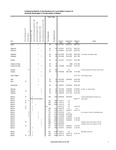
Historical Sketch of Elections for Local Control of Alcohol in Alaska Communities
Teresa Hull and Matthew Berman
This document provides tabulated information about elections in Alaska which had an option for Local Option Control of Alcoholic Beverages.
-

Gulf of Alaska Coastal Communities: An Overview
Teresa Hull and Eric Larson
The Gulf of Alaska Coastal Communities Coalition is helping Gulf Coast communities find ways to promote development and preserve lifestyles. To assist the Coalition, researchers at the Institute of Social and Economic Research have gathered and organized information for a selection of Gulf Coast communities. The information provides a basis for community residents, the Coalition, Native corporations, regulatory agencies, and others to make decisions about development in these communities. This report summarizes the assembled data and identifies patterns, trends, and significant exceptions in the data. The next section of this report (Part II) provides a broad overview of the entire Gulf Coast. Part III looks in more detail at each region. Part IV contains extensive tables with detailed information for each community. Throughout this report, the footnotes at the bottom of the pages refer to the tables in Part IV with more detailed information.
-
Alaska Salmon Ranching: An Economic Review of the Alaska Salmon Hatchery Programme
Gunnar Knapp
Beginning in the 1970s, at a time when wild salmon harvests were at historically low levels, the State of Alaska invested heavily in the establishment of salmon hatcheries for commercial salmon ranching. In 1995, more than 33 million salmon of hatchery origin were harvested in Alaska, mostly pink and chum salmon. This chapter review the experience of this Alaska salmon hatchery programme from and economic perspective, and suggests lessons of the programme for other sea ranching projects. The benefits of the programme have been reduced by a significant decline in salmon prices since the late 1980s. Commercial fishermen harvesting hatchery fish have benefited from the programme, but fishermen in other areas of Alaska may have been harmed to the extent that hatchery harvests helped depress prices. Many hatcheries are not viable without continuing state subsidies. The Alaska salmon hatchery programme is neither obviously an economic nor obviously an economic failure.
-
Effects of IFQ Management on Alaska Halibut Fishery
Gunnar Knapp
In 1998, the University of Alaska Institute of Social and Economic Research (ISER) conducted two telephone surveys of Alaska halibut fishermen about the effects of Individual Fishing Quota (IFQ) management of the Alaska halibut fishery. Funding for the surveys was provided by the Alaska Sea Grant College Program. There are 4 papers in this series covering study methodology, resource conservation, fishing safety, and unreported discards of halibut under IFQ management. Highlights: More than half of the respondents to both surveys answered "better" in response to the question "Compared with the old system, do you think that IFQ management is better, worse, or about the same for conservation of the halibut resource?" About one-quarter responded "about the same," while about 10% answered "worse." The great majority of halibut fishermen believe IFQs have made fishing for halibut safer. More than 85% of the respondents to both surveys answered "yes" to the question "Do you think IFQs have made fishing for halibut safer?" Responses were similar across vessel classes and 1997 harvest levels. Another question asked, "How much halibut do you think was caught and then discarded in 1997 without being sold or reported? Very little, some, or a lot?" Slightly more than half of halibut fishermen responded that "very little" halibut was caught and then discarded without being sold or reported, while about one-third answered "some" or "a lot." Respondents who gave positive responses about other effects of the IFQ program were much more likely to give a positive response about unreported discards.
-
Sustainability of Arctic Communities: An Interdisciplinary Collaboration of Researchers and Local Knowledge Holders
Jack Kruse
Just under four years ago, 23 researchers representing 8 natural and social science disciplines set out to examine how the combined effects of climate change, oil development, tourism, and government cutbacks might change the sustainability of Arctic villages in the range of the Porcupine Caribou Herd. In so doing, we stepped into the world of integrated assessment. We have been working with four communities: Aklavik, Fort McPherson, Old Crow, and Arctic Village. We have worked together to incorporate research and local knowledge-based understanding in a common tool - a synthesis model - to examine the sensitivity of relationships and assess levels of uncertainty. We are discussing with our partner communities possible futures, local policies, and the limitations of science and local knowledge to predict the future. Along the way, we have contributed to our disciplines by modeling vegetation changes, caribou population dynamics, local labor markets, mixed subsistence and cash economies, and oil field-caribou interactions. In many respects, we believe that the sustainability project is a model for a regional integrated assessment (IA). We attempted to build on solid, disciplinary science, and to develop simple, reduced form models that focus on only the relationships important to the finite set of questions we undertook to examine. We worked with stake holder groups directly to ensure the relevance of study questions, and we combined science and local knowledge. We focused on the value of assessments as a springboard for understanding alternative futures rather than trying to predict the future. While most IA's focus solely on climate change, we examine the effects of climate change in the context of other global changes that are important to Arctic residents. And, while most IA's focus on national and international abatement policies, we are researching local and regional policy options to mediate the effects of climate change and shape the impacts of other global changes to benefit Arctic residents. Our scale of analysis also allows us to explore ways to represent values in parametric terms without reducing them all to dollar terms. The high degree of interaction between disciplines and between researchers and community members provides a great incentive to work on developing ways to make relationships in our models more obvious. We can advance IA methods while addressing some of the most important issues facing Arctic communities. While we think that aspects of the Sustainability Project can serve as a model for integrated assessments, we also think that the lessons learned during the course of the project may be as valuable as its successes. We organized the project by discipline, and later learned that the most important relationships within a discipline are not necessarily the most important when integrating across disciplines. We constructed a synthesis model at the beginning of the project to promote integration, but found that researchers did not use the model because it was written with unfamiliar software. We were committed to focusing much of the project on discussions with communities rather than model building, by found ourselves working into the fourth year on modeling tasks. In this paper we report our successes and the lessons learned. We conclude that integrated assessment is an effective tool for promoting learning among researchers of different disciplines and between researchers and communities. IA is also useful for identifying major uncertainties and associated research needs.
-
Alaska Sustainable Gross State Product
Eric Larson
Over the past ten years, the idea of "sustainable development" has been promoted as a way to reconcile economic development and environmental protection. With this popularity has come many different -- and often conflicting -- definitions and interpretations of "sustainability." To help clarify the meaning of "sustainable development," this paper offers a very basic definition of sustainability. This particular definition is measurable and allows us monitor whether or not we are achieving sustainability. This paper presents the assumptions underlying the basic definition of sustainability and then describe the methods for measuring it using an indicator called "sustainable gross state product." Presented at the "Can the Last Frontier Have A Sustainable Future" conference in Anchorage, Alaska.
-
Changing Oil Industry: Will It Affect Oil Prices?
Arlon R. Tussing and Linda Leask
The petroleum industry is far different today from what it was two decades ago, when oil started flowing from Alaska’s North Slope. An important question in Alaska, where oil has driven economic growth and supported government since the 1970s, is what industry changes might mean for future oil prices. As ISER noted in 1998, Alaska is less vulnerable to low oil prices than it used to be, because the state government has invested much of its oil income to build huge financial reserves and has sharply cut spending. This paper explores a range of questions relating to consolidation of the companies developing Alaskan oil, and other changes to the terms under which this resource is developed.
-
Alcohol Control Policy and Native American Communities
Matthew Berman
There is a long-standing debate over the degree to which control of alcohol supply is effective or makes sense as a policy direction for prevention of alcohol and drug abuse. The arguments on both sides of the control-of-supply debate are probably familiar to most alcohol researchers. However, it may be useful to review some empirical studies relevant to prevention policy for Native American populations. The remainder of the paper begins with a brief review of studies measuring effects of price and availability on alcohol consumption among North American and European populations. Then the review moves to focus on studies of alcohol control among Native Americans. Much of this research generally challenges the idea that alcohol prohibition is likely to be an effective prevention strategy for most Native American communities. The paper next proposes a more complete model of drinking behavior that may reconcile the conflicting findings of the prevention literature and help frame questions of alcohol policy. The more complete model motivates a set of testable hypotheses about the effectiveness of alcohol control among American Indians and Alaska Natives. The concluding section discusses the implications for research on alcohol policy for Native Americans.
-
Sustainability and Subsistence in Arctic Communities
Matthew Berman
Thirty years ago, Chance (1966) wondered if hunting and fishing traditions of the people of the Arctic Slope of Alaska would survive the transition from nomadic to village life. The oil boom of the 1980s brought change to the region to an extent neither Chance nor Arctic dwellers themselves might have predicted (Knapp and Morehouse, 1991). Yet despite a vigorous wage economy fueled by two decades of oil revenues that yields a per-capita income exceeding the national average, subsistence traditions remain strong. Average per-capita harvest of subsistence foods in Alaska's North Slope Borough still exceeds a pound per day (Fuller and George, 1997). This document was prepared for presentation to the Western Regional Science Association annual meeting in Monterey, California
-
Reducing and Recycling Hazardous Materials in Alaska: A Summary of Selected Commercial Hazardous Waste Minimization Programs
Patricia DeRoche, April Relyea, Darla Siver, and Eric Larson
A wide variety of businesses, manufacturers, institutions, military posts, small businesses, and agencies in Alaska regularly handle hazardous wastes at their facilities. Many of these facilities have chosen voluntarily to provide information about their efforts to minimize hazardous wastes. The information they provide helps to encourage and to expand hazardous waste minimization efforts statewide. Furthermore, the information supports the state's efforts to work cooperatively with the U.S. Environmental Protection Agency to help businesses and agencies comply with federal hazardous waste guidelines.' The purpose of this report is to provide a summary of the information provided by facilities in Alaska. Our analysis is based on information reported by facilities in their "Waste Minimization/Pollution Prevention Supplements to Annual Hazardous Waste Reports" for the last three years. In addition we have conducted in-depth telephone interviews with selected oil and gas and govemment facilities to leam in more detail how they manage hazardous materials. This report expands in several ways on a study we completed last year. In this new study we've looked in more detail at the written responses of the pollution prevention reports; we've compiled data for more than one year; and we've analyzed the results of our telephone interviews with facilities to learn more about the unique characteristics of waste management. In Section II of this report, we describe the most common wastes handled by facilities based on their responses to the pollution prevention reports. InSection III, we describe the characteristics ofhazardous waste minimization assessments and plans based on responses in telephone interviews and the pollution prevention reports.
-
Environmental Guidance and Support for Small Businesses
Rosyland Frazier, Virgene Hanna, Mary Killorin, Eric Larson, Patricia DeRoche, April Relyea, Irma Schriener, and Robin Rogers
As part of an effort to help small businesses, the Small Business Development Center contracted with the Institute of Social and Economic Research (ISER) to conduct discussion groups to find out what representatives of small businesses believe are the most useful existing forms of help for meeting environmental protection requirements; and what additional compliance assistance they would like. This report summarizes what ISER learned from the discussion groups. It describes what business people perceive are the most useful forms of assistance and the most helpful delivery methods. This kind of information is crucial in determining the types of guidance, support, and counseling to offer businesses in the future.
Printing is not supported at the primary Gallery Thumbnail page. Please first navigate to a specific Image before printing.