-
Management Alternatives for the Guided Sport Fishery for Halibut off Alaska
Marcus Hartley and Scott Goldsmith
The domestic fishery for halibut in and off Alaska is managed by the International Pacific Halibut Commission (IPHC) as provided by the ""Convention Between the United States and Canada for the Preservation of the Halibut Fishery of the Northern Pacific Ocean and the Bering Sea" (Convention) signed at Washington March 29, 1979, and the Northern Pacific Halibut Act of 1982 (Halibut Act). The Convention and the Halibut Act authorize the respective North Pacific Fishery Management Council (Council) established by the Magnuson-Stevens Act to: "develop regulations governing the United States portion of Convention waters, including limited access regulations, applicable to nationals or vessels of the United States, or both which are in addition to and not in conflict with regulation adopted by the Commission. Such regulation shall only be implemented with the approval of the Secretary, shall not discriminate between residents of different States, and shall be consistent with the limited entry criteria set forth in Section 303(b)(6) of the Magnuson Stevens Act. If it becomes necessary to allocate or assign halibut fishing privileges among various United States fishermen, such allocation shall be fair and equitable to all such fishermen, based upon the rights and obligation in existing Federal law, reasonable calculated to promote conservation, and carried in such manner that no particular individual, corporation, or other entity acquires an excessive share o f the halibut fishing privileges ... [Halibut Act]." This document assesses the potential economic and social impacts of a proposed catch reporting system and/or some form of limitation on the growth of the halibut charter boat industry (lodges, outfitters, guides, and charter vessels) operating in waters off Alaska's coast.
-
Alaska's Economy and Population 1959-2020
Alexandra Hill and Scott Goldsmith
Understanding Alaska's economy and population helps us evaluate current and future transportation needs. This report summarizes how the economy and population have changed since Alaska became a state and how they are likely to change over the next 25 years.
-
Community Control of Alcohol in Alaska
Teresa Hull and Matthew Berman
Many of Alaska’s Native communities want alcohol out of their towns. Alcohol plays a part in everything from domestic violence to high rates of accidental death in rural areas. About 100 communities—mostly small villages off the highway system—have restrictions on selling, importing, or possessing alcohol. A few larger rural regional centers—including Barrow, Bethel, and Kotzebue—also have controls on alcohol. Gulkana on the Richardson Highway recently became the first community on a major highway to ban alcohol under state law. Both municipalities and unincorporated places can control the availability of alcohol under Alaska’s local option law. This paper looks at the status of communities under that law and briefly reviews the history of community alcohol control under state and federal law.
-
Timber Harvest and Wood Products Manufacture in Alaska - 1995 and 1996 Update
Teresa Hull and Alexandra Hill
This report provides information about the timber and wood products industry gathered from a variety of sources. It includes data for the entire state and for three regions within the state, and brings together previously available data on timber harvests and wood products exports, as well as new data derived from information ISER collected in surveys of loggers and wood processors. We hope the data will be useful for both public and private planning efforts, as well as informed policy debate over timber management and development of the forest products industry.
-
Going Private: The 1968 Sale of the Alaska Communication System
Douglas Jones and Bradford Tuck
Putting the Alaska long-distance system in private hands was a public policy success. Except for improved service for bush communities, the goals of the sale were all met or exceeded within 10 years. Problems with the adequacy, quality, and reliability of service persisted under RCA. Some problems can be traced to the ownership and management of RC - but the fast growth of demand; an uncertain regulatory environment; lack of a comprehensive telecommunications plan; and state intervention in the industry also contributed. This summary is based on Privatization of State-Owned Utility Enterprises: the Alaska Case Revisited Thirty Years Later, by Douglas N. Jones and Bradford H. Tuck.
-
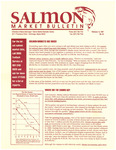
Alaska Halibut Markets and the Alaska Halibut IFQ Program
Gunnar Knapp
This report provides an introduction to Alaska halibut markets and how they are changing under the Alaska halibut Individual Fishing Quota (IFQ) program, which was implemented in 1995. Appendixes to the report provide a variety of halibut market data. Several general conclusions may be drawn about the relationship between future Alaska halibut harvests and fresh and frozen production and wholesale prices: • The higher the Alaska harvest volume, the higher will be Alaska production of both fresh and frozen halibut. • The higher the Alaska harvest volume, the lower will be wholesale prices of both fresh and frozen halibut. The fresh share of halibut production is unlikely to rise to the levels seen in Canada in recent years (more than 90% ). If Alaska were to produce this volume of fresh halibut, fresh wholesale prices would be substantially lower and frozen wholesale prices would be substantially higher--reducing the incentive for processors to supply fresh halibut.
-
Modeling Community Economic Impacts of the Alaska Halibut IFQ Program
Gunnar Knapp
In 1995 an Individual Fishing Quota (IFQ) management plan was implemented for the Alaska halibut fishery (Hippoglossus stenolepis). With annual catches in the 1990s ranging from 34 to 53 million lbs, valued between $60 million and $99 million, the Alaska halibut IFQ program represents by far the largest fishery for which the United States has adopted IFQ fishery management. How can we assess the individual and combined economic effects on Alaska fishing communities of the many different changes resulting from the IFQ program? Economists at the University of Alaska Anchorage Institute of Social and Economic Research (ISER) have developed a model for use in assessing community economic impacts of changes in fisheries harvests, markets and management. We refer to this model as the Fisheries Community Impact (FCI) model. In this paper, we use this model to look at changes between 1994 and 1995 in the economic impacts of the halibut fishery on five Alaska communities. These five communities-- Kodiak, Homer, Seward, Petersburg and Sitka--accounted for 53% of Alaska halibut landings in 1994 and 57% of total landings in 1995. For this paper, we use direct personal income earned by community residents in fish harvesting, fish processing, and supplying goods and services to the harvesting or processing industries as a measure of community economic impacts. The model may also be used to track employment impacts of fishing, as well as indirect "multiplier" effects on communities of fisheries income and expenditures. Because these effects are roughly (although not exactly) proportional to direct income impacts, for purposes of brevity and simplicity in this paper we describe only direct income impacts.
-
Summary of Greenstar Programs In Anchorage, Fairbanks, and Central Kenai Peninsula
Eric Larson
The Green Star® Program is a voluntary program created in 1990 to encourage businesses, schools, non-profit organizations, and government agencies to educate employees, reduce waste, conserve energy, and recycle materials. The program began as a cooperative agreement among the Anchorage Chamber of Commerce, the Alaska Center for the Environment, and the Pollution Prevention Office of the Alaska Department of Environmental Conservation. Since its inception, the program has expanded to include over 400 Alaskan business firms, government agencies, schools, and non-profit organizations employing over 60,000 people in Alaska. The program has also expanded to include chapters in several others states. This report is a summary of some of these cost-savings and benefits as reported by participants in the Green Star® programs in Anchorage, Fairbanks, and Central Kenai Peninsula. This summary is based on interviews with selected, knowledgeable participants in the programs -- including awardees, enrollees, and board members. This report also describes the current status of these three programs -- including the characteristics of the current membership, available financial resources, and long-term goals of the programs.
-
Summary of Selected Commercial Pollution-Prevention Efforts in Alaska
Eric Larson
Businesses and government agencies in Alaska recycle and reduce a wide variety of hazardous and non-hazardous wastes each year. A substantial component of their efforts are documented in "Waste Minimization/ Pollution Prevention Supplemental Reports" submitted by businesses and agencies to the Alaska Department of Environmental Conservation. These reports describe how facilities are meeting federal guidelines to reduce hazardous wastes. The purpose of this report is to provide a summary of information and feedback to facilities that handle these different types of wastes. Our analysis is based on the information businesses and government agencies have submitted to the Alaska Department of Environmental Conservation on the "Waste Minimization / Pollution Prevention Supplements to Annual Hazardous Waste Reports." For this study we analyzed a total of 121 supplemental reports submitted to the department in 1995 and 1996. The supplemental reports contain four sections: Section A: Steps taken to reduce and recycle hazardous wastes, Section B: Identifying and assessing opportunities for source reduction and recycling, Section C: Planning for pollution prevention, and Section D: Pollution prevention programs that include other waste streams. For each section of these supplemental reports, we have analyzed, described, and statistically summarized selected information submitted by facilities.
-
Teachers Planning Professional Development in a Reform Context: The Case of Kentucky
G. Williamson McDiarmid and Phillip P. Kelly
-
Northeast Asian Energy Development in a Global Perspective
Arlon Tussing, Samuel A. Van Vactor, John Tichotsky, and Ronald D. Ripple
-
Caveat Emptor: Purchasing Petroleum Industry Investment with Fiscal Incentives
Matthew D. Berman
Increasing international competition is encouraging governments to negotiate fiscal incentives with oil producers. The asymmetrical nature of information driving industry development decisions means that governments do not know how much they are paying with these incentives or what they are getting in return. This paper models renegotiating of fiscal terms for a petroleum prospect as an economic game. Nash equilibrium strategies are derived for the government and the developer for revising royalty rates, investment credits, and profit shares, The paper also addresses how the developer's strategic sharing of information may affect the outcome of negotiations. The model results suggest that governments should exercise caution with the use of discretionary incentives.
-
Defining Arctic Community Sustainability
Stephen Braund and Gary Kofinas
The question of defining sustainability is a subject of much discussion in the literature, with much of it centering on debates regarding the definition of the more controversial term "sustainable development." Part of this discourse has examined questions of the erosion of natural and social capital, the evolution and diversity of institutions, and the dilemmas associated with achieving a balance between economic growth and maintenance of environmental quality. Through our initial discussions, we recognized the legacy of failures associated with non-locals defining criteria of sustainability (and community well being) for northern peoples. We, in turn, responded to this problem by applying for supplemental funding from NSF to involve communities in our study. As a part of our grant, we proposed that we work with local community members to define appropriate community sustainability goals. In this summary, we present the results of our work – - a the list of the elements which are considered by locals to reflect the conditions for achieving Arctic community sustainability. In the first stage of the research, we worked with the communities of Arctic Village, Aklavik, Old Crow, and Kaktovik. Our effort to define community sustainability goals was completed through meetings of local organizations (e.g., hunters and trappers committee) and at project-sponsored workshops. We also met one-on-one with formal and informal local leaders to discuss the project and with them entered into discussions about the applications of the term sustainability in a northern community context.
-
Yukon-Kuskokwim Region Sanitation Utility Management Options Type I Market Feasibility Study
Steve Colt and Mary Forster
-
Working for Children: Kids Count Alaska
Norman Dinges, Rosyland Frazier, and Eric Larson
Many Americans are worried about children in the U.S. growing up in poverty, in broken homes, and in dangerous neighborhoods. Policymakers and others with responsibilities for children's well-being need reliable information about conditions affecting children. Alaska in 1990 had relatively few babies born with low birth weights (which can mean developmental problems later), with little regional variation. The share of children in poverty statewide in 1990 was 11 percent, but regional shares varied from 6 to 24 percent. More than one in five Alaska families were headed by single parents in 1990, with the regional share as high as one in three. Overall, we hope the indicators compiled and disseminated by Kids Count Alaska will become an important tool that Alaskans in public and private life can use in developing policies and programs to help children and families.
-
Kids Count Alaska 1996
Norman Dinges, Claudia Lampman, Fay Reilly, Genee Jackson, Jack Kruse, Rosyland Frazier, Eric Larson, Mera Atlis, Alexandra Hill, Barbara Minton, and Monette Dalsfoist
Between 1990 and 1995 the total population of Alaska increased about 12 percent, growing from 550,043 to 615,900. However, the number of children (18 and under) only grew about 9 percent, from 179,939 to 196,037. So the share of children in the population dropped slightly in the first half of the 1990s, from 32.7 percent to 31.8 percent. It was slower growth in the number of White children that caused the decline; numbers of children in other ethnic groups increased faster than the general population between 1990 and 1995.
-
Economic Projections for Alaska and the Southern Railbelt to 2025
Scott Goldsmith
In the 30 years between statehood and 1990, Alaska was dominated by petroleum-driven growth punctuated by a number of boom and bust cycles, each of which has brought the economy to a higher plateau of activity. Since 1990 the Alaska economy has moved into a period of slower growth because petroleum production-the source of half of state value added-is now in decline. Continued exploitation of petroleum resources, even as production declines, as well as growth in other basic industries such as tourism and mining, will help to offset this loss and stabilize the economy. But dependence on commodity- producing industries means that cycles in the petroleum, fishing, timber, and mining sectors will continue to generate business cycles at the state and regional levels. This series of reports continues from previous economic projections which used 2020 as the end date for its modeling.
-
Fiscal and Socio-economic Impact of Marginal Oil Field Development in Alaska: Does It Pay Its Own Way?
Scott Goldsmith
As oil industry interest turns toward Alaskan oil fields with higher unit costs of production and, consequently, lower state revenues per barrel, an important public policy question is whether these fields on state lands are able to "pay their own way." This is loosely defined to mean that the benefits to the state from the development of the publicly owned resource exceed the public costs associated with development. A related question is how much state tax and royalty policy can change in an attempt to stimulate marginal field development and still provide a net economic benefit to the state. This paper develops a methodology for analyzing the conditions under which an oil field development produces a net economic benefit to the state. The model calculates the public sector costs associated with field development and compares them to the public revenues generated by the oil production from the field. The methodology demonstrates that whether a project produces net economic benefits depends not only upon the characteristics of the economy, the characteristics of the oil field, and the existing or anticipated fiscal regime but also on the benefits and costs chosen for inclusion in the analysis. In particular, the question of which revenues and which costs to attribute to the development is an important determinant of the result. The paper presents an analysis using a hypothetical marginal oil field in Alaska as an example. This example demonstrates that using the definitions of costs and benefits commonly associated with other natural resource activities in the state, marginal oil field development is likely to be able to "pay its own way" under a variety of fiscal regimes. This paper was presented at the International Conference on Petroleum Fiscal Regimes in Anchorage, Alaska on May 3, 1996 .
-
Economic Impacts of the Kodiak Launch Complex
Alexandra Hill and Pershing Hill
The Alaska Aerospace Development Corporation hopes to build a commercial satellite launch facility on Kodiak Island during the next several years. The facility would launch small satellites and small to medium rockets into polar, low-earth orbits. It would be one of the few commercial launch facilities in the U.S. and would compete in a rapidly-growing market. MDC hired the Institute of Social and Economic Research (ISER) at the University of Alaska Anchorage to examine the potential economic impacts of such a facility. The economy of the Kodiak Island Borough depends heavily on the commercial fishing industry (including both seafood harvesting and processing) and on government (particularly the U.S. Coast Guard station at Kodiak). The proposed facility; to be known as the Kodiak Launch Complex, would not change the basic picture of the Kodiak economy.
Printing is not supported at the primary Gallery Thumbnail page. Please first navigate to a specific Image before printing.