-
Snapshot: The Home Energy Rebate Program
Oliver Scott Goldsmith, Sohrab Pathan, and Nathan Wiltse
Alaska’s state government has spent an estimated $110 million since 2008 for better insulation, new furnaces, and other retrofits for roughly 16,500 homeowners—10% of all homeowners statewide.1 That spending was under the Home Energy Rebate Program, which rebates homeowners part of what they spend to make their houses more energy-efficient and less expensive to heat.2 The state legislature established the current program in 2008, as energy prices were spiking. The Alaska Housing Finance Corporation (AHFC) administers it, and the Institute of Social and Economic Research and the Cold Climate Housing Research Center did this analysis for AHFC, assessing the broad program effects from April 2008 through September 2011. Changes in fuel use and heating costs reported here are estimates from AHFC’s energy-rating software; figures based on actual household heating bills aren’t currently available. The software uses house characteristics and location-specific information on weather and other factors to produce the estimates—but remember they are estimates.3
-
Shareholder Employment at Red Dog Mine
Sharman Haley and David Fisher
Under the Alaska Native Claims Settlement Act of 1971, Iñupiat of northwest Alaska organized as shareholders in the NANA1 Regional Corporation, Inc., and received title to 2,258,836 acres, including rights to the rich Red Dog zinc deposit. In 1982, NANA signed a joint-venture agreement with Teck2 to develop the mine, including provisions for preferential hire for qualified NANA shareholders. The agreement aimed for 100% shareholder hire by 2001. As of 2010, Teck had 220 NANA shareholders in full-time employment, which is 53 percent of the workforce. Other mines around the world have similar indigenous or local hire agreements with mixed success. The Voisey’s Bay mine sets the high mark for Canada with an Aboriginal hire rate of 54 percent (AETG 2008), followed by Ekati diamond mine at 50 percent (BHP Billiton 2011). So the track record for indigenous employment at Red Dog is high by global standards, although it falls short of NANA and Teck’s goal. What are the continuing barriers to increasing shareholder hire, retention and promotion?
-
Food System Assessment
Virgene Hanna, Rosyland Frazier, Khristy L. Parker, and Irena Ikatova
Food assessments are conducted for different reasons such as creating a more sustainable commercial food production system or to target particular policies. The main focus of this effort was to locate indicators that could be updated regularly so current information would be readily available and so that changes or trends could be monitored. Without knowing the current state of food-related indicators it’s difficult to make informed decisions about which issues and goals are priorities. We start with an overview of the food system model we used. Chapter 2 is a demographic overview of Alaska’s residents. The next five chapters present the indicators for each of the components of the food system. Chapter 8 contains the data we think would be need to develop a better picture of Alaska’s food system. The final section of this report is an index of the indicators: the name of the indicator, where the indicator appears in this report, the years of data included, the source (the agency or organization thatproduced the data), the source title for the data, and the location of the data, usually a Web address.
-

Kids Count Alaska 2011-2012
Virgene Hanna, Irena Ikatova, Patricia DeRoche, Kent Spiers, Darla Silver, Lily Sloth, and Erin Johnson
Kids Count Alaska is part of a nationwide program, sponsored by the Annie E. Casey Foundation, to collect and publicize information about children’s health, safety, education, and economic status. We gather information from many sources and present it in one place, trying to give Alaskans a broad picture of how the state’s children are doing and provide parents, policymakers, and others with information they need to improve life for children and families. Our goals are: • Distributing information about the status of Alaska’s children • Creating an informed public, motivated to help children • Comparing the status of children in Alaska with that of children nationwide, and presenting additional Alaska indicators (including regional breakdowns) when possible.
-

From Northern Village to Global Village
Heather Hudson
The digital divide, which originally signifed the gap between those with Internet acces and those without, now applies to broadband. As other software and applications, such as health records, government documents, and educational materials are moving to the cloud rather than being installed on local devices, people in developing regions will need affordable broadband to access them.
-
Toward Universal Broadband in Rural Alaska
Heather E. Hudson, Virgene Hanna, Alexandra Hill, Khristy Parker, Suzanne Sharp, Kent Spiers, and Kyle Wark
The TERRA-Southwest project is extending broadband service to 65 communities in the Bristol Bay, Bethel and Yukon-Kuskokwim regions. A stimulus project funded by a combination of grants and loans from the Rural Utilities Service (RUS), TERRA-Southwest has installed a middle-mile network using optical fiber and terrestrial microwave. Last-mile service will be through fixed wireless or interconnection with local telephone networks. The State of Alaska, through its designee Connect Alaska, also received federal stimulus funding from the National Telecommunications and Information Administration (NTIA) for tasks that include support for an Alaska Broadband Task Force “to both formalize a strategic broadband plan for the state of Alaska and coordinate broadband activities across relevant agencies and organizations.” Thus, a study of the impact of the TERRA project in southwest Alaska is both relevant and timely. This first phase provides baseline data on current access to and use of ICTs and Internet connectivity in rural Alaska, and some insights about perceived benefits and potential barriers to adoption of broadband. It is also intended to provide guidance to the State Broadband Task Force in determining how the extension of broadband throughout the state could contribute to education, social services, and economic activities that would enhance Alaska’s future. Results of the research could also be used proactively to develop strategies to encourage broadband adoption, and to identify applications and support needed by users with limited ICT skills.
-
Assessing Ecological Risk of Proposed Mines: Can Valid Assessments be Done Pre-Design?
Bob Loeffler
Large resource development projects take years to plan. During that planning time, the public frequently debates the potential benefits and risks of a project, but with incomplete information. In these debates, some people might assert that a project would have great benefits, while others might assert that it would certainly harm the environment. At the same time, the developer will be assessing different designs, before finally submitting one to the government permitting agencies for evaluation and public scrutiny. For large mines in Alaska, the government permitting process takes years, and often includes an ecological risk assessment. This assessment is a data-intensive, scientific evaluation of the project’s potential ecological risks, based on the specific details of the project. Recently, some organizations have tried to bring scientific rigor to the pre-design public discussions, especially for mining projects, through a pre-design risk ecological risk assessment. This is a scientific assessment of the environmental risks a project might pose, before the details of project design, risk-prevention, and risk-mitigation measures are known. It is important to know whether pre-design risk assessment is a viable method for drawing conclusions about risks of projects. If valid risk predictions can be made at that stage, then people or governments would not have to wait for either a design or for the detailed evaluation that is done during the permitting process. Such an approach could be used to short cut permitting. It could affect project financing; it could affect the schedule, priority, or even the resources that governments put toward evaluating a project. But perhaps most important: in an age where public perceptions are an important influence on a project’s viability and government permitting decisions, a realistic risk assessment can be used to focus public attention on the facts. But if the methodology is flawed and results in poor quality information and unsupportable conclusions, then a pre-design risk assessment could unjustifiably either inflame or calm the public, depending on what it predicts.
-
Alaska Coastal Community Youth and the Future
Marie E. Lowe, Meghan Wilson, Miller Robyn, and Kate Sanders
-
Energizing Alaska: Electricity Around the State
Alejandra Villalobos Meléndez and Ginny Fay
This publication is mostly about electricity in Alaska: how it’s generated, how much fuel is used to produce it, how fuel sources have shifted over time, and how prices vary. An inside foldout map shows how individual communities throughout the state generate electricity. But besides looking in detail at electricity, it also reports more broadly on energy in Alaska. It includes our estimates of all the types of energy produced and consumed in Alaska, and summarizes changes over time in the prices and amounts of energy Alaskans use.
-
Toward Universal Broadband in Rural Alaska
Khristy Parker, Suzanne Sharp, Heather Hudson, Kent Spiers, Kyle Wark, Alexandra Hill, and Virgene Hanna
-
Cordova Psychrophiles Bio-Digester Benefit-Cost and Sensitivity Analysis
Sohrab Pathan, Alejandra Villalobos Meléndez, and Ginny Fay
Cordova is located in southcentral part of Alaska, 150 miles southeast of Anchorage, and can be accessed only by boat or plane. The average winter temperature1 varies from 17⁰ F to 28⁰ F (-8⁰ C to -2⁰ C) and the average summer temperature varies from 49⁰ F to 63⁰ F (9⁰ C to 17⁰ C).2 To support Cordova’s ongoing energy independence efforts , the Denali Commission approved a science project for the Science Club students at Cordova High School using Emerging Energy Technology Funds to develop a bio-digester that uses psychrophiles, a cold climate bacteria, that can reproduce in very cold temperatures, as low as 19⁰ F (-7.5⁰ C).3 Use of psychrophiles in a bio-digester in Cordova is a new technology that aims to produce low cost biogas for Alaskans who live in extreme cold temperatures. The production of biogas varies significantly depending on ambient temperatures. The cold climate application of this technology is in its research and development (R&D) phase, which makes in-depth economic analysis challenging as there is little cost information and many parts for the application of the technology have to be custom build. This paper describes a preliminary economic analysis of the Cordova project. In order to provide a study at this early stage in technology development, the analysis was prepared using a combined benefit-cost and sensitivity analysis to show the impacts of variations in methane output, and diesel fuel and propane prices. For this preliminary analysis we compared the bio-digester technology against diesel and propane fuel alternatives.
-
Managing Invasive Species: How Much Do We Spend?
Tobias Schwörer, Rebekka Federer, Howard Ferren, and N/A Alaska SeaLife Center
Invasive species: they’re along roadways and up mountain trails; they’re in lakes and along the coast; chances are they’re in your yard. You might not recognize them for what they are—plants or animals not native to Alaska, brought here accidentally or intentionally, crowding out local species. This problem is in the early stages here, compared with what has happened in other parts of the country. But a number of invasive species are already here, and scientists think more are on the way. These species can damage ecosystems and economies—so it’s important to understand their potential economic and other effects now, when it’s more feasible to remove or contain them. Here we summarize our analysis of what public and private groups spent to manage invasive species in Alaska from 2007 through 2011. This publication is a joint product of ISER and the Alaska SeaLife Center, and it provides the first look at economic effects of invasive species here. Our findings are based on a broad survey of agencies and organizations that deal with invasive species.1 The idea for the research came out of a working group formed to help minimize the effects of invasive species in Alaska.2 Several federal and state agencies and organizations funded the work (see back page).
-
Next Steps Toward an Arctic Human Dimensions Observing System
Matthew Berman
The goal of The Arctic Observing Network Social Indicators Project (AON-SIP) was to develop a system of social observations that can answer the question, ‘Is the arctic system moving to a new state?’ Much of the project effort focused on compiling data on human activities in the arctic that might interact with climate change and social indicators of arctic well-being. This paper reviews the adequacy of the data analyzed in the project for three objectives: observing changes in well-being of arctic residents, observing arctic changes relevant to global society, and understanding ongoing social change in the arctic. The review highlights issues of comparability of data across different scales in different nations, as well as key observation gaps. Understanding change in well-being of arctic residents also requires observing additional less-climate-related drivers of change that the AON-SIP did not address, many of which also suffer from the same issues of comparability and data gaps. Two types of recommendations are offered for developing the arctic social observation system: (1) recommendations through the Arctic Council to national statistical agencies to achieve internationally comparable data, and (2) recommendations for essential new primary data collection.
-
Social Indicators for Arctic Tourism: Observing Trends and Assessing Data
Ginny Fay and Anna Karlsdottir
The authors of this paper attempted to develop a database that would serve to track social changes brought about by the expansion of arctic tourism resulting from climate change. In this paper we review and assess the state of data used to describe and monitor tourism trends in the pan-arctic and their potential social effects. We selected 12 potential indicators for long-term assessment and monitoring changes in arctic tourism. We attempted to collect consistent data from 1980 to 2008 for Alaska, Canada, Norway, Greenland, Lapland and Iceland. In addition to visitor counts of various types, the database includes tourism-related employment and earnings at the place and regional levels, though the data are not consistent or complete for all the countries. The World Tourism Organization provides relatively standardized tourism data definitions. However, data collection by national agencies varies across the arctic countries and data are not available for all selected indicators. A significant problem is that most jurisdictions use sampling and reporting protocols that result in statistically unreliable estimates for remote rural areas. These same areas may also be most vulnerable to potential impacts and changes brought about by expanding tourism development. We discuss the critical need for an arctic tourism observation system. Standardization or comparability of time series data sets will be important for the future monitoring and modeling of changes in the arctic environment and associated impacts of expanding tourism, especially as diminishing sea ice cover increases visitor access.
-
Alaska Energy Statistics 1960‐2009
Ginny Fay, Alejandra Villalobos Meléndez, and Amber Converse
This report has had various publishers. Before 1985, the federal Alaska Power Administration published Alaska Electric Power Statistics. Then, the Alaska Energy Authority (formerly the Alaska Power Authority) began gathering statistical data and publishing this annual report. In 1988, the Alaska Electric Power Statistics report became a combined effort of the Alaska Systems Coordinating Council and the Alaska Energy Authority. Beginning in 1993, the report became a joint effort of the Alaska Systems Coordinating Council and the Alaska Department of Community and Regional Affairs, Division of Energy. After the 1995 report, no reports were issued until 2003, when the Institute of Social and Economic Research (ISER) at the University of Alaska Anchorage (UAA), published a report, with funding from the Alaska Energy Authority (AEA), the Regulatory Commission of Alaska (RCA), and the Denali Commission. ISER prepared this twenty‐fourth edition of the Alaska Electric Energy Statistics in collaboration with the Alaska Energy Authority. Unlike previous reports, data tables are presented solely in digital form in an MS Excel file. The workbook containing the data tables is available on the ISER website at http://iser.uaa.alaska.edu/Publications/AlaskaEnergyStatisticsCY2009Tables.xlsx) and the AEA website (http://www.akenergyauthority.org/).The data tables are presented in a dataset format for convenient use and manipulation. All data presented are identified by the geographic regions used in previous Alaska Electric Energy Statistics,1 as well as AEA energy regions, Alaska Native corporation regions, and census areas.
-
Alaska Fuel Price Projections 2011-2035
Ginny Fay, Alejandra Villalobos Meléndez, and Sohrab Pathan
This and previous Alaska fuel price projections were developed for the Alaska Energy Authority (AEA) for the purpose of estimating the potential benefits and costs of developing renewable energy projects applied for through the Alaska Renewable Energy Fund program process. The projections are not price forecasts but a statistical estimation of potential future utility avoided fuel costs based on the relationships between historic utility fuel prices and crude oil and refinery prices reported by the Energy Information Administration (EIA). These statistically estimated relationships are used to project potential future fuel prices based on EIA’s Energy Outlook oil price forecasts. In addition to developing these low, medium and high fuel price projections, estimates of the social cost of carbon (previously included as estimates of potential carbon taxes), a premium for low sulfur fuels, and a price differential for home heating fuel are provided and are incorporated into the Renewable Energy Fund benefit-cost model for evaluating potential projects. The settings of these parameters are public policy considerations selected for project reviews by the AEA. The fuel price projections are limited in their applicability to the modeling of project benefits and costs and should not be considered fuel price forecasts.
-
Alaska Energy Statistics 1960-2008
Ginny Fay, Alejandra Villalobos Meléndez, Ben Saylor, and Sarah Christine Gerd
Prior to 1985, the federal Alaska Power Administration published the Alaska Electric Power Statistics. Then, the Alaska Energy Authority (formerly the Alaska Power Authority) began gathering statistical data and publishing this annual report. In 1988, the Alaska Electric Power Statistics report became a combined effort between the Alaska Systems Coordinating Council and the Alaska Energy Authority. Beginning in 1993, the report became a joint effort between the Alaska Systems Coordinating Council and the Alaska Department of Community and Regional Affairs, Division of Energy. After the 1995 report, no further reports were published until 2003 when a report was prepared by the Institute of Social and Economic Research (ISER), University of Alaska Anchorage (UAA), with funding provided by the Alaska Energy Authority (AEA), the Regulatory Commission of Alaska (RCA), and the Denali Commission. This twenty-third edition of the Alaska Electric Energy Statistics was prepared by the Institute of Social and Economic Research. Information on utility, industry, and military electricity capacity, generation, and other characteristics was gathered primarily from reports filed with the U.S. Department of Energy (DOE), Energy Information Administration (EIA) and made available on their website. This was supplemented by data collected by the Alaska Energy Authority through the Power Cost Equalization (PCE) program and a limited number of direct contacts with electric power producers in the state. This is a similar methodology used to develop information for the 2003 report.
-
Factors Influencing Success of Wind-Diesel Hybrid Systems in Remote Alaska Communities: Results of an Informal Survey
Ginny Fay and Nataliya Udovyk
In 2008 the Alaska State Legislature created and funded the Renewable Energy Fund. As a result of this available funding, the number of wind-diesel hybrid power systems is increasing dramatically in rural Alaska. Development, integration, and operation of complex wind technologies in remote, rural communities are challenging. With multiple communities in Alaska installing and operating these systems, it is important to understand the factors that influence successful completion, operation and long-term maintenance of projects (Fay, Schwoerer and Keith 2010; Colt, Goldsmith and Wiita 2003). As of fall 2011, over $107 million has been spent constructing wind projects in 27 communities (Alaska Energy Authority 2011). The majority of these systems were built since 2008 and utilized $50.8 million in appropriations from the REF by the Alaska legislature (Fay, Crimp and Villalobos-Melendez 2011) This report summarizes the findings of an informal survey conducted on the most important characteristics of a successful wind-diesel hybrid power project in small remote rural communities. The survey was done to help guide socioeconomic research in Alaska on community capacity under a U.S. Department of Energy project entitled “Making Wind Work for Alaska: Supporting the Development of Sustainable, Resilient, Cost-Effective Wind-Diesel Systems for Isolated Communities”.
-
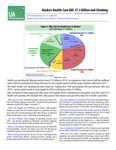
Alaska’s Health-Care Bill: $7.5 Billion and Climbing
Mark A. Foster and Oliver Scott Goldsmith
Health-care spending for Alaskans reached about $7.5 billion in 2010. For comparison, that’s close to half the wellhead value of all the oil produced in Alaska that year. It’s also roughly equal to half the wages Alaskans collected in 2010. The state’s health-care spending has been rising fast, tripling since 1990 and jumping 40% just between 2005 and 2010—and at current trends it could double by 2020, reaching more than $14 billion. Here we report on who’s paying the bills, what we’re buying, what’s contributing to the growth, and other aspects of health-care spending. We conclude with a discussion of how Alaska could get better value for its health-care dollars.
-
Alaska after Prudhoe Bay: Sustainability of an Island Economy
Oliver Scott Goldsmith
The typical sovereign island economy is small and remote. For example the remote island nations of Nauru, Niue, and Saint Helena have populations in the range of 10 thousand each. Of course not all island nations are small or remote and neither are small or remote economies necessarily islands. However it is useful to think about the economies of small and remote islands because they can help us to understand the economic structure and prospects of larger and less remote places. Island economies generally lack a comparative advantage in the production of goods or services for export to the rest of the world. This is due to distance from markets and suppliers as well as an absence of economies of scale and specialization, both of which drive up the cost of exporting goods and services. And although the economic theory of comparative advantage tells us that trade among countries can occur even if one has an advantage in the production of all goods and services, that theory can break down if costs in the small and remote economy are too high. The mechanism by which the island economy gains access to export markets in the presence of high costs is through downward adjustment in the wage. But in some cases the wage would need to become negative to overcome the cost disadvantages created by distance and size. In such a case the island would have a subsistence economy with neither exports to the rest of the world or imports. The most important private economic activities one observes in these economies are agriculture and fishing. Occasionally an island economy will be able to take advantage of a market niche to generate exports. Tourism is the most common, and mining has provided an export base in some other places. However these market activities will not necessarily be large enough to employ a large share of the population. Furthermore dependence on a single activity leaves these economies vulnerable or “precarious”.As a consequence many of these economies are dependent on foreign aid and remittances from emigrants. These funds allow these economies to purchase a basic level of imports that would not otherwise be possible
-
Four Scenarios for Alaska's Future
Oliver Scott Goldsmith
The Alaska economy is growing as high commodity prices (for oil and gold in particular) drive the private sector and oil revenue surpluses fuel the state budget. But as oil production continues to decline; the prospect for commercialization of North Slope gas in the near term fades; access to petroleum resources on federal lands remains stalled; and non-petroleum resource development moves forward only slowly, many Alaskans are concerned with what path the Alaska economy will take in the next decades. We could go in four possible directions. Here we offer a short description of each scenario— general enough to let each person fill in the blanks. Our objective is not to predict but rather to stimulate thought and discussion about what Alaskans can and should do to move the economy along the preferred path. Here’s a summary of the four potential paths. A more detailed description follows.
-
High Oil Prices Give Alaskans a Second Chance: How Will We Use this Opportunity?
Oliver Scott Goldsmith
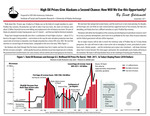
Think about this: 10 years ago, it looked as if Alaska was on the brink of a tough transition to a post-Prudhoe Bay economy. Oil production was half of what it had once been, the state’s oil revenues were about $2 billion, financial reserves were falling, and employment in the oil industry was down. The price of Alaska oil, adjusted to today’s buying power, was $27 a barrel—and that was high by historical standards. Things have changed dramatically since then: a combination of much higher oil prices—about $115 a barrel as this paper is being written—and revisions in the way the state calculates production taxes have caused state oil revenues to skyrocket, even though oil production is down 40% since 2002. We now find ourselves in a second huge oil-revenue boom, comparable to the one in the early 1980s (Figure 1 ).
-
How Much Should Alaska Save?
Oliver Scott Goldsmith
Alaska today is in the lucky position of having an estimated $126 billion in petroleum wealth— $45 billion in savings accounts derived from oil revenues, and $81 billion in future state revenues from oil and gas still in the ground--if current official state projections prove accurate. Almost all state revenues come from oil, as they have for 30 years. But oil production is now only a third of what it once was, and analysts think that even with new discoveries and enhanced recovery, production from state lands will keep dropping. So Alaskans face a dilemma: how can we preserve this petroleum wealth for future generations, while still benefitting from it ourselves? The answer is to limit how much we spend today from our petroleum wealth, and invest the savings in income generating assets. The income from those assets would grow over time and gradually replace declining petroleum revenues. We’ve already taken a major step, by depositing 24% of past oil revenues into savings accounts. Is that enough?
Printing is not supported at the primary Gallery Thumbnail page. Please first navigate to a specific Image before printing.