-
How Hard Is It for Alaska’s Medicare Patients to Find Family Doctors?
Rosyland Frazier and Mark A. Foster
In the past few years, Alaskans have been hearing reports that some primary-care doctors won’t see new Medicare patients. Medicare pays these doctors only about two-thirds of what private insurance pays—and that’s after a sizable increase in 2009. But most Americans 65 or older have to use Medicare as their main insurance, even if they also have private insurance. Just how widespread is the problem of Alaska’s primary-care doctors turning away Medicare patients? ISER surveyed hundreds of doctors to find out—and learned that so far there’s a major problem in Anchorage, a noticeable problem in the Mat-Su Borough and Fairbanks, and almost no problem in other areas.
-
Alaska without Petroleum: A Preliminary Run of a Gendanken Experiment
Oliver Scott Goldsmith
For the purposes of this study, I have used a simple economic base model to describe the structure of the Alaska economy.1 In the model each component of the economic base (the economic drivers) supports a certain number of jobs and generates a certain amount of personal income, not only directly but also through indirect and induced effects. All of the jobs and income in the economy are then accounted for when the contribution of each component of the economic base is included. The jobs and income attributed to a component of the economic base represents the potential loss to the economy if that part of the base were to disappear. For example, mining is an important industry in Alaska, consisting almost entirely of primary production for export outside the state. The contribution of the mining sector to total Alaska employment consists of miners as well as workers at Alaskan businesses that supply goods and services to the mining industry and workers at Alaskan businesses that supply goods and services to the families of the miners and workers at the Alaskan supplier businesses. If all of the mines in the state were to close, the loss in jobs and income would include those at the businesses supplying the mines and the families of the workers.
-
Economic and Demographic Projections for Alaska and Greater Anchorage 2010–2035
Oliver Scott Goldsmith
This report describes three economic, demographic, and fiscal projections for the state of Alaska and the Greater Anchorage region consisting of the Municipality of Anchorage and the Matanuska- Susitna Borough. These projections have been prepared by the Institute for Social and Economic Research (ISER) of the University of Alaska Anchorage as part of the development of the Seward Highway to Glenn Highway Connection (H2H) Environmental Impact Statement (EIS) for the Department of Transportation and Facilities. These projections will be used to estimate future travel demand within the study area. The assumptions driving the three projections were developed by ISER in consultation with the study team and planners and economic development staff from Anchorage and Mat-Su. The BASE CASE projection is driven by a set of assumptions that together represent a likely future scenario for employment and population growth. The HIGH and LOW CASES are each driven by a set of assumptions that together represent the range of possible outcomes around the likely BASE CASE. The assumptions are based upon the best information available at the time that they were developed—the fall of 2009. The economic and demographic projections, contingent upon the assumptions for the different cases, were prepared using the MAP economic and demographic model developed by ISER. The main body of this report is a description of each of the three projection cases. This is followed by short sections comparing the three projections to one another and to an earlier projection prepared by ISER for KABATA (Knik Arm Bridge and Toll Authority) in 2005. There is also a brief description of the structure of the MAP model. A number of appendices contain detailed tables of model output as well as a detailed description of the assumptions for each of the three cases.
-

2009 Alaska’s Construction Spending Forecast
Oliver Scott Goldsmith and Mary Killorin
Construction spending “on the street” in Alaska in 2009 will be $7.1 billion, down 3% from 2008.1,2,3 Lower construction spending, combined with higher material and labor costs, will result in a modest reduction in the level of construction employment in 2009. Although this will be the fourth year of decline, the level remains considerably above the long-term average. Excluding the oil and gas sector—which accounts for 43% of the total—construction spending will be $4.1 billion—down 1% from 2008. Private-sector construction spending will follow the slowdown in the Alaska economy. Excluding oil and gas, we expect private spending to be $1.3 billion in 2009, a decline of 24% from 2008. But strength in the oil and gas sector will keep the overall private sector decline to only 12%. Mining, utilities, and commercial spending will be down, mostly because a number of large projects have been completed. However, commercial —as well as residential— spending will be weaker, in response to the slowdown in the U.S. economy. Public construction spending will be up 16%, to $2.7 billion, offsetting much of the decline in private spending. That growth will mainly be due to the large FY 2009 state capital budget. But strong federal spending— both military and civilian— and the federal stimulus package will also contribute to the increase. Uncertainty in this year’s forecast comes from several sources. Volatility in commodity prices has affected construction spending in two important ways. The lower petroleum and metals prices in early 2009 have made investment in some prospects less attractive. Also, companies that finance construction activities out of their current cash flow are dealing with shrinking capital budgets. The national economy continues to deteriorate as we enter 2009.
-
Anchorage Port Intermodal Expansion Program (PIEP) Benefit Cost Analysis of Proposed TIGER Discretionary Grant Funds
Oliver Scott Goldsmith and Tobias Schwörer
The Port of Anchorage (POA) has exceeded its design life and has been operating beyond its capacity for a number of years. It is in need of replacement to both minimize operating costs and avoid potential damage in the event of an earthquake. It is in need of expansion to meet the needs of the growing South Central Alaska economy1. In response to these needs the POA has embarked on a multi-year expansion project—the Port Inter-modal Expansion Program (PIEP)2. In early 2009, in the midst of this expansion program, the federal government passed the American Recovery and Reinvestment Act. The Recovery Act appropriated $1.5 billion of discretionary funds to be awarded by the Department of Transportation for capital investments in surface transportation infrastructure (including ports) that would provide long-term economic benefits as well as preserve and create jobs and promote economic recovery3. In support of its request for a “Grant for Transportation Investment Generating Economic Recovery” (TIGER Grant), the POA asked the Institute of Social and Economic Research (ISER) to prepare a Benefit-Cost Analysis (BCA) demonstrating the long term economic benefits that would flow from expenditure of grant funds in support of the PIEP. This BCA follows the guidelines set forth in the Federal Register notice announcing the TIGER grant program. It measures the increase in national income that would result from the expenditure of the grant funds in support of the PIEP. Since the POA funding request would pay only a portion of the cost of the entire PIEP, this BCA is limited to measuring the benefits from the expenditure of the TIGER grant funds rather than the total benefits of the entire PIEP.
-
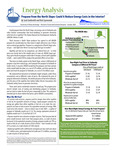
Propane from the North Slope: Could It Reduce Energy Costs in the Interior?
Oliver Scott Goldsmith and Nick Szymoniak
Could propane from the North Slope cut energy costs in Fairbanks and other Interior communities that heat buildings or generate electricity with fuel oil or naphtha? The Alaska Natural Gas Development Authority (ANGDA) thinks it could. That’s because a North Slope producer has agreed to sell ANGDA propane for considerably less than what it might otherwise cost, if there were a natural gas pipeline. Propane is a component of North Slope natural gas—and right now there’s no way to get that gas to market.* Naphtha and fuel oil, by comparison, are refined from oil—so their prices are closely tied to the volatile price of crude oil. ANGDA hopes getting a price break on propane could make it cheaper, at least until a pipeline is built—and it asked ISER to analyze the potential effects of one idea.
-
Economic Analysis of Future Offshore Oil & Gas Development: Beaufort Sea, Chukchi Sea, and North Aleutian Basin
Scott Goldsmith, Leah Cuyno, Kent Kovacs, Nancy Mundy, Anne Bunger, and Terri McCoy
This study describes and quantifies the potential economic benefits to the State of Alaska and local communities from developing oil and gas resources in Alaska’s Outer Continental Shelf (OCS) areas. The findings of this study are not predictions of the future for Alaska, but rather they describe a reasonable approach that one might expect for OCS development. The findings also provide a basis for thinking about potential actions that state and local governments, industry, and other stakeholders might undertake to deal most effectively with the effects that do occur. While there have been other studies in the past that looked at the potential effects of OCS development, this study is based on more recent information and represents the current state of knowledge in OCS resource estimates, exploration, development, and production activities; recent technology improvements; and state and local government fiscal systems. The economic benefits described here are based on assumptions about when and how OCS development, as well as other economic development in the state, might occur during the next 50 years. The magnitude of the economic effects of OCS development are contingent on assumptions about petroleum prices, volumes of OCS resources that might be economically recoverable, the levels of investment that the petroleum industry would be willing to spend to develop in the OCS areas, and the fiscal regime or tax structure that would be in effect as OCS oil and gas development occurs.
-
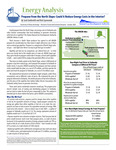
Propane from the North Slope: Could It Reduce Energy Costs in the Interior?
Scott Goldsmith and Nick Szymoniak
Could propane from the North Slope cut energy costs in Fairbanks and other Interior communities that heat buildings or generate electricity with fuel oil or naphtha? The Alaska Natural Gas Development Authority (ANGDA) thinks it could....We analyzed how fuel prices in Fairbanks might compare, under those assumptions and at different crude oil prices. We estimated the price of propane delivered to Fairbanks, the wholesale price of fuel oil in Fairbanks, and the price of the naphtha that Golden Valley Electric Association (the Fairbanks utility) burns to generate electricity. These aren’t prices residential customers would pay. The propane price doesn’t include costs of storing and distributing propane in Fairbanks, and we tried to make the fuel oil price comparable to that. This analysis is intended just to show relative fuel prices, given ANGDA’s assumptions.
-
Health Effects of Indoor-Air Benzene in Anchorage Residences: A Study of Indoor-Air Quality in Houses with Attached Garages
Mary Ellen Gordian, Rosyland Frazier, Alexandra Hill, Irma Schreiner, Darla Siver, Alistair Stewart, and Steve Morris
Benzene is a known carcinogen. It affects white blood cells; it causes leukemia and aplastic anemia. It may also affect the immune system which is dependent on white blood cells.1 It has been removed from all household products, but it is still present in gasoline. Alaskan gasoline is particularly high in benzene (>5%). Gasoline refined in Alaska has high concentrations of benzene and other the aromatic compounds as much as 50% aromatics by volume. Leaving the aromatics in the gasoline helps cars start in the cold, but it also puts high concentrations of benzene in both the ambient and indoor air. We already knew from previous work done in Alaska by Bernard Goldstein in Valdez2 and the Anchorage Department of Health and Human Services in Anchorage3 that people were exposed to high ambient levels of benzene in the winter, and that there were high indoor benzene concentrations in homes with attached garages if the garage was used to store gasoline or gasoline powered engines. Benzene does not bioaccumulate in the body as dioxin or some pesticides do. But are its effects cumulative? Does a little dose of benzene everyday have the same effect as a large dose over less time? Benzene reduces CD4 cells in a dose-response manner at workplace concentrations less than 1 ppm (OSHA 8-hour exposure limit) in workers.4 People who live in homes with high benzene concentrations may be exposed 24 hours a day, seven days a week. There have been no studies of health effects of such environmental exposure to benzene. This study was done to determine three things: 1. What percentage of Anchorage homes with attached garages had high levels of indoor benzene? 2. Were the high levels of indoor benzene affecting the health of the residents? 3. Were residents more likely to develop asthma in homes with high levels of indoor benzene?
-

Kids Count Alaska 2008
Virgene Hanna, Linda Leask, Claudia Lampman, Irma Schreiner, and Patricia DeRoche
We’re pleased to announce that Kids Count Alaska is part of a new site, the Kids Count Data Center (datacenter.kidscount.org). Developed by the KIDS COUNT national program, the site gives easy access to data on children and teenagers for every state and hundreds of cities and counties across the country. For Alaska, you can select indicators for each of the state’s seven regions and create your own maps, trend lines, and charts. There are also maps and graphs you can put on your Web site or blog. You can go directly to that national site, or you can link from our Web site (www.kidscount.alaska.edu). We hope you’ll find the new data and features helpful. This book and all previous data books are available on our Web site, and each data book is divided into sections for faster downloading. Also on our site is a link to the most recent national KIDS COUNT data book, as well as to other publications and reports. About This Year’s Book Alaska is celebrating 50 years as a state in 2009—and as part of the celebration, we decided to illustrate this year’s data book with historic photos of Alaska’s children before statehood. We also used information from the U.S. Census Bureau to take a broad look at how conditions have changed for Alaska’s children since statehood. In the Highlights at the end of this section (pages 7 to 10) you’ll find some comparisons of the social and economic wellbeing of children in Alaska in 1959 and today. What is Kids Count Alaska? Kids Count Alaska is part of a nationwide program, sponsored by the Annie E. Casey Foundation, to collect and publicize information about children’s health, safety, and economic status. We pull together information from many sources and present it all in one place. We hope this book gives Alaskans a broad picture of how the state’s children are doing and provides parents, policymakers, and others interested in the welfare of children with information they need to improve life for children and families. Our goals are: • Distributing information about the status of Alaska’s children • Creating an informed public, motivated to help children • Comparing the status of children in Alaska with children nationwide, and presenting additional Alaska indicators (including regional breakdowns) when possible
-
An Exploration of Experiences and Outcomes of Alaska Native Graduates of Mt. Edgecumbe High School
Diane Hirshberg and Brit DelMoral
In Alaska’s schools, indigenous1 students are the most at risk of any ethnic group of failing to thrive; they drop out more frequently, are less likely to graduate, and generally have lower educational attainment than non-Native students(Martin and Hill, 2009). Indeed, the situation appears to be worsening. The dropout rate of Alaska Native students living in all areas of Alaska besides Anchorage has risen from 0.7 percent in 1996 to 3.3 percent in 2001 (Goldsmith et al. 2004). Dropout rates among all Native students in Alaska increased from 5 percent to almost 10 percent between 1998 and 2001, while the dropout rate among non-Native students increased from about 3 percent to 5 percent (ibid). In addition, low test scores are preventing many students from graduating from high school—almost half of Alaska Native students are not passing the reading section of the High-School Graduation Qualifying Exam. The educational system in Alaska is failing to provide Alaska Native students the skills necessary either for postsecondary academic work or success in the job market, if that is what they desire. However, one secondary school, Mt. Edgecumbe High School, a boarding school located in Southeast Alaska that serves predominately rural and Alaska Native students, has produced students that consistently outperform their peers, both indigenous and non- Native. The reputation of the school has been strong for decades, based on both historic and recent accomplishments of its alumni. However, the experiences of recent alumni at the school and their professional and educational attainment after high school had not been looked at systematically for a number of years. This paper is the result of a study conducted by the authors on recent graduates of Mt. Edgecumbe High School (MEHS), at the suggestion of school administrators. Our case study attempts to capture the educational, social, and cultural experiences of the students while they attended the boarding school, and the impacts the school has had on their lives. With this research we hope to inform the decisions o f policymakers and educators, indigenous and non-Native alike, regarding rural secondary schooling options in Alaska for indigenous children across the state.
-
Benefits of Alaska Native Corporations and the SBA 8(a) Program to Alaska Natives and Alaska
University of Institute of Social and Economic Research, Sharman Haley, Ginny Fay, Joel Ainsworth, Jane Angvik, Alexandra Hill, and Stephanie Martin
Senator Begich’s office asked ISER for assistance assembling information to document the social and economic status of Alaska Natives and the benefits of the 8(a) program. His purpose is to brief Missouri Senator McCaskill and her committee which is reviewing the status of ANC contracts awarded under SBA’s 8(a) program. This review was triggered by a 2006 GAO report recommending increased SBA oversight to 8(a) contracting activity. Highlights of the GAO report are provided in Tab A.1; a letter dated May 15, 2009, from Senators Begich and Murkowski to Sentaor McCaskill, outlining their concerns is provided in Tab A.2. As the Congressional Research Service report (Tab A.3) explains, the Small Business Administration’s 8(a) program targeting socially and economically disadvantaged individuals was operating under executive authority from about 1970, and under statutory authority starting in 1978. A series of amendments from 1986 to 1992 recognized Alaska Native Corporations (ANCs) as socially and economically disadvantaged for purposes of program eligibility, exempted them from limitations on the number of qualifying subsidiaries, from some restrictions on size and minimum time in business, and from the ceiling on amounts for sole-source contracts. Between 1988 and 2005, the number of 8(a) qualified ANC subsidiaries grew from one to 154 subsidiaries owned by 49 ANCs. The dollar amount of 8(a) contracts to ANCs grew from $265 million in FY 2000 to $1.1 billion in 2004, approximately 80 percent of which was in sole-source contracts. (GAO Highlights, Tab A.1) The remainder of this briefing book is divided in three sections. Section 2 addresses changes in the social and economic status of Alaska Natives from 1970--the year before the enactment of the Alaska Native Claims Settlement Act and the subsequent creation of the ANCs--to the present. ISER’s report on the “Status of Alaska Natives 2004” (Tab B.1) finds that despite really significant improvements in social and economic conditions among Alaska Natives, they still lag well behind other Alaskans in employment, income, education, health status and living conditions. A collection of more recent analyses updates the social and economic indicators to 2008. There were many concurrent changes throughout this dynamic period of Alaska’s history and we cannot attribute all the improvements to the ANCs, though it is clear that they play an important catalyst role. In the final part of section 2 we attempt to provide some historical context for understanding the role ANCs have played in improving the well-being of Alaska Natives. Section C. documents the growth in ANCs and their contributions to Alaska Native employment, income, social and cultural programs and wellbeing, and their major contributions to the Alaska economy and society overall. Section D. Looks specifically at the 8(a) program. Although there are a handful of 8(a) firms with large federal contracts, the majority are small, village-based corporations engaged in enterprise development in very challenging conditions. A collection of six case studies illustrate the barriers to business development these small firms face and the critical leverage that 8(a) contracting offers them.
-
Municipality of Anchorage Baseline Greenhouse Gas Emissions Inventory Base Year 2008
Ralph Kelcie and Marcus Welker
The Municipality of Anchorage (MOA) conducted a greenhouse gas (GHG) emissions inventory with a 2008 base year in order to quantify the results of initiatives to reduce the MOA’s current carbon footprint, place those initiatives into a broader strategic plan, and measure reductions going forward. The MOA conducted the carbon baseline because it is a signatory of the U.S. Mayors Climate Protection Agreement. Over 710 U.S. Mayors have signed the agreement. Under the agreement, Anchorage must attempt to meet or beat the Kyoto Protocol targets of 7% reduction from 1990 levels by 2012, encourage their state governments and federal government to meet or beat the Kyoto Protocol targets, and urge the U.S. Congress to pass greenhouse gas reduction legislation establishing a national emissions trading system. The greenhouse gas emissions inventory is the first step for Anchorage to begin measuring the reductions of greenhouse gases as the MOA strives to meet the 7% reduction goal by 2012. The MOA chose to adopt the framework developed by the Local Governments for Sustainability (ICLEI) for measuring progress toward reduction goals because of its wide use, standardized methodology, and proven results. The ICLEI strategy has been adopted worldwide by over 1,000 communities working toward meet Kyoto Protocol carbon emission reduction targets.
-
2009 Alaska Health Workforce Vacancy Study
Beth Landon, Sanna Doucette, Rosyland Frazier, Meghan Wilson, Darla Silver, Alexandra Hill, Kate Sanders, Suzanne Sharp, Kristin Johnson, Patricia DeRoche, Stephanie Martin, and Donna Prator
Alaska continues to experience health professional shortages. The state has long had a deficient “supply side” characterized by insufficient numbers of key health workers whose recruitment, retention, and training have been impeded by Alaska’s remoteness, harsh climate, rural isolation, low population density, and scarce training resources. Alaska is the only state without a pharmacy school and lacks its own dental and physical therapy schools as well. Health professional shortages can be decreased through the start of new training programs, the expansion of existing programs, and the improvement of the effectiveness of recruitment and retention efforts. However, strategic planning and the execution of such programs require valid and accurate data. To this end, stakeholders such as the Alaska Mental Health Trust Authority (AMHTA) and Alaskan's For Access to Health Care (ACCESS), along with schools and departments within the University of Alaska Anchorage (UAA), funded the Alaska Center for Rural Health-Alaska’s AHEC (ACRH) and the Institute of Social and Economic Research (ISER) to conduct a comprehensive health workforce study during winter and spring of 2009. This report highlights employers’ needs for employees to fill budgeted positions. This is different from a needs assessment that would take into account population demographics and disease incidence and prevalence. This health workforce study is an assessment of health manpower shortage based on budgeted staff positions and their vacancies in organizations throughout the state. Respondents included part-time positions, which resulted in our counting full-time equivalent (FTE) rather than individuals (“bodies”). In situations where a position was divided among more than one occupation (e.g., Dental Assistant and Billing Clerk), we asked the respondent to count the position under which they considered the position’s “primary occupation.” This was a point-in-time cross-sectional study. Recently filled vacancies or imminent vacancies were not counted. Positions filled by relief/temporary/locum/contract health workers were counted as vacancies only if these workers were temporarily filling a currently vacant, budgeted position. Due to budget and time constraints, we were not able to conduct a trend analysis that is a comparison of this study’s findings and the prior 2007 study. The key questions this study sought to answer were (1) How many budgeted positions, either full- or part-time, existed in organizations providing health services in Alaska? (2) How many of these budgeted positions were currently vacant? (3) What was the vacancy rate? (4) How many of the organizations that employ these occupations hired new graduates of training programs? (5) How many of the currently vacant budgeted positions (#2) could be filled by new graduates of training programs? (6) What were the mean and maximum length of time, expressed in months, that the vacancies have existed? (7) What were the principal, underlying causes of vacancies? The study was designed in consultation with an advisory group that included AMHTA, ACCESS, and UAA. The study targeted 93 health occupations. The unit of analysis was the employment site by organization type, which allowed for the allocation of positions and vacancies by geographic region. For each employer, we identified the staff person most knowledgeable about hiring and vacancies. In large organizations this meant that one employer might provide information about multiple sites and organization types; smaller employers were responsible for only a single site.
-
Alaska’s People and Economy, 1867-2009
Linda Leask, Oliver Scott Goldsmith, Gunnar Knapp, and Steve Colt
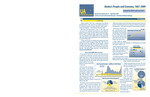
Utterly worthless. That’s how a congressman from Missouri described Alaska in 1867, when the U.S. bought it from Russia. A lot of Americans agreed. For almost 100 years, hardly anyone— except some Alaskans—wanted Alaska to become a state. But Alaska did finally become a state, in 1959. Today, after 142 years as a U.S. possession and 50 years as a state, Alaska has produced resources worth (in today’s dollars) around $670 billion. The U.S. paid $7.2 million for Alaska, equal to about $106 million now. For perspective, that’s roughly what the state government collected in royalties from oil produced on state-owned land in just the month of March 2009. To help mark 50 years of statehood, this publication first takes a broad look at what’s changed in Alaska since 1959. That’s on this page and the back page. We’ve also put together a timeline of political and economic events in Alaska from 1867 to the present. That’s on the inside pages. There’s an interactive version of the timeline—with photos, figures, and more—on ISER’s Web site: www.iser.uaa.alaska.edu.
-
New Students in the Anchorage School District: Where Are They From?
Marie E. Lowe, Patricia DeRoche, Suzanne Sharp, and Meghan Wilson
In September 2008, the superintendent of the Anchorage School District and the mayor of Anchorage sent a letter to the governor of Alaska, reporting what they thought might be an influx of students into Anchorage from rural communities. Enrollment in the school district was higher than expected, and it coincided with the largest-ever Alaska Permanent Fund dividend and with a one-time payment of $1,200 the state made per person, to help offset high energy costs. Researchers at the Institute of Social and Economic Research (ISER) at UAA have a longstanding interest in migration patterns in Alaska and the Arctic, and they saw the increased enrollment in Anchorage schools as a potential opportunity to better understand: • If rural Alaskans are moving to Anchorage • Where they are coming from • Why they are moving So with the cooperation of the Anchorage School District, ISER conducted a survey of the parents or guardians of students who had enrolled in Anchorage in the 2007-2008 or 2008-2009 school years and who had transferred in from other Alaska school districts. Besides finding out where students were coming from—and why—another purpose of the study was to provide the Anchorage School District and the Municipality of Anchorage with information about what they could do to help students and families who are new to the city. To our knowledge, this may be the first survey ever conducted to find out why people move to Anchorage from other areas of Alaska.
-
The Cost of Crime: Could The State Reduce Future Crime and Save Money by Expanding Education and Treatment Programs ?
Stephanie Martin and Steve Colt
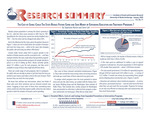
Alaska’s prison population is among the fastest-growing in the U.S., with five times more inmates in 2007 than in 1981. Spending for the state justice system has nearly doubled since 1981—but the crime rate has dropped only about 30%. Here’s the dilemma for the state, given the pattern shown in Figure 1: what can it do to hold down the number of inmates and stem the rising costs—while at the same time keeping the public safe and using tax dollars effectively? Senator Hollis French asked ISER to project growth in the number of Alaska inmates and the associated costs—and then evaluate whether the state could reduce that growth by expanding intervention and prevention programs for people already in prison or at risk of ending up there. Alaska currently spends about $17 million a year for such programs, but they aren’t available to many of those who might benefit from them.
-
The Changing Economic Status of Alaska Natives, 1970-2007
Stephanie Martin and Alexandra Hill
Forty years ago—when the discovery of North Slope oil was about to transform Alaska’s economy— Alaska Natives had among the lowest income, employment, and education levels in the U.S. Today their economic conditions are better, but they still fall considerably below averages among other Alaskans and other Americans. This note first reports how current economic conditions among Alaska Natives compare with U.S. averages, and then looks at changes since 1970 in poverty, employment, income, and education levels among Alaska Natives. We relied mainly on data from federal censuses in 1970, 1980, 1990, and 2000 and from the annual American Community Survey for 2005 to 2007. We also used the most recent population estimates from the Alaska Department of Labor and Workforce Development.1
-
Yup’ik Language Assistance Tribal Outreach: Report to the Alaska Division of Elections
Stephanie Martin, Mary Killorin, Suzanne Sharp, and Patricia DeRoche
The Division of Elections contracted with the Institute of Social and Economic Research (ISER) at the University of Alaska Anchorage to help develop a network of key tribal organization and village representatives in the Bethel census area to work with the division on their Yup’ik language assistance program. The division asked ISER to help them communicate with tribes about the division’s current programs and to document additional ways that the division can improve its language assistance program. The Alaska Division of Elections is required under the Federal Voting Rights Act (VRA) to provide language assistance to voters in areas where more than 5% of the voting age citizens are members of a single-language minority and are limited English proficient. In July 2008, a federal court ordered the division to take the following remedial actions, many of which the division had already taken prior to the court order: 1. Provide mandatory poll worker training. 2. Hire a language assistance coordinator fluent in Yup'ik. 3. Recruit bi-lingual poll workers or translators. 4. Provide sample ballots in written Yup'ik. 5. Provide pre-election publicity in Yup'ik. 6. Ensure the accuracy of translations. 7. Provide a Yup'ik glossary of election terms. 8. Submit pre-election and post-election reports. Although the division has a Yup’ik language assistance program and has been addressing the court order, interviews with Bethel census area residents show that some people are unaware of the elements in the division’s language assistance plan. In addition, some Bethel area residents said they feel the election workers and the division should interpret the meaning of the ballot measures and explain the positions of the various candidates—activities that are forbidden by state statute. ISER agreed to help the division address this lack of awareness and the misconceptions about their programs by contacting tribal organizations and inviting them to attend a meeting in Bethel, Alaska, on May 27, 2009. Part I of this report, issued in July 2009, describes ISER’s contacts with tribal organizations and summarizes the comments and feedback from the participants at the election outreach meeting in Bethel. Part II describes ISER’s post-meeting contacts with tribal organizations and meeting participants and summarizes their responses to the post-meeting survey.
-
2009 Alaska Health Workforce Vacancy Study - Report and Appendices
N/A N/A
Health professional shortages can be decreased through the start of new training programs, the expansion of existing programs, and the improvement of the effectiveness of recruitment and retention efforts. However, strategic planning and the execution of such programs require valid and accurate data. To this end, stakeholders such as the Alaska Mental Health Trust Authority (AMHTA) and Alaskan's For Access to Health Care (ACCESS), along with schools and departments within the University of Alaska Anchorage (UAA), funded the Alaska Center for Rural Health-Alaska’s AHEC (ACRH) and the Institute of Social and Economic Research (ISER) to conduct a comprehensive health workforce study during winter and spring of 2009. This report highlights employers’ needs for employees to fill budgeted positions. This is different from a needs assessment that would take into account population demographics and disease incidence and prevalence. This health workforce study is an assessment of health manpower shortage based on budgeted staff positions and their vacancies in organizations throughout the state. Respondents included part-time positions, which resulted in our counting full-time equivalent (FTE) rather than individuals (“bodies”). In situations where a position was divided among more than one occupation (e.g., Dental Assistant and Billing Clerk), we asked the respondent to count the position under which they considered the position’s “primary occupation.” The study was designed in consultation with an advisory group that included AMHTA, ACCESS, and UAA. The study targeted 93 health occupations. The unit of analysis was the employment site by organization type, which allowed for the allocation of positions and vacancies by geographic region. APPENDICES: Appendix A. List of Health Occupations, Appendix B. Health Workforce Surveys, Appendix C. Cover Letter Accompanying Survey Forms, Appendix D. Confidence Intervals for Positions, Vacancies, Number of Vacancies Filled with New Graduates, and Length of Longest Vacancy in Months, Appendix E. Tables of Samples and Estimates of Positions, Vacancies, Vacancy Rates, Number of Vacancies Filled with New Graduates, Mean and Maximum Length of Longest Vacancy in Months, Appendix F. Tables of Occupations Sorted By Estimates of Positions, Vacancies, Vacancy Rates, Number of Vacancies Filled with New Graduates, Mean and Maximum Length of Longest Vacancy in Months
-
Benefits of the Cook Inlet Ferry to the Municipality of Anchorage
Nick Szymoniak and Steve Colt
The purpose of this study is to examine the economic benefits of the Cook Inlet Ferry to the Municipality of Anchorage. The Cook Inlet Ferry is currently being built at the Ketchikan, Alaska shipyard. The U.S. Navy has financed construction of the ferry as a prototype military landing craft for northern, ice-filled waters. The Matanuska-Susitna Borough paid for Ferry engineering, design, and outfitting with federal transit monies. Following short-term Navy testing of the craft, it will be transferred to the Borough to provide ferry service in Cook Inlet. The Borough will provide operating and maintenance information to the Navy on an ongoing basis. The Borough will operate the ferry, which will provide regular service between Anchorage and Port MacKenzie as well as service to other points on Cook Inlet. The Ferry is expected to be operational by 2010.
-

Viability of Business Enterprises for Rural Alaska Volume II: Business Case Studies
Jane Angvik, Linda Ketchum, and Steve Colt
-
Comments on the Lieberman-Warner Climate Security Act and Lieberman-Warner proposed legislation
Steve Colt
The Lieberman-Warner Climate Security Act (hereafter LW or “the Act”) aims to cover 87% of total U.S. greenhouse gas (GHG) emissions.2 It aims to reduce the emissions of those gases by 4% below year 2005 levels in 2012 and by 17% below 2005 levels in 2020. The Act would impose a cap-and-trade mechanism on most energy-using activities. The number of emissions allowances would be limited in order to keep total emissions in each year below the predetermined cap. The interaction of buyers and sellers of emissions allowances would determine a market price per ton of CO2 equivalent. The Act allows emitters to trade, save, and borrow allowances, so that the most cost-effective GHG emissions reductions can be made where and when they are available. The American Council for Capital Formation and the National Association of Manufacturers (ACCF/NAM) recently issued a report3 that projects some of the economic effects of implementing LW. Both effects on the U.S. economy and effects on individual states are projected. The analysis was conducted by Science Applications International Corporation using the National Energy Modeling System (NEMS). NEMS is a set of interlinked computer models that project energy supply and demand and key macroeconomic outcomes such as gross domestic product and employment. Many assumptions are required as inputs into NEMS. The assumptions driving the ACCF/NAM results were provided by ACCF and NAM. They were not chosen by the consultants who ran the model. Two sets of assumptions were used to generate two set of projections: a “Low Cost” scenario and a “High Cost” scenario.
-
Economic Analysis of an Integrated Wind-Hydrogen Energy System for a Small Alaska Community
Steve Colt and Steve Gilbert
Wind-hydrogen systems provide one way to store intermittent wind energy as hydrogen. We explored the hypothesis that an integrated wind-hydrogen system supplying electricity, heat, and transportation fuel could serve the needs of an isolated (off-grid) Alaska community at a lower cost than a collection of separate systems. Analysis indicates that: 1) Combustible Hydrogen could be produced with current technologies for direct use as a transportation fuel for about $15/gallon-equivalent; 2) The capital cost of the wind energy rather than the capital cost of electrolyzers dominates this high cost; and 3) There do not appear to be diseconomies of small scale for current electrolyzers serving a a village of 400 people.
Printing is not supported at the primary Gallery Thumbnail page. Please first navigate to a specific Image before printing.