-
Managing Extractive Resource Wealth for Sustainability: Alaska in the Time of Falling Oil Production
Oliver Scott Goldsmith
Cash economies in many parts of the Arctic North have long been dominated by resource extraction industries such as petroleum and metal mining. These developments are often short lived, generating cycles of economic booms followed by busts. And the wealth created by these activities tends to flow South, as profits to large firms and wages to temporary residents. But in Alaska the Permanent Fund (and a number of smaller financial accounts), has captured a significant share of the wealth generated by the production of petroleum over the last 30 years. Alaska residents now have the opportunity to use this wealth (currently estimated at $45 billion in financial assets and $81 billion in the state share of oil still in the ground) to build a strong economy, not only for the current generation but for future generations of Alaskans as well. This will be a unique challenge, balancing the needs of current and future generations, the preferences of urban and rural residents, permanent and temporary citizens, and others. This paper will examine the challenges facing Alaska as it begins the task of wealth management in an era of declining petroleum production. This should provide lessons for other regions impacted by cycles of resource extractive industries.
-
Oil Pumps Alaska's Economy to Twice the Size - But What's Ahead?
Oliver Scott Goldsmith
Oil money has driven most of the growth and paid for state government operations in Alaska for 40 years. We’ve all gotten used to that money, so it’s easy to underestimate how much of the state’s prosperity is built on oil. Think about this: without oil, the economy today would be only half the size. But now times are changing. The North Slope is producing just a third the oil it once did—and there’s a danger Alaskans will assume the state can keep going the way it is, without future oil development. Not true.
-
Revising the State Fiscal Plan to Account for Petroleum Wealth
Oliver Scott Goldsmith
In 2008 the Alaska Legislature passed and the governor signed into law a bill requiring the Office of Management and Budget (OMB) to prepare an annual state fiscal plan projecting state spending for 10 years and identifying the revenue sources to pay for that spending. One objective of the law was to get government and the general public thinking, discussing, and planning for the long-term fiscal health of the state in light of declining oil production. These plans have not attracted the attention they deserve. In this Web Note we review the most recent fiscal year 2012 10-year plan and offer suggestions for improvement.
-
The Alaska Permanent Fund Dividend: A Case Study in the Direct Distribution of Resource Rent
Oliver Scott Goldsmith
The Alaska Permanent Fund is a sovereign wealth fund of the state of Alaska established in 1976 by a vote of the people to preserve part of the revenues from current oil production for future generations. Twenty percent of direct petroleum revenues have been deposited into the fund which now has a balance of $32 billion. Over its life it has generated nominal earnings of $35 billion. The successes of the fun in saving a share of the Alaska petroleum windfall and generating income are due to several factors. The boom-bust economic history of the state has been a reminder of the need to actively manage public resources. Fund management is independent of general government finances and extremely transparent. It invests to maximize long run income. In addition, the modest share of petroleum revenues set aside in the fund has left enough available for the state to expand public spending, including the establishment of a number of programs designed to strengthen the economy in recognition of the non sustainability of the petroleum sector. Since these public programs benefit particular segments of the population, the Alaska Permanent Fund dividend program was created in 1982 to provide an annual unconditional direct cash distribution to all Alaska residents. The dividend was felt to be the most equitable way to distribute a share of the public wealth of the state to the entire population. Since the inception of the program, the dividend has been paid each year. About half of Permanent Fund earnings have been allocated to the dividend program and the rest to increasing the balance in the fund. The size of the dividend has increased as the fund has grown, but it fluctuates considerably because fund earnings change from year to year. In 2010 the dividend payment was $1,281 which augmented per capita income by 3 percent. The dividend program has become extremely popular since most Alaskans feel that individuals can benefit more from deciding themselves how to spend at least a portion of the public wealth rather than allowing the government to decide on their behalf. However a minority of the population feels the dividend fosters an attitude of consumerism and leads to underinvestment. And although the dividend has created a strong constituency defending the Alaska Permanent Fund, which many feel is the main reason for the success of the fund, there is concern that the dividend will prevent the fund from being used for its ultimate purpose which is to help support the economy after petroleum production ends. Beyond its obvious positive impact on aggregate income, employment and population, little analysis has been done of other economic, social, and political effects of the dividend program. Because the dividend is not viewed as a policy to improve social welfare, but rather as a means to share public wealth equitably, interest in these other potential effects has been limited.
-
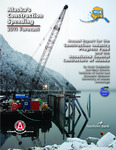
2011 Alaska's Construction Spending Forecast
Oliver Scott Goldsmith and Mary Killorin
The total value of construction spending “on the street” in Alaska in 2011 will be $7.1 billion, up 4% from 2010.1,2,3 Wage and salary employment in the construction industry will continue the slow decline that began in 2006, but the level remains above the long-term average for the industry. Excluding the oil and gas sector—which accounts for 41% of the total—construction spending will be $4.2 billion—up 5% from 2010. Private-sector construction spending will be up 6% from 2010, to $4.5 billion, in spite of the expected slow growth in the overall Alaska economy. Oil and gas sector spending will be about $2.9 billion, up 3%. Spending will increase in the utility and hospitals4 categories, but will decline in residential and other commercial categories. Public construction spending will be up 1%, to $2.7 billion, due to the large FY 2011 state capital budget. The main infusion of cash from the American Recovery and Reinvestment Act (ARRA) has worked its way through the system, and federal spending overall has declined. Uncertainty is particularly significant in the forecast this year, especially in the oil and gas sector—in spite of high oil prices. In January 2011, uncertainty surrounds most of the large-scale petroleum projects on the North Slope and in Cook Inlet. Environmental reviews are slowing development drilling at Point Thomson east of Prudhoe Bay and Alpine West in the National Petroleum Reserve Alaska. Exploration drilling offshore in the Chukchi and Beaufort seas continues to face legal challenges. The offshore Liberty project is under internal environmental review. In Cook Inlet, a major offshore exploration effort awaits the uncertain arrival of a jack-up rig. In this forecast we assume most of these projects will move forward this year, but their pace is hard to predict. If several are delayed in 2011, oil and gas spending will be significantly lower.
-
Strengthening Institutions for Stakeholder Involvement and Ecosystem-Based Management in the US Arctic Offshore
Sharman Haley, Laura Chartier, Glenn Gray, Chanda Meek, Jim Powell, Andrew A. Rosenberg, and Jonathan Rosenberg
Due to their unique characteristics, the Chukchi and Beaufort Seas have escaped many, though not all, of the problems encountered in more temperate seas. For most of the 20th century, multi-year sea ice provided a barrier to significant industrial activity in the Arctic Ocean. Even though the Chukchi and Beaufort Seas have not been managed seas, per se, the area has been governed under a patchwork of policy regimes relating to regional Outer Continental Shelf land claims, marine mammal conservation, environmental pollution, coastal development and eventually pan-Arctic governance through the Arctic Council. As the open water period available to industrial use increases, new users are expected to follow. As in other parts of the United States, many human uses of the Alaskan marine environment are governed by a patchwork of rules stemming from various sectors of the federal, state, and local governments. Significant and emerging challenges include: climate change and the restructuring of seasonal sea ice habitats, ocean acidification, growing marine traffic and the prevention of oil spills in a challenging operating environment. Here we explore how innovations in ocean governance incorporating principles of ecosystem-based management, participatory democracy and complex systems can protect ocean resources and mitigate conflict.
-
Observing Trends and Assessing Data For Arctic Mining
Sharman Haley, Matthew Klick, Nick Szymoniak, and Andrew Crow
This paper reviews and assesses the state of data to describe and monitor mining trends in the pan-Arctic and their social effects, and discusses drivers of change in Arctic mining. Trends in mining activity can be characterized as stasis or decline in mature regions of the Arctic, with strong growth in the frontier regions. World prices and the availability of large, undiscovered and untapped resources with favorable access and low political risk are the biggest drivers for Arctic mining, while climate change is a minor and locally variable factor. The widely available measures of mineral production and value are poor proxies for social and economic effects on Arctic communities. Historical data on mineral production and value are unavailable in electronic format for much of the Arctic, specifically Scandinavia and Russia; completing the historical record back to 1980 will require work with paper archives. The most critically needed improvement in data collection and reporting is to develop comparable measures of employment. The eight Arctic countries each use different definitions of employment and different methodologies to collect the data. Furthermore, many countries do not report employment by county and industry, so the Arctic share of mining employment cannot be identified.
-
Social Indicators for Arctic Mining
Sharman Haley, Nick Szymoniak, Matthew Klick, Andrew Crow, and Tobias Schwoerer
This paper reviews and assesses the state of the data to describe and monitor mining trends in the pan-Arctic. It constructs a mining index and discusses its value as a social impact indicator and discusses drivers of change in Arctic mining. The widely available measures of mineral production and value are poor proxies for economic effects on Arctic communities. Trends in mining activity can be characterized as stasis or decline in mature regions of the Arctic, with strong growth in the frontier regions. World prices and the availability of large, undiscovered and untapped resources with favorable access and low political risk are the biggest drivers for Arctic mining, while climate change is a minor and locally variable factor. Historical data on mineral production and value is unavailable in electronic format for much of the Arctic, specifically Scandinavia and Russia; completing the historical record back to 1980 will require work with paper archives. The most critically needed improvement in data collection and reporting is to develop comparable measures of employment: the eight Arctic countries each use different definitions of employment, and different methodologies to collect the data. Furthermore, many countries do not report employment by county and industry, so the Arctic share of mining employment cannot be identified. More work needs to be done to develop indicator measures for ecosystem service flows. More work also needs to be done developing conceptual models of effects of mining activities on fate control, cultural continuity and ties to nature for local Arctic communities.
-

Kids Count Alaska 2009-2010
Virgene Hanna, Irma Schreiner, Patricia DeRoche, Irena Ikatova, and Erin Trimble
For information on children across America, visit the Kids Count Data Center (www.datacenter.kidscount.org). Developed by the national KIDS COUNT program, the site provides data on children and teenagers for every state and hundreds of cities and counties. For Alaska, you can select indicators for each of the state’s seven regions and create your own maps, trend lines, and charts. There are also maps and graphs you can put on your website or blog. You can go directly to that national site or link from our website (kidscount.alaska.edu). This book and all previous data books are available on our website, with each book divided into sections for faster downloading. Also on our site is a link to the most recent national KIDS COUNT data book, as well as other publications and reports.
-
Digital Diversity: Broadband and Indigenous Populations in Alaska
Heather E. Hudson
Alaska Natives comprise several cultural and linguistic groups including Inupiat, Yupik, Athabascan, Aleut, Tlingit and Haida, organized into some 226 tribes. Approximately two-thirds of the indigenous population live in more than 200 rural villages, most of which are remote settlements with fewer than 200 people and no road access. Since the late 1970’s, all communities with at least 25 permanent residents have had telephone service, but broadband connectivity remains limited. The major mechanism for extending Internet access to rural Alaska has been federal universal service funds, specifically the E-rate program that subsidizes Internet access for schools and libraries, and the Rural Health program that subsidizes connectivity for rural health clinics and hospitals. Under the federal Stimulus program, Alaska has also recently received funding for infrastructure to extend broadband in southwest Alaska, for improved connectivity for rural libraries, and for training and support for rural public computer centers. These initiatives primarily support improvements in Internet and broadband availability for rural Alaska. However, this paper proposes a more rigorous framework including not only availability, but more broadly access, and also adoption, and examines how these concepts apply to Alaska natives. The paper also examines other elements of digital diversity, including innovation in applications and content, ICT entrepreneurship, and participation in telecommunications policy-making.
-
Risk Management in the Arctic Offshore: Wicked Problems Require New Paradigms
Mandy Kaempf and Sharman Haley
Recent project-management literature and high-profile disasters—the financial crisis, the BP Deepwater Horizon oil spill, and the Fukushima nuclear accident—illustrate the flaws of traditional risk models for complex projects. This research examines how various groups with interests in the Arctic offshore define risks. The findings link the wicked problem framework and the emerging paradigm of Project Management of the Second Order (PM-2). Wicked problems are problems that are unstructured, complex, irregular, interactive, adaptive, and novel. The authors synthesize literature on the topic to offer strategies for navigating wicked problems, provide new variables to deconstruct traditional risk models, and integrate objective and subjective schools of risk analysis.
-

Local Permit Ownership in Alaska Salmon Fisheries
Gunnar Knapp
Changes in ownership of limited entry permits by “local” residents of the region where a fishery occurs may have significant economic and social implications for fishery-dependent regions. This paper examines changes in local permit ownership in Alaska salmon fisheries, for which a long-term decline in rural local permit ownership is an important policy concern. Theoretically, permit markets allocate permits over time to the individuals who are willing to pay the most for them. Any factors that differentially affect what local and non-local residents are willing to pay for permits may affect the equilibrium share of permits held by local residents. For remote rural fisheries in particular, these may include differences between local and non-local residents with respect to access to and costs of financing permits and boats, costs of travel to the fishery, opportunity costs of participation in the fishery, and many other factors. As a fishery increases in profitability, differences between local and non-local residents in access to financing matter more while differences in costs of travel and opportunity costs matter less in the relative ranking of what local and non-local residents are willing to pay for permits. This tends to increase the share of non-local residents among buyers willing to pay the market price for permits, reducing the equilibrium share of permits held by local residents. This leads to a conflict between two important policy goals: increasing fishery profitability and maintaining rural local permit ownership. Consistent with predictions of this theory, the local share of permit ownership in Alaska salmon fisheries is negatively related to permit prices (an indicator of fishery profitability).
-
Developing an Arctic Subsistence Observation System
Jack Kruse
The goal of the Arctic Observing Network Social Indicators Project subsistence component is to assess the adequacy of existing subsistence harvest data to advance our understanding of arctic change and to serve as the basis for recommending steps that can improve the observation network. The assessment is based on a database developed to include 1521 place/year records for Alaska and northern Canada. Of these records, 641 include estimates of harvest of all resources. Separate harvest reports are available for 131 species. Annual harvests are expressed as kilograms of edible harvest per capita for years ranging from 1965 to 2007. One or more measures per decade of comprehensive harvest in the 1990s and 2000s exist for 50 of the 411 arctic North American communities. Based on these results, in most, but not all regions, available data on subsistence harvests in Arctic North America cannot support analysis of changes in harvest over time. The Alaska Department of Fish and Game Community Subsistence Information System continues to provide harvest data for communities and has developed several regional sets of community harvest data in response to actual and potential environmental changes. The past harvest surveys conducted in the Nunavik, Inuvialuit, and Nunavut regions offer valuable experience as well as baseline data. The Arctic Borderlands Ecological Cooperative is a model of community–researcher collaboration. These past and current initiatives provide a foundation for the design of an expanded arctic subsistence observation network. The paper concludes with a discussion of challenges and recommendations.
-
Arctic Observing Network Social Indicators Project: Overview
Jack Kruse, Marie Lowe, Sharman Haley, Ginny Fay, Larry Hamilton, and Matthew Berman
The Arctic Observing Network Social Indicators Project (NSF OPP0638408) is intended to contribute to the development of the Arctic Observation Network and to the science goals of SEARCH in two ways: (1) develop and make available to the science community relevant datasets and (2) identify gaps in the existing observation system and recommend appropriate actions to fill those gaps. The SEARCH Implementation Plan identified the following arenas of human activity likely to involve climate–human interactions: (1) subsistence hunting; (2) tourism; (3) resource development and marine transportation; and (4) commercial fishing. This project seeks to develop and assess datasets in these four areas. Again drawing from the SEARCH Implementation Plan priorities, the project also seeks to develop and assess datasets measuring social outcomes. This special issue of Polar Geography contains articles on each of the four arenas of human activity likely to involve climate–human interactions, an article on demographic indicators of social outcomes, an overview article, and a synthesis of recommendations for researchers and statistical agencies. The articles also introduce datasets now available to the research community.
-
Arctic Observing Network Social Indicators and Northern Commercial Fisheries
Marie Lowe
This article presents issues and challenges associated with collecting social indicator data in the context of northern commercial fisheries. The Arctic Observing Network Social Indicators Project (AON-SIP) fisheries domain database consists of geo-coded social indicator datasets from Alaska, Iceland, Norway, and Chukotka, of place/year catch, landings, employment, and permit data from 1980-present for commercially important species above 60°N and in the Bering Sea. Comparability of indicator data across regions will be important for the future monitoring and modeling of the effects of changes in the arctic environment such as those influenced by diminishing sea ice cover and increasing ocean acidification which will impact fisheries production and distribution. Equally important, the collection and analysis of time-series social indicator data could aid in understanding how arctic residents experience the processes of globalization as they participate in industries such as fisheries that are increasingly dominated by non-local corporations. Because of this extrinsic control of resources, social indicator data reflecting local ownership in fisheries rights and revenues could be functional in understanding how changes in fisheries impact arctic livelihoods. It is also necessary to understand how changes in fisheries fit within a broader resource use and arctic development context, for example, in conjunction with the oil and gas industry. Finally, planning for arctic fisheries of the future will be dependent upon data collection and analysis activities that can inform management plans and governance structures accommodating international boundary conflicts, rights-based management regimes, indigenous access, and organization/oversight of arctic marine science initiatives.
-
Greenhouse Gas Emissions: Inventory From Transportation UAA
Alejandra Villalobos Meléndez, Sarah Christine Gerd, and Ginny Fay
-
The Economic Contributions of the Kenai Peninsula Borough School District
Kim Pitney and Alexandra Hill
The purpose of this study was to evaluate the economic significance of the Kenai Peninsula Borough School District within the Kenai Peninsula Borough. We use an Alaska-specific Input-Output (I-O) model created by Dr. Scott Goldsmith of ISER, which is custom designed for the Alaska economy to “relate changes in spending in a particular industry to total changes in jobs and income in the Alaska economy.1” In the 2009/2010 school year, the school district directly created 1468.4 jobs, and about $109 million dollars was spent in south central Alaska. Based on the results of the model, this created 628.6 jobs, mostly in the borough, but with some located in Anchorage. These figures highlight the school district's role in the private as well as the public sector of the Kenai Peninsula Borough economy.
-
The Economic Significance of the Kenai Peninsula Borough School District in the Kenai Peninsula Borough
Kim Pitney and Alexandra Hill
The Kenai Peninsula Borough School District is the largest single employer in the borough, providing over 1,200 jobs in the 2009-2010 school year. In addition to employment, school district purchases of goods and services directly supported an additional 250 jobs (Direct employment in Table 1). Those 1450 jobs supported over 600 more jobs (indirect and inducedimpact in Table 1) when employed households spent their income locally. The total payroll from district, direct, indirect and induced employment is almost $100 million. This paper (and the numbers in Table 1) report on the economic significance of the KPBSD. Economic significance analysis models how money is spent and re-spent within the economy, and how much leaks out of the economy (e.g., money spent while on vacation in Hawaii). Based on this modeling, the analysis calculates how much economic activity in the borough can be traced to the school district, as the district and the borough economy currently exist.
-

Alaska Fuel Price Projections 2011-2030
Tobias Schwoerer, Ben Saylor, and Ginny Fay
This report and supporting spreadsheet outline Low, Medium, and High case fuel price projections for the years 2011-2030 for natural gas in Southcentral Alaska delivered to a utility-scale customer, diesel delivered to a PCE community utility tank, diesel delivered to a home in a PCE community, home heating oil purchased in Anchorage, Fairbanks, Juneau, Kenai, Ketchikan, Palmer, and Wasilla. The report provides documentation of the assumptions and methods that are used, while a companion Excel workbook contains the detailed projections.
-
Alaska Native Claims Settlement Act: Selected Bibliography
Suzanne Sharp, Irene Rowan, Jo Antonson, Paul Ongtooguk, Gordon Puller, and Willie Templeton
ISER prepared this list of books, reports, and other resources on the Alaska Native Claims Settlement Act for the ANCSA @ 40 Committee. It is the most comprehensive such list we are aware of, but there are likely additional resources yet to be identified. Some of these resources are now out of print and may be available at used bookstores or at libraries. More recent publications can be obtained from the publishers or at bookstores. You can also find resources on websites, as noted in the citations.
-
Treatment of Petroleum Refining and Other Energy-Intensive and Trade-Sensitive Industries in Pending National Climate Legislation
Matthew Berman
One of the major issues confronting Congress as it deliberates about legislation to limit carbon dioxide and other greenhouse-gas (GHG) emissions is the effect on international trade. If the U.S. implements a cap and trade program, the cost of emissions rights becomes a new business cost for domestic establishments that foreign establishments do not face. This puts domestic industry at a competitive disadvantage in export markets as well as against imported goods. Over time, investments in U.S. industries decline, taking jobs oversees and undermining progress in reducing greenhouse gas emissions. The concern, often called “carbon leakage,” is most acutely felt in trade-sensitive, energy-intensive manufacturing industries. The main climate bills that Congress is currently considering include H.R. 2454 and S. 1733, commonly termed the Waxman-Markey and Kerry-Boxer bills, respectively, in reference to their original sponsors. H.R. 2454 passed the House on June 26, 2009 with a recorded vote of 219-212. The companion Senate bill was filed on September 30, 2009, and is at this writing (11/06/09) under markup in the Senate Committee on Environment and Public Works. S.1733 incorporates many sections of HR 2454 verbatim, but differs in some respects in the way it treats energy-intensive and tradesensitive industries. This policy brief analyzes the way that both bills approach the issue of carbon leakage, with particular attention to the petroleum processing industry. The next section outlines the general treatment of energy-intensive and trade-sensitive industries that is common to both bills. Then, the brief discusses the specific treatment of refined petroleum products. Following that comes an analysis of the limitations and deficiencies in the approach that Congress is taking. The brief concludes with a discussion of potential modifications -- an outline of proposed amendments -- that could address the deficiencies consistent with the overall approach of H.R. 2454 and S. 1733.
-
Socioeconomic Impacts of Potential Wishbone Hill Coal Mining Activity
Steve Colt and Tobias Schwörer
The purpose of this study is to assess some of the significant socioeconomic effects of potential coal mining activity at Wishbone Hill. The analysis scenario assumes a 16-year period of startup and mine production using two known deposits that are currently permitted by the State of Alaska for mineral exploration. “Mine Area 1” would be mined during years 2-7 and “Mine Area 2” would be mined during years 8-16. Mining would only take place at one of these areas during any given time. We considered four kinds of effects: Jobs and income, fiscal impacts, property values, and traffic.
-
Benefits of the Southcentral Rail Extension to the Municipality of Anchorage
Steve Colt and Nick Szymoniak
The proposed Southcentral rail extension to Port MacKenzie is likely to generate significant economic benefits for the residents of Anchorage. These benefits are due to a combination of reduced transport costs, the ability to ship bulk commodities over shorter distances, and economical access to industrial land. We considered and analyzed these benefits under a set of assumptions about job creation, transportation costs, land use considerations and future mineral development. Our major findings include the following: Jobs • Port MacKenzie. The rail extension will generate new jobs for Anchorage workers by stimulating industrial development and jobs at Port MacKenzie. Under a base case scenario with a rail extension and ferry service, Anchorage residents would gain 730 average annual jobs and $50 million of annual income during the period of 2013 -2017 from industrial development at Port MacKenzie. Hundreds more jobs would be gained after 2017. The rail extension will play an important role in this process. For example, it will allow coal exports through the port as early as 2013, generating more than 100 jobs. • New Mines. Major new mines shipping concentrate via the rail extension would generate thousands of new jobs, and a significant fraction of these jobs would be held by Anchorage residents. Our detailed analysis of the potential employment from five specific mining projects indicates that more than 2,000 average annual jobs would be created in Anchorage or held by Anchorage residents once the mines are fully developed. Most of these jobs would be in mining and in professional sectors that pay good wages. Also, during initial mine development, many of the jobs would be in construction and fabrication. • Rail Construction. The construction of the rail extension would generate up to 3,000 total jobs, and ongoing operations would generate up to 150 total jobs. It is likely that many of these jobs would be held by Anchorage residents. • State Revenues. State mining taxes generated from new mines will boost the Anchorage economy. Estimated tax revenues and royalties would grow steadily, reaching $267 million per year by 2040. A large share of these potential tax revenues, roughly proportional to Anchorage’s share of state population, would likely flow into the Anchorage economy, sustaining hundreds of direct jobs and reducing property tax burdens that would otherwise stifle private sector job creation. Regional Competitiveness • New Economic Opportunities. Port MacKenzie and the rail extension, operating together, are a significant new strategic asset for the entire regional economy. This infrastructure will create expanded opportunities for mineral, timber, and energy resource development, and the export of bulk commodities by rail through Port MacKenzie constitutes a new economic sector for the Southcentral regional economy. As the region’s commercial and financial hub, Anchorage will gain jobs and income from all of this activity. • More Efficient Land Use. The rail extension allows for higher-valued use of land in Anchorage. The rail extension will allow for railroad-dependent industrial development to take place at Port MacKenzie. This development would allow limited existing industrialzoned land throughout Anchorage to be used for other, higher-value uses such as commercial development, while still meeting the regional economy’s need for industrial land. Fiscal Benefits • New State Revenues. As noted above, revenues to the State of Alaska from new resource development would grow steadily, reaching $267 million per year by 2040. These revenues will reduce the need for other taxes, stimulating capital formation and job creation by the private sector. • Higher Local Tax Base. Local governments will also see higher tax revenues from a higher-valued property tax base. The stimulated new development will increase the tax base and reduce the need to raise taxes on homeowners or existing businesses. Other Benefits • Port of Anchorage. The industrial and mineral development stimulated by the rail extension to Port MacKenzie will likely increase both the volume and the value of cargo going through the Port of Anchorage. For example, if large mines are developed, the goods and equipment used by the mines for development and operations will flow through Anchorage. • Rail Shipping Costs. The unit cost of shipping on the Alaska Railroad is likely to fall as fixed costs of roadbed maintenance and administration are spread over a higher volume of shipments.
-
Data Survey and Sampling Procedures to Quantify Recreation Use of National Forests in Alaska
Ginny Fay, Steve Colt, and Eric White
Estimating visitor numbers and collecting information on visitor attitudes in Alaska national forests is especially challenging because of the dispersed access to the forests by a relatively small number of visitors. The Tongass and Chugach National Forests are each millions of acres with miles of saltwater coastline and numerous lakes that allow almost infinite boat and float plane access points. This study identified a number of methods used by land managers in Alaska and other states to address dispersed recreational access as well as other ongoing data collection processes in Alaska, such as sport fish angler surveys, traveler surveys, and other systematic efforts that generate visitor data. These data may be useful for USDA Forest Service efforts to improve their visitor use monitoring processes.
Printing is not supported at the primary Gallery Thumbnail page. Please first navigate to a specific Image before printing.